The Art of Kitchen Elegance Balancing Luxury and Function

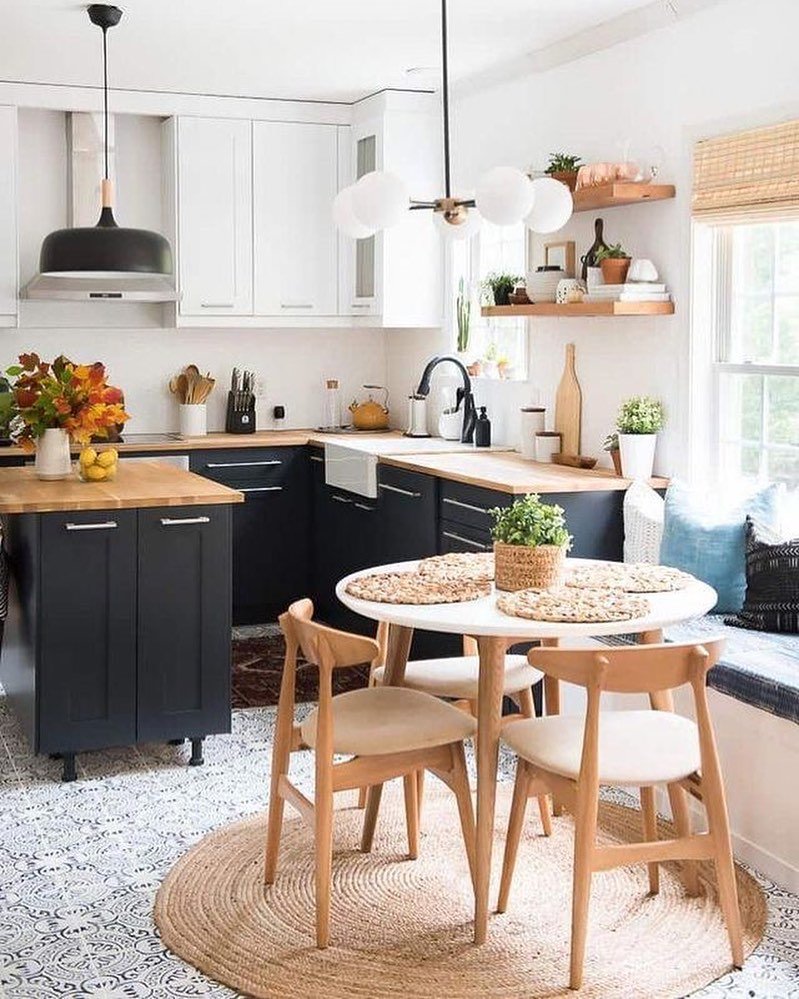
This kitchen masterfully balances high-contrast tones with warm, organic textures. The design features a striking two-tone cabinetry layout, utilizing sleek matte black lower cabinets paired with crisp white uppers to create visual depth. Natural wood butcher-block countertops bridge the two extremes, adding a soft, tactile element to the workspace.

Functional and Airy Layout

The space maximizes efficiency through a compact L-shaped configuration complemented by a small mobile island. Open wooden shelving replaces traditional upper cabinets on one wall, maintaining an airy feel while showcasing potted greenery and kitchen essentials. A dedicated dining nook with a built-in window bench offers a cozy, space-saving solution for morning coffee or casual meals.

Artistic Accents and Textures

Attention to detail is evident in the curated decor:

  • Patterned Flooring: Intricate blue-and-white tiles provide a vintage charm that contrasts with the modern furniture.

  • Mixed Lighting: A bold black dome pendant over the island and a multi-globe mid-century chandelier over the table define separate zones.

  • Organic Materials: Jute rugs, woven placemats, and light-toned wooden chairs introduce “Japandi” influences, softening the industrial black accents.

  • Natural Light: Large windows are dressed with woven bamboo shades, filtering light and enhancing the warm, lived-in atmosphere.

Deep Dive into Materiality and Form

The kitchen’s aesthetic success relies on a deliberate “sandwiching” of materials. By placing natural wood butcher block between the high-contrast matte black and stark white cabinetry, the design avoids feeling cold or overly clinical. The use of matte finishes rather than high-gloss prevents glare and hides fingerprints, contributing to a more sophisticated, modern-industrial mood.

The Geometry of Light

The lighting choices serve as functional art pieces that dictate the room’s flow. The oversized black pendant acts as an anchor for the prep area, drawing the eye to the verticality of the room. In contrast, the bubble-globe chandelier over the round dining table uses soft, diffused light to create an intimate atmosphere. This mix of spherical and dome shapes breaks up the linear grid of the cabinets and shelving.

Textural Layering and Pattern Play

The floor serves as a “fifth wall,” using geometric encaustic-style tiling to introduce a sense of history and craftsmanship. To prevent the pattern from overwhelming the senses, it is partially softened by a circular jute rug. This layering—patterned tile beneath a textured natural fiber rug—is a hallmark of “Modern Organic” design, prioritizing comfort and visual interest through varying tactile surfaces.

Maximizing Small-Footprint Living

Every inch of the layout is optimized for multi-functional living:

  • The Window Nook: By extending the seating into the window architecture with a built-in bench, the design eliminates the need for bulky chairs on one side, keeping the walkway clear.

  • Mobile Utility: The small island features casters or slim legs, suggesting it can be repositioned to adapt to different cooking or entertaining needs.

  • Vertical Greenery: The inclusion of live plants on open shelving and table surfaces breathes life into the monochromatic palette, improving air quality and adding a pop of natural color.

Sage and Herringbone Culinary Suite

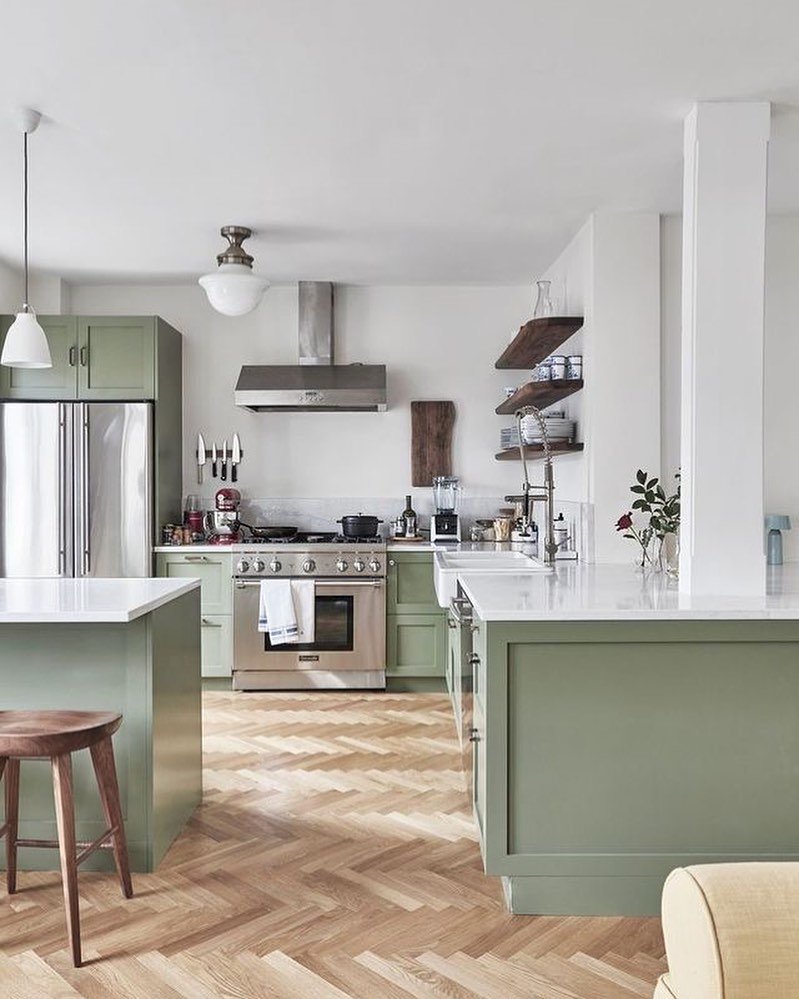
This kitchen design centers on a sophisticated sage green cabinetry palette, providing a calm and earthy foundation for the room. The soft olive tones are elegantly paired with bright white quartz countertops, creating a refreshing contrast that feels both timeless and modern. The centerpiece of the floor is a stunning herringbone wood parquet, which adds a layer of architectural movement and warmth to the overall aesthetic.

Professional-Grade Stainless Accents

The workspace is anchored by high-end stainless steel appliances, including a wide professional range and a sleek French-door refrigerator. This industrial touch is complemented by a matching range hood and a minimalist magnetic knife strip, suggesting a kitchen built for serious home chefs. The cool metallic surfaces balance the soft greens and warm woods, introducing a contemporary edge to the “Modern Organic” theme.

Open Concepts and Vertical Interest

The layout prioritizes flow and accessibility:

  • Floating Wooden Shelves: Instead of heavy upper cabinets, dark-stained live-edge shelves offer a place for curated dishware, keeping the walls looking light and spacious.

  • Dual-Level Surfaces: The peninsula and island provide ample room for both food preparation and casual socializing, topped with clean, seamless white stone.

  • Integrated Support: A structural white pillar is seamlessly incorporated into the countertop design, turning a functional necessity into a clean architectural feature.

Lighting and Tactile Details

Illumination is handled through a mix of classic and modern fixtures, featuring a schoolhouse-style flush mount and minimalist white pendants. A tall, professional-style spring faucet sits above the farmhouse sink, emphasizing utility. The use of dark wood bar stools mirrors the tone of the floating shelves, creating a cohesive “visual thread” of wood accents throughout the breezy, light-filled space.

Architectural Harmony and Earthy Sophistication

This kitchen serves as a masterclass in Modern Transitional design, blending traditional textures with a contemporary color story. The muted sage green cabinetry acts as a sophisticated neutral, offering more personality than gray while maintaining a sense of tranquility. The use of shaker-style doors adds a classic architectural touch that grounds the room’s modern elements.

Structural Flow and Proportions

The kitchen layout utilizes an expansive open-concept footprint that maximizes movement. A prominent white quartz peninsula wraps around a structural support column, integrating the home’s architecture directly into the workspace. This design choice effectively separates the culinary zone from the living area without closing off the space, making it ideal for entertaining.

Geometry and Movement

The flooring is a critical design element, featuring natural oak in a herringbone pattern. This classic layout introduces a sense of direction and luxury, guiding the eye toward the cooking hearth. The repetitive “V” shapes of the wood grain provide a dynamic contrast to the flat, solid surfaces of the sage cabinets and white stone tops.

Curated Culinary Details

The space is detailed with high-functionality features that cater to an organized lifestyle:

  • Live-Edge Shelving: Three tiers of dark-stained wood shelves provide a vertical “moment,” allowing for the display of artisanal ceramics while keeping the backsplash area feeling open and uncluttered.

  • Metallic Cohesion: The stainless steel range and oversized hood create a powerful focal point. This industrial finish is mirrored in the high-arc professional faucet and refrigerator, creating a consistent metallic theme.

  • Zoned Lighting: A blend of vintage-inspired glass flush mounts and sleek, minimalist pendants ensures the space is well-lit for both detailed prep work and soft evening ambiance.

Material Balance and Contrast

The design achieves balance through the “rule of three” in its material palette: matte painted wood, polished stone, and natural timber. The cool undertones of the sage green and white quartz are perfectly offset by the warmth of the herringbone floors and the dark wood of the stools and floating shelves. This careful layering prevents the large, bright space from feeling sterile, resulting in a kitchen that is as cozy as it is high-end.

The Masterful Balance of Color and Texture

This kitchen showcases a “Modern English” aesthetic, where the choice of muted sage green for the cabinetry provides a refreshing alternative to traditional neutrals. The color acts as a soft anchor, harmonizing with the natural environment while offering a sophisticated, matte finish that absorbs light beautifully. This earthy tone is framed by crisp white walls and expansive stone surfaces, creating a bright, airy atmosphere that feels both expansive and grounded.

Dynamic Flooring and Linear Flow

The herringbone oak parquet is the design’s most influential feature, providing a rich, multi-tonal foundation. The intricate pattern adds a layer of formal elegance and visual movement, preventing the large open space from looking flat. The “V” shape of the wood grain creates a sense of direction that leads the eye toward the professional-grade cooking zone, effectively lengthening the room’s appearance.

Professional Utility Meets Domestic Comfort

The layout is tailored for high-performance cooking without sacrificing a lived-in feel:

  • Industrial Focal Point: The heavy-duty stainless steel range and matching chimney hood serve as the kitchen’s “engine room,” signaling a space built for serious culinary activity.

  • Integrated Peninsula: The white quartz peninsula extends the prep area and includes a built-in sink, allowing the cook to face the room and engage with guests or family.

  • Structural Integration: By wrapping the cabinetry and stone around a central white pillar, the design turns a structural obstacle into a purposeful architectural element that defines the kitchen’s boundary.

Strategic Vertical Elements

To maintain the open, breezy feel, the design avoids heavy overhead storage in the primary work zone. Instead, three-tiered floating shelves crafted from dark-stained wood provide a vertical display for curated ceramics and glassware. This choice, paired with a magnetic knife strip and wall-mounted spice jars, keeps essential tools within reach while leaving the backsplash clean and uncluttered.

Layered Lighting and Warm Accents

The lighting plan combines various styles to define different functional areas:

  • Task Lighting: Minimalist white pendants provide focused light over the islands.

  • Ambient Lighting: A glass schoolhouse-style flush mount adds a vintage touch to the ceiling.

  • Natural Contrast: The dark walnut-toned bar stools mirror the floating shelves, creating a “visual sandwich” that pins the light-colored countertops between warm, dark wood accents.

Enchanting Rustic Attic Kitchen

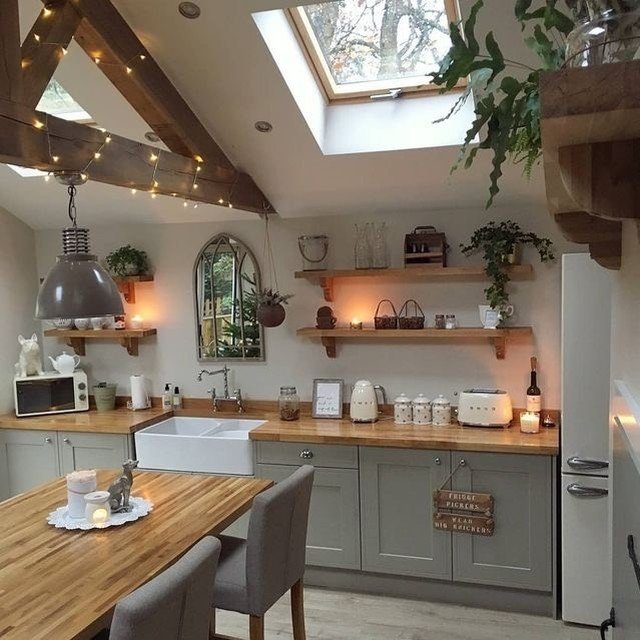
This space exemplifies the charm of a converted attic, utilizing sloped ceilings and exposed timber beams to create a cozy, cocoon-like atmosphere. The design embraces a “Cottagecore” or modern rustic aesthetic, where the structural bones of the home—heavy dark wood rafters—are highlighted rather than hidden. Large skylights flood the room with natural light during the day, while warm fairy lights wrapped around the beams provide a whimsical glow in the evening.

Harmony of Wood and Soft Tones

The material palette is a thoughtful blend of organic warmth and muted sophistication. The honey-toned butcher block countertops provide a continuous, tactile surface that complements the dining table, creating a cohesive wood-on-wood story. These warm surfaces are balanced by soft dove-gray shaker cabinets, which offer a contemporary touch without feeling cold. The use of simple silver knobs and a classic white apron-front farmhouse sink reinforces the timeless, country-inspired character of the kitchen.

Thoughtful Vertical Styling

With the unique geometry of the roofline, the design avoids heavy upper cabinetry in favor of open wooden shelving. This choice serves several functional and stylistic purposes:

  • Airy Atmosphere: The shelves allow the walls to remain visible, making the compact footprint feel larger and more breathable.

  • Curated Display: Traditional corbels support the shelves, which hold a mix of functional kitchenware, trailing greenery, and glowing candles, adding layers of personality.

  • Architectural Mirror: A decorative arched mirror is placed above the sink, mimicking the shape of a window and reflecting light into the deeper corners of the room.

Vintage-Inspired Details and Comfort

The space is rich with small, intentional details that make it feel like the heart of the home. Retro-style cream appliances, including a toaster and kettle, sit alongside polka-dot canisters, contributing to the nostalgic vibe. A prominent industrial-style pendant lamp hangs low over the dining area, defining the transition from the prep zone to the seating area. The addition of plush gray upholstered chairs ensures that the wooden dining table is a comfortable spot for long conversations, blending utility with a high level of domestic comfort.

Architectural Character and Attic Conversion

This kitchen is a masterclass in utilizing unique architectural constraints to create a cozy, “Modern Cottage” sanctuary. Located in what appears to be a converted attic or loft, the room celebrates its exposed structural timber beams, which provide a sense of history and strength. The sloped ceiling is punctuated by a large skylight, which serves as a primary light source, bringing the outdoors in and offering a view of the sky, which helps the compact space feel significantly more expansive and breathable.

Sophisticated Color Palette and Material Mix

The design achieves a perfect balance between cool and warm tones through a carefully curated material selection:

  • Dove Gray Cabinetry: The shaker-style lower cabinets in a soft gray offer a sophisticated, neutral base that feels more contemporary than traditional white.

  • Honey Oak Butcher Block: The continuous use of warm wood for the countertops and the matching dining table creates a seamless visual flow. This thick, tactile material adds an organic, lived-in quality to the workspace.

  • Soft White Accents: The white farmhouse sink and matching retro-style appliances provide bright “pops” that keep the gray and wood palette from feeling too heavy or dark.

Whimsical and Atmospheric Lighting

Lighting is used here not just for utility, but to create a specific emotional mood. The combination of layers is key:

  • Fairy Lights: Wrapped delicately around the dark wood beams, these introduce a whimsical, “starry” effect that emphasizes the height of the ceiling.

  • Industrial Pendant: A large, grey dome pendant light hangs low over the table, creating a “pool” of light that defines the dining zone as an intimate gathering spot.

  • Warm Ambient Glow: The use of real candles and small integrated spotlights creates a soft, flickering warmth that highlights the textures of the wood and the greenery of the plants.

Curated Open Storage and Styling

In place of traditional upper cabinets, which would have felt claustrophobic under the sloped roof, the design utilizes open floating shelves with decorative corbels. This choice allows for “lifestyle styling,” where everyday items like canisters, glassware, and trailing plants become part of the decor. A strategically placed gothic-arched mirror above the sink mimics a window, tricking the eye into seeing more depth and reflecting the natural light from the skylight throughout the room.

Functional Comfort and Nostalgia

Every element is designed to evoke a sense of comfort and nostalgia. The inclusion of Smeg-style retro appliances and a “Fridge Pickers” hanging sign adds a playful, vintage personality to the room. Meanwhile, the plush gray upholstered dining chairs provide a level of comfort typically found in a living room, suggesting that this kitchen is intended to be a multi-functional space for both culinary prep and long, relaxed evenings.

Bold Geometric Urban Oasis

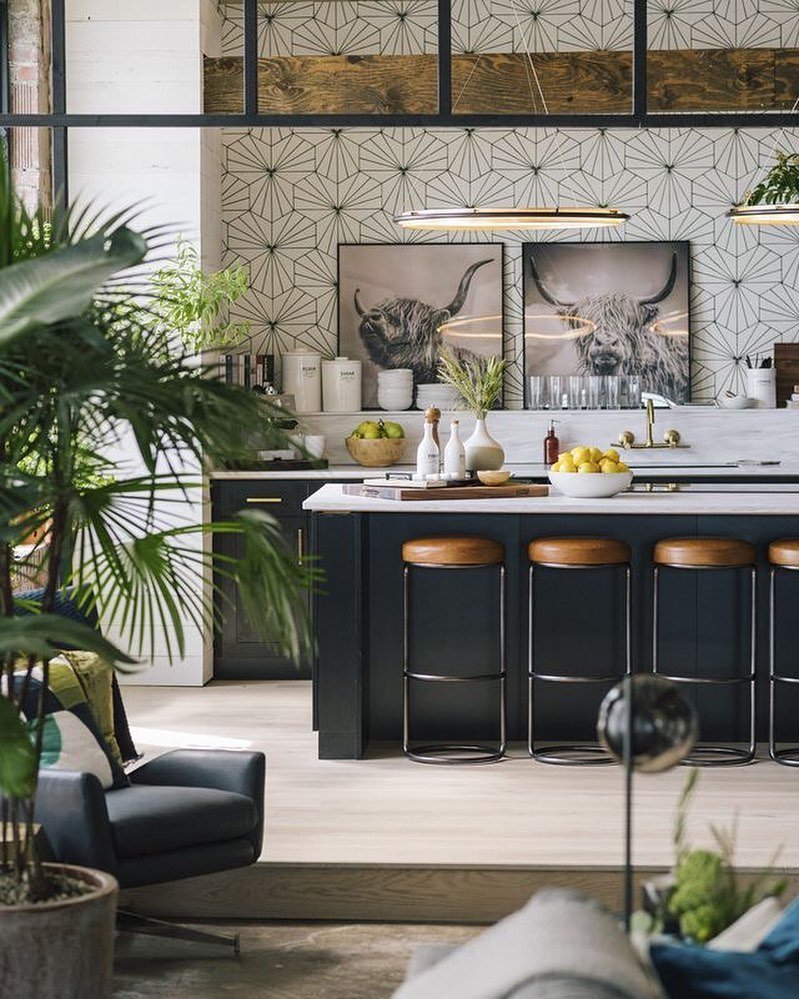
This interior showcases a striking “Modern Industrial” aesthetic that prioritizes bold patterns and rich, dark tones. The focal point is a breathtaking geometric starburst wallpaper that covers the back wall, providing a high-contrast backdrop that instantly draws the eye. This sharp, linear pattern is softened by the inclusion of large-scale nature photography and an abundance of indoor greenery, creating a vibrant, lived-in gallery feel within a functional kitchen space.

Sophisticated Contrast and Luxe Finishes

The design utilizes a “Moody Luxe” color palette to create a sense of grounded luxury:

  • Deep Charcoal Cabinetry: The kitchen island and lower cabinets are finished in a matte dark navy or charcoal, which provides a solid, sophisticated anchor to the room.

  • White Marble Surfaces: The thick marble countertops with subtle gray veining offer a bright, reflective surface that balances the darker cabinetry.

  • Golden Accents: Professional-grade brass fixtures and slim cabinet pulls introduce a warm, metallic glimmer, elevating the industrial vibe with a touch of elegance.

Textural Layering and Seating

The space is expertly layered with a variety of textures to ensure it feels warm and inviting:

  • Cognac Leather Stools: The round, swivel bar stools feature rich tan leather tops, adding a pop of warm color and a soft, organic texture against the dark island.

  • Mixed Flooring: A subtle transition in floor levels separates the kitchen from the living area, utilizing light-toned wood to keep the foundation feeling airy and open.

  • Industrial Framework: Black-framed internal windows and exposed wooden lintels add architectural depth, hinting at an urban loft or repurposed warehouse setting.

Artful Lighting and Curation

Lighting and decor are treated as essential design components rather than afterthoughts. A sleek, minimalist halo pendant hangs over the island, providing a halo of soft light that doesn’t obstruct the view of the bold wallpaper. The countertops are meticulously styled with white ceramic canisters, bowls of fresh citrus, and glass vessels, seamlessly blending culinary utility with high-end interior styling. The result is a kitchen that functions as a high-performance workspace while doubling as a sophisticated social hub.

Sophisticated Urban Loft Aesthetic

This kitchen is a premier example of Modern Industrial design, where bold architectural patterns meet luxurious, moody finishes. The most striking element is the geometric starburst backsplash, which uses sharp black-and-white lines to create a dynamic, high-energy backdrop. This intricate pattern is masterfully balanced by the inclusion of oversized, monochromatic Highland cow artwork, which introduces an organic and slightly whimsical “Modern Farmhouse” touch to an otherwise sharp, urban environment.

Material Depth and Color Blocking

The designer has utilized deep, saturated tones to create a sense of permanence and luxury. The kitchen island is finished in a matte midnight blue or charcoal, providing a heavy, sophisticated anchor that contrasts beautifully with the bright white marble countertops. The subtle gray veining in the stone ties the dark cabinets to the light walls, creating a cohesive visual bridge throughout the culinary zone.

Metallic Warmth and Tactile Finishes

To prevent the high-contrast palette from feeling sterile, warm materials are integrated throughout the workspace:

  • Brushed Brass Hardware: The golden tones of the bridge faucet and slim cabinet pulls add a “jewelry-like” finish to the room, elevating the industrial look.

  • Cognac Leather Seating: The bar stools feature circular, supple tan leather cushions. This choice introduces a soft, organic texture and a warm earthy hue that pops against the dark cabinetry.

  • Natural Timber Accents: An exposed wooden beam above the prep area provides a rustic architectural detail that grounds the modern wallpaper and lighting.

Zoned Living and Greenery

The space is designed for seamless transitions between cooking and relaxing. A slight elevation change in the flooring—from light-toned wood in the kitchen to a lower lounge area—defines the different zones without the need for walls. Large-scale indoor plants, such as the lush fan palm in the foreground, soften the hard lines of the black-framed windows and introduce a vibrant, “Urban Jungle” vitality to the home.

Minimalist Halo Lighting

The lighting choice is a masterclass in subtlety. A minimalist disc pendant hangs horizontally over the island, providing a wide “halo” of illumination that is highly functional for food prep while remaining visually light. This ensures that the beautiful wallpaper and artwork remain the primary focus, while the sleek metallic finish of the light fixture echoes the brass accents found in the hardware below.

Stately Grandmillennial Culinary Heritage

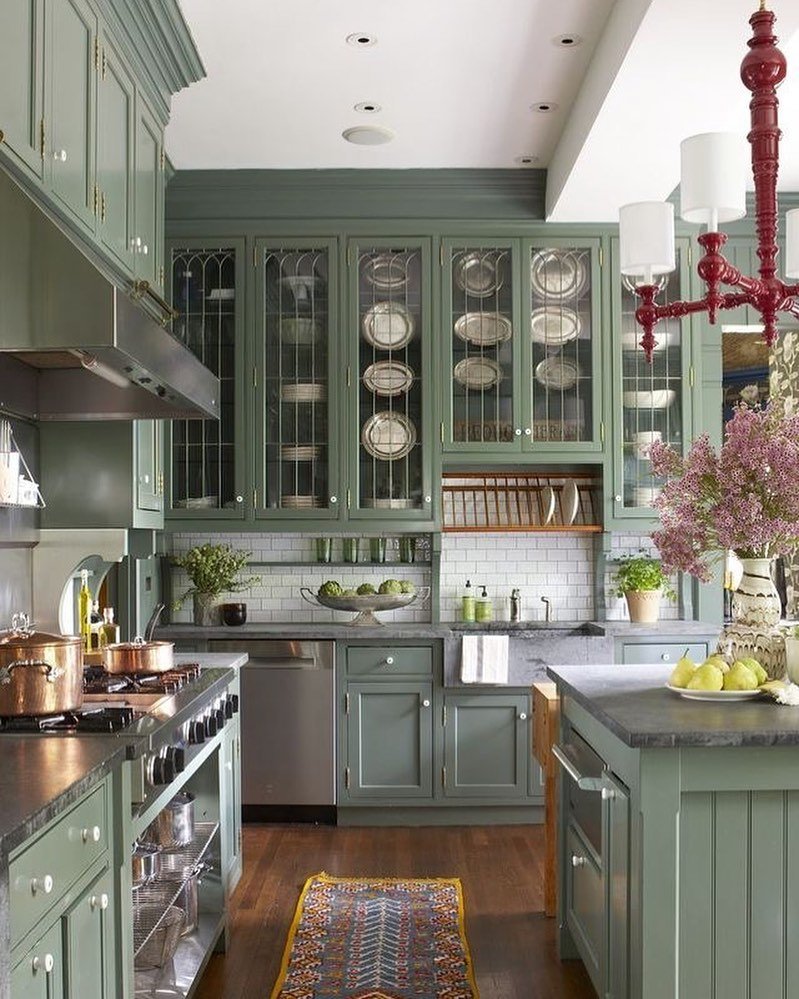
This kitchen is a vivid celebration of “Grandmillennial” style, blending old-world charm with contemporary color confidence. The cabinetry is bathed in a deep forest green, a choice that feels both historic and trendy. The design features floor-to-ceiling cabinetry with intricate crown molding and leaded glass display doors, allowing silver heirloom platters and fine china to serve as a glittering backsplash. This vertical storage solution maximizes the room’s height while maintaining an air of classic European elegance.

Textural Richness and Artisanal Details

The space is a masterclass in layering varied materials to create a high-end, lived-in feel:

  • Soapstone Surfaces: The dark, matte countertops and matching integrated farmhouse sink provide a soft, velvet-like texture that grounds the vibrant green cabinetry.

  • Classic Subway Tile: A crisp white subway tile backsplash with dark grout introduces a clean, rhythmic pattern that reflects light into the prep areas.

  • Copper and Stainless: Professional-grade stainless steel appliances are paired with warm copper cookware, creating a “chef’s kitchen” atmosphere that prioritizes both function and beauty.

Architectural Accents and Whimsical Color

A bold departure from standard kitchen lighting, the red lacquered chandelier serves as a daring focal point. This pop of primary color breaks the monochromatic green scheme and introduces a playful, eclectic energy. Below, a traditional wooden plate rack is built directly into the cabinetry, offering easy access to daily dishware while nodding to traditional English country house design.

Zoned Functionality and Organic Touches

The layout is optimized for a busy household, featuring a large center island with beadboard detailing that provides additional workspace and storage.

  • Floral and Fruit Displays: Oversized vases of purple blooms and bowls of fresh green pears breathe life into the stone and wood surroundings.

  • Textile Layering: A vibrant, patterned runner rug on the dark wood floors adds a soft tactile element and introduces additional colors like yellow and blue, further cementing the eclectic, collected-over-time aesthetic.

  • Integrated Solutions: From the built-in dishwasher to the open shelving for glassware, every element is tucked away or displayed with intentionality, ensuring the kitchen remains a place of both high utility and high style.

Regal English Estate Inspiration

This kitchen is a definitive example of Grandmillennial design, where traditional heritage elements are revitalized with a bold, contemporary color story. The saturated forest green cabinetry is the room’s primary anchor, offering a moody and sophisticated alternative to standard neutrals. This historical hue is elevated by dramatic architectural details, including oversized crown molding and leaded glass-front cabinets that transform everyday dishware and heirloom silver into a curated gallery display.

The Art of High-Contrast Materiality

The design balances the depth of the green cabinetry with a sophisticated mix of stone and tile:

  • Honed Soapstone: The dark, matte countertops and the deep, integrated farmhouse sink provide a tactile, organic feel that adds a sense of permanence and age to the kitchen.

  • Reflective Backsplash: Classic white subway tiles with subtle gray grouting provide a clean, rhythmic backdrop that bounces light throughout the workspace, preventing the dark tones from feeling heavy.

  • Metallic Fusion: The combination of a professional-grade stainless steel range and polished copper pots introduces a “functional luxury” aesthetic, signaling a kitchen that is as much about high-end cooking as it is about high-end style.

Bold Color Theory and Focal Points

One of the most daring elements is the crimson lacquered chandelier. By introducing a primary red against the green cabinetry, the design utilizes a complementary color scheme to create a high-energy visual spark. This whimsical, “maximalist” touch breaks the formality of the room and injects a sense of personality and playfulness that is central to modern eclectic interiors.

Heritage Features and Open Storage

The cabinetry incorporates specialized storage that nods to traditional English country homes:

  • Built-in Plate Rack: A natural wood plate rack is positioned over the sink for both convenience and visual warmth, breaking up the expanse of painted wood.

  • Beadboard Detailing: The kitchen island features vertical beadboard paneling, adding a layer of subtle texture and “cottage-style” charm.

  • Appliance Integration: A stainless steel dishwasher is seamlessly tucked between the shaker drawers, maintaining a balance between modern convenience and classic furniture-like cabinetry.

Layered Textiles and Organic Life

To soften the hard surfaces of stone and wood, the design incorporates vibrant textiles and natural elements. A patterned runner rug with yellow and blue accents introduces a global, traveled feel to the dark hardwood floors. Meanwhile, an oversized vase of seasonal purple blossoms and bowls of fresh citrus serve as “living” decor, bringing a burst of organic color and freshness to this highly structured and stately culinary environment.

Contemporary Rustic Charm

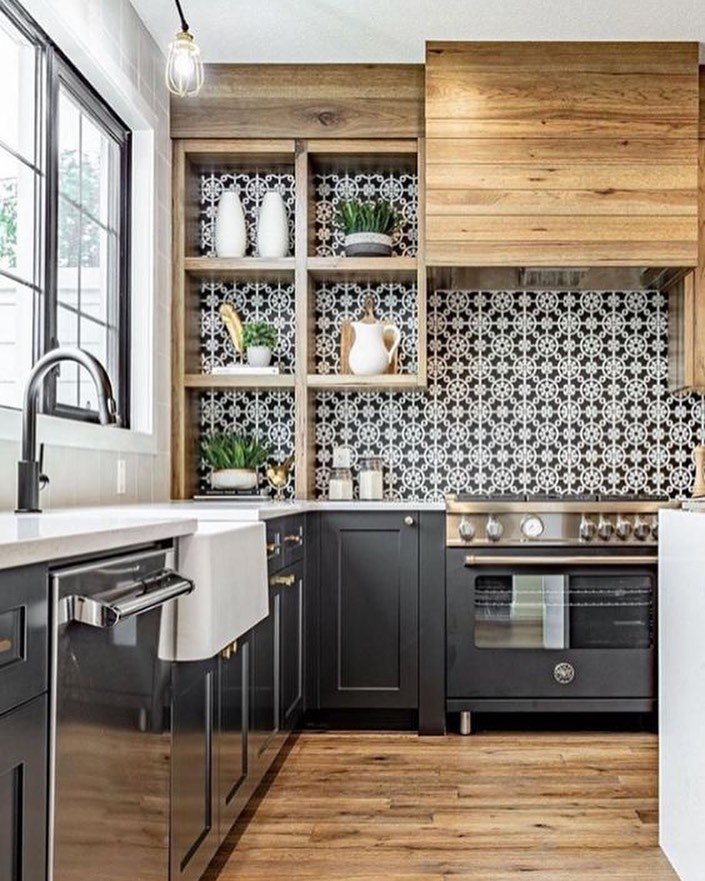
This kitchen is a masterclass in Modern Organic design, skillfully blending high-contrast elements with natural, warm materials. The visual centerpiece is the geometric tile backsplash, featuring an intricate black-and-white pattern that adds an energetic, artisanal feel to the workspace. This bold graphic is perfectly balanced by the use of reclaimed wood accents, most notably in the massive custom vent hood and integrated shelving unit, which introduce a sense of history and earthiness.

Sleek Cabinetry and Industrial Edge

The design utilizes a sophisticated color palette to create depth and character:

  • Matte Charcoal Cabinets: The dark lower cabinetry provides a strong, moody foundation that grounds the room’s more detailed patterns.

  • Professional Black Range: The high-end stove blends seamlessly into the dark cabinetry, accented by stainless steel hardware that lends a subtle industrial touch.

  • Matte Black Fixtures: A sleek gooseneck faucet and minimalist pendant light echo the dark tones of the cabinets, creating a cohesive hardware story.

Texture and Light Integration

The space prioritizes a rich sensory experience through varied textures:

  • Natural Wood Shelving: The built-in wooden cubes provide a warm “frame” for white ceramics and greenery, allowing the intricate tile pattern to peek through.

  • Farmhouse Functionality: A crisp white apron-front sink breaks up the dark countertop run, offering a clean focal point that reflects the light coming from the large window.

  • Warm Oak Floors: The medium-toned wood flooring ties the entire room together, mirroring the warmth of the overhead woodwork.

Curated Architectural Details

Every element in this kitchen serves a purpose in the overall aesthetic. The horizontal wood planking on the range hood creates a sense of width, while the thin-framed window allows for a clear view of the outdoors, making the indoor greenery feel like an extension of nature. The result is a highly functional kitchen that feels both luxurious and incredibly welcoming, blending sharp modern lines with the soft, imperfect beauty of natural timber.

The Interplay of Pattern and Raw Timber

This kitchen is a definitive study in Modern Organic design, where the tension between sharp graphic patterns and raw, natural materials creates a sophisticated energy. The monochromatic encaustic-style backsplash acts as a high-contrast tapestry, providing a rhythmic, artistic backdrop. By framing this busy pattern within the thick, structural lines of a custom oak shelving unit, the design prevents the tile from feeling overwhelming, instead turning the entire wall into a piece of architectural furniture.

Masterful Material Sandwiching

The aesthetic success of the space is found in its vertical layering. The designer has “sandwiched” high-contrast elements between warm, organic woods:

  • The Upper Canopy: A massive, horizontal-planked wood vent hood commands the upper third of the room, adding a sense of rustic weight and warmth.

  • The Middle Contrast: The crisp white quartz countertops and a prominent apron-front farmhouse sink provide a bright, reflective “breathing space” between the dark cabinets and the patterned wall.

  • The Foundation: Deep matte charcoal cabinetry grounds the room, while the honey-toned wood floors mirror the vent hood above, creating a cohesive visual loop of natural timber.

Professional utility with an Artisanal Soul

While the kitchen feels like a curated gallery, it is highly optimized for performance. The professional-grade black range is integrated directly into the dark cabinetry run, making it feel like a custom built-in feature rather than a standalone appliance. Above the stove, the shelving unit is not just decorative; it provides immediate access to frequently used items like white ceramic pitchers and bowls, showcasing a “form follows function” philosophy where utility is the decor.

Architectural Light and Line

The design utilizes linear elements to guide the eye and define the space:

  • Vertical and Horizontal Lines: The vertical lines of the shaker cabinet doors are contrasted by the horizontal grain of the wooden hood, creating a balanced geometric grid.

  • Minimalist Hardware: Thin, matte black hardware—from the sleek bridge faucet to the cage-style pendant light—adds a modern “sketch-like” quality to the room, punctuating the space without cluttering it.

  • Natural Connectivity: The large, black-framed window serves as a live painting, bringing in natural light that highlights the depth of the wood grain and the intricate detail of the tilework, ensuring the dark palette remains vibrant and inviting throughout the day.

Advanced Material Logic and Vertical Rhythm

The visual impact of this kitchen lies in its “vertical rhythm,” where the eye is led from the heavy, grounded charcoal cabinetry up through a high-energy pattern and into the warm, expansive timber canopy. This design strategy uses a “weighted” base to support a lighter, more artistic upper half. The use of natural wood for the range hood is a significant departure from standard stainless steel, transforming a bulky appliance into a sculptural focal point that radiates warmth and organic texture.

The “Frame within a Frame” Technique

The designer employs a sophisticated architectural technique by building a structural wood grid directly over the patterned backsplash. This serves several purposes:

  • Visual Anchoring: It “contains” the intricate tile pattern, preventing the graphic print from feeling chaotic or distracting.

  • Depth and Shadow: The thickness of the wooden shelves creates physical depth, allowing shadows to play across the tiles and highlighting the three-dimensional nature of the carpentry.

  • Curated Voids: By leaving some shelves partially empty, the design allows the “jewelry” of the tilework to shine through, turning the storage area into a dynamic art installation.

Sophisticated Color Blocking

Rather than using a single color for the entire kitchen, the space utilizes tonal blocking to define different functional zones:

  • The Prep Zone: The sink area is characterized by crisp white and reflective glass, emphasizing cleanliness and natural light.

  • The Heat Zone: The cooking area is defined by dark matte finishes and warm wood, creating a “hearth-like” feel that is cozy and professional.

  • The Transition: The matte black farmhouse sink and black-framed windows act as the connective tissue, tying the dark lower elements to the dark patterns on the wall.

Tactical Texture and High-Performance Finishes

Every surface has been chosen for its tactile quality. The matte finish of the charcoal cabinets absorbs light to prevent glare, while the polished quartz of the countertops reflects light to brighten the workspace. The reclaimed-style flooring features a varied grain and knot pattern, which is strategically chosen to hide the wear and tear of a high-traffic kitchen while echoing the artisanal spirit of the custom woodwork. This combination of “perfect” man-made surfaces and “imperfect” natural materials is the hallmark of a high-end, contemporary home.

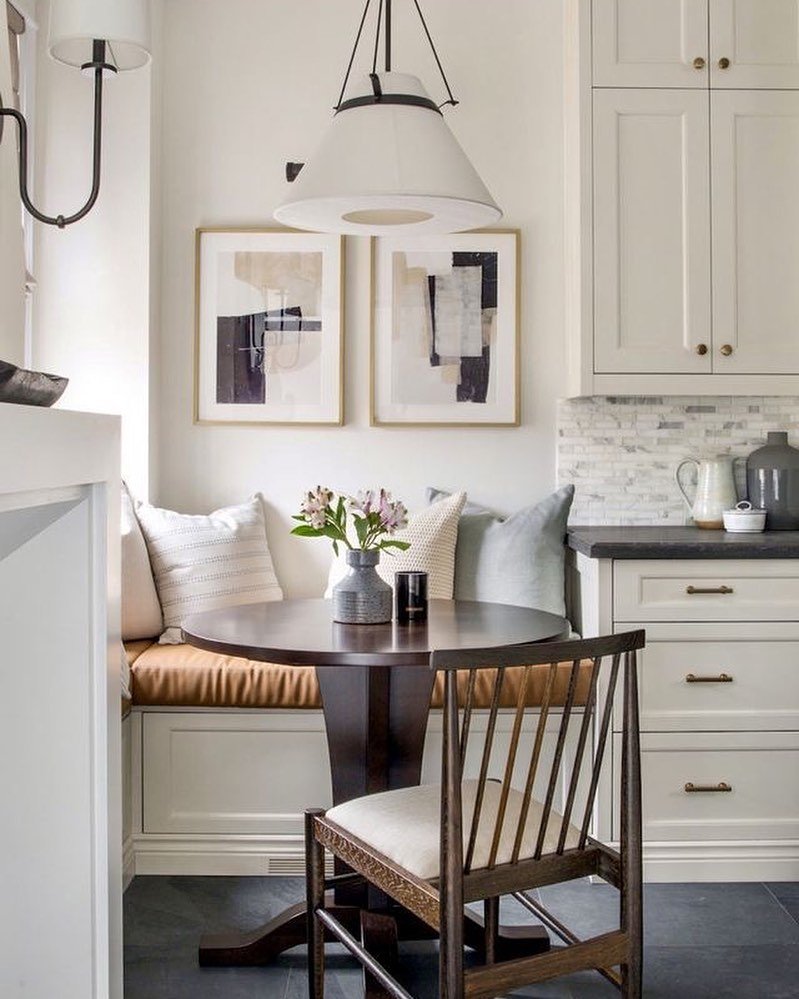
Elegant Transitional Breakfast Nook

This corner demonstrates a sophisticated “Transitional” style, seamlessly blending traditional cabinetry with modern, artistic accents. The space is anchored by a built-in banquette featuring creamy off-white paneling that matches the kitchen cabinetry, creating a cohesive flow between the dining and prep areas. A warm, cognac leather seat cushion adds a touch of luxury and organic texture, while a selection of soft-toned throw pillows ensures the nook feels inviting and comfortable.

Harmonious Material Palette

The design utilizes a high-contrast but muted color story to achieve a timeless look:

  • Two-Tone Cabinetry: Crisp white upper and lower cabinets are paired with a dark slate-gray countertop, providing a sharp, clean edge to the workspace.

  • Textured Backsplash: A classic marble mosaic backsplash introduces subtle movement and gray veining, bridging the gap between the dark counters and light walls.

  • Dark Wood Furniture: The pedestal bistro table and spindle-back chair in a deep espresso finish provide a solid, grounded contrast to the light-filled corner.

Curated Art and Lighting

Lighting and wall decor are used to define the nook as a distinct “zone” within the home:

  • Oversized Cone Pendant: A large white pendant light with black hardware hangs low over the table, creating an intimate atmosphere for morning coffee or casual meals.

  • Symmetric Abstract Art: A pair of framed abstract prints in neutral tones adds a gallery-like quality to the space, pulling together the black, tan, and cream hues found throughout the room.

  • Classic Sconces: Traditional black swing-arm sconces flank the area, providing adjustable ambient light and an extra layer of metallic detail.

Functional and Stylish Details

Small, intentional touches elevate the functionality of the space:

  • Integrated Storage: The base of the window seat features recessed paneling that suggests hidden storage drawers, perfect for keeping linens or seasonal items out of sight.

  • Natural Accents: A simple ceramic vase with fresh pink blooms and a textured stone bowl introduce life and softness to the structured lines of the furniture.

  • Warm Metallic Hardware: Slim brass or bronze pulls on the drawers add a subtle glimmer, providing a high-end finish that complements the warm leather and wood tones.

Sophisticated Proportions and Visual Balance

This breakfast nook is a masterclass in Transitional symmetry, designed to maximize a small footprint without sacrificing style. The arrangement is anchored by the L-shaped banquette, which utilizes “dead space” under the window to create high-capacity seating. By extending the kitchen’s off-white shaker cabinetry into the seating base, the designer ensures the nook feels like a permanent architectural feature rather than an afterthought, creating a seamless visual transition from the culinary zone to the dining area.

Material Contrast and Sensory Depth

The design relies on a specific “material sandwich” to create depth and warmth:

  • The Base: Dark slate-gray floor tiles provide a heavy, grounded foundation that contrasts with the airy cabinets.

  • The Middle Layer: A cognac leather cushion introduces a rich, organic texture that is both durable and visually luxurious. The warmth of the leather is echoed in the tan tones of the adjacent abstract artwork.

  • The Upper Layer: Crisp white walls and a light-reflecting marble subway tile backsplash keep the eye moving upward, making the ceiling feel higher and the corner more expansive.

Strategic Curation of Furniture

The choice of a pedestal bistro table is a tactical move for small-space living; the central leg allows for easier movement in and out of the banquette compared to a traditional four-legged table. The dark walnut-stained wood of the table and the spindle-back chair provide a “visual anchor” that pops against the lighter surroundings, while the chair’s open-back design maintains a sense of transparency and flow.

Lighting as a Zonal Marker

Three distinct lighting sources work together to define the ambiance:

  • The Halo Effect: The large white cone pendant acts as the primary “zone marker,” casting a focused pool of light that makes the dining area feel like a private room within a room.

  • Directional Tasks: A black swing-arm sconce provides adjustable task lighting, perfect for reading at the table.

  • Architectural Detail: A classic shaded sconce on the far left introduces a traditional, library-like feel, softening the sharp lines of the modern art and cabinetry.

Artistic Continuity and Finishing Touches

The space is tied together through symmetrical styling. The two framed abstract prints are hung with precision, their color palette of ink black, sand, and cream acting as a “mood board” for the entire room. Small details—like the brushed brass cabinet pulls, the delicate veining in the marble, and the soft sage and blue tones of the throw pillows—introduce a subtle “Modern Organic” layer that makes the high-end design feel accessible and comfortably lived-in.

Mastery of “The Third Space”

This design represents a perfect execution of the “third space” within a home—a versatile area that serves as a breakfast nook, a home office, or an intimate dinner setting. The built-in banquette is the structural hero here; by utilizing a corner configuration, it saves significant floor space while providing a cozy, enclosed feel that freestanding chairs cannot achieve. The use of recessed paneling on the bench base mirrors the kitchen’s cabinetry, ensuring the dining area is architecturally integrated rather than appearing as an add-on.

The “Quiet Luxury” Color Story

The palette is a sophisticated exercise in tonal layering. Instead of stark whites, the designer uses a spectrum of creams, sands, and taupes to create warmth.

  • Warmth via Leather: The cognac leather seat acts as the primary color pop, offering a rich, buttery texture that will only improve with age and wear.

  • Contrast via Charcoal: The deep slate-gray countertops and dark-stained furniture prevent the room from feeling “washed out.” This dark “outline” gives the space a clear definition and a modern, high-end edge.

  • Neutral Continuity: The abstract art pieces serve as a visual bridge, containing every hue present in the room—black, tan, white, and gray—thereby unifying the entire design scheme.

Ergonomics and Small-Space Logic

Beyond aesthetics, the furniture selection follows a strict functional logic:

  • Pedestal Dynamics: A round table with a center pedestal is the most ergonomic choice for a banquette, as it eliminates corner legs that would collide with the knees of those sliding onto the bench.

  • Vertical Expansion: The oversized cone pendant draws the eye upward, highlighting the ceiling height and making the small corner feel grander. Its white finish blends with the walls, providing light without adding visual “clutter.”

  • Shadow and Light: The placement of the swing-arm sconce creates a secondary layer of light. By casting shadows downward, it adds a “moody” dimension to the nook during evening hours, transforming it from a bright breakfast spot into a cozy lounge.

Textural Synthesis

The design achieves a “Modern Organic” feel through its varied finishes. You have the cool smoothness of the marble backsplash, the supple grain of the leather, the raw grain of the dark wood, and the soft weave of the linen pillows. This variety ensures that even though the color palette is limited, the room feels rich and multi-dimensional. The result is a highly disciplined design that feels effortless, comfortable, and deeply personalized.


Similar Posts

Leave a Reply

Your email address will not be published. Required fields are marked *