Modern Yellow Kitchen Designs and Decor Ideas
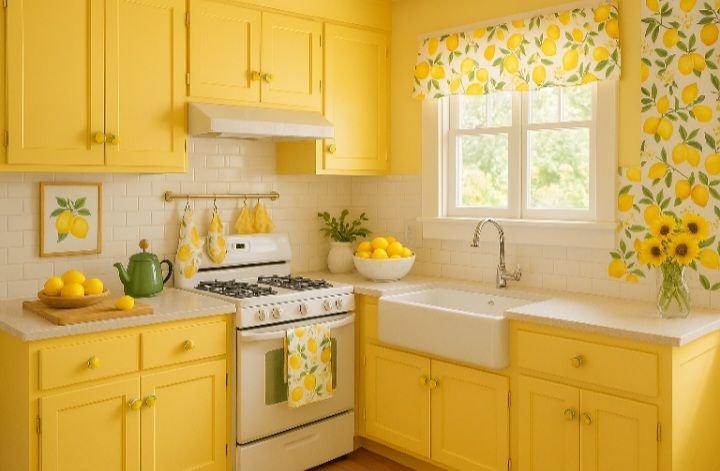
The Lemon Kitchen: A Bright & Cheerful Interior Design
Introduction
This kitchen is one of the most joyful and visually striking spaces you will ever come across. It is designed around a single, happy theme — a bright citrus-inspired world that fills every corner with warmth and energy. Walking into this kitchen would instantly lift your mood. The bold use of color, the consistent decorative theme, and the careful attention to every small detail make this space truly stand out. It is not just a place to cook — it is a place that makes you feel something the moment you step inside.
The Color Palette
The first thing that grabs your attention is the strong, sunny yellow that covers absolutely everything — every upper cabinet, every lower cabinet, every wall surface that is not tiled. This is not a shy or pastel yellow. It is a deep, confident, warm yellow that fills the room with energy. Many people would be afraid to paint an entire kitchen in such a bold color, but here it works perfectly. The secret lies in the balance. The white subway tile backsplash running along the cooking area provides a clean, neutral surface that gives your eyes a place to rest. Without that white tile, the yellow might feel too intense. Together, they create a beautiful contrast that feels both lively and comfortable. Small touches of soft green from the plant, the cabinet knobs, and the leaf patterns in the decorations complete the color story and add a natural, earthy freshness to the overall look.
The Citrus Theme Throughout the Kitchen
What truly sets this kitchen apart is how completely and consistently the citrus theme has been carried through every single element of the space. This is not a theme that appears in just one or two places — it is everywhere, and that total commitment is exactly what makes it so charming and memorable.
- The window curtain or valance at the top of the window is made from a bright fabric printed with fruit and leaf patterns, framing the natural light beautifully.
- The wallpaper on the right-side wall features a large, bold print of fruits, flowers, and green leaves, adding depth, texture, and a dramatic decorative statement to that corner of the room.
- The dish towels hanging from the oven handle are printed with the same fruity pattern, showing that even the most functional items in the kitchen have been chosen to match the overall theme.
- The oven mitts hanging on the small rail above the stove continue the same pattern, creating a sense of unity and intention across every accessory.
- A small framed botanical print hangs on the wall near the stove, acting like a piece of art that ties the natural theme together in a refined and elegant way.
- A bowl of real fruit sitting on the counter blurs the line between decoration and everyday life in the most delightful way, making the theme feel lived-in and genuine rather than forced or artificial.
Every single item tells the same story. That kind of consistency is rare and takes both vision and dedication to achieve.
Appliances and Fixtures
Despite the boldness of the color and theme, the appliances and fixtures are kept clean and simple, which is a very smart design choice. The white gas stove sits at the center of the kitchen and does its job without drawing too much attention away from the overall design. It is classic and functional. The deep farmhouse-style apron sink is one of the standout features — its large, wide basin gives the kitchen a warm, rustic, cottage-like character that perfectly suits the cheerful, nature-inspired theme. The chrome or silver faucet adds a touch of elegance without being too flashy. The white range hood above the stove keeps the cooking area clean and tidy in appearance. Even the cabinet knobs, small as they are, have been carefully chosen in a muted yellow-green tone that adds a subtle, earthy contrast to the bright yellow cabinets without clashing.
Natural Light and Greenery
One of the most important elements of this kitchen is the large window positioned above the sink. It allows a generous amount of natural light to pour into the space, making the yellow walls glow warmly and preventing the room from ever feeling dark or closed in. Through the window, you can see green trees outside, which creates a beautiful visual connection between the cheerful interior and the natural world beyond. This connection feels intentional and deeply satisfying. Adding to this sense of nature, a small potted green plant sits on the windowsill, bringing a living, breathing element into the kitchen that keeps the space feeling fresh, alive, and organic.
The Mood and Atmosphere
The overall mood of this kitchen is one of pure happiness and comfort. It feels like a space that belongs in a charming countryside cottage or a cozy home by the sea. It is the kind of kitchen where you would want to spend hours — baking something sweet, preparing a slow breakfast, sipping tea while watching the garden outside. There is nothing cold or sterile about it. Everything feels warm, personal, and full of care. The person who designed this space clearly wanted it to bring joy, and they succeeded completely.
Design Lesson
The biggest lesson this kitchen teaches is the power of fully committing to a vision. Many people play it safe when decorating their homes, adding small touches of a theme here and there without ever going all the way. This kitchen shows what happens when you trust your idea completely and carry it through without hesitation. The result is a space that feels cohesive, intentional, deeply personal, and absolutely unforgettable. It proves that boldness, when executed with care and consistency, always wins.

The Modern White Kitchen: Clean, Warm & Elegantly Simple
Introduction
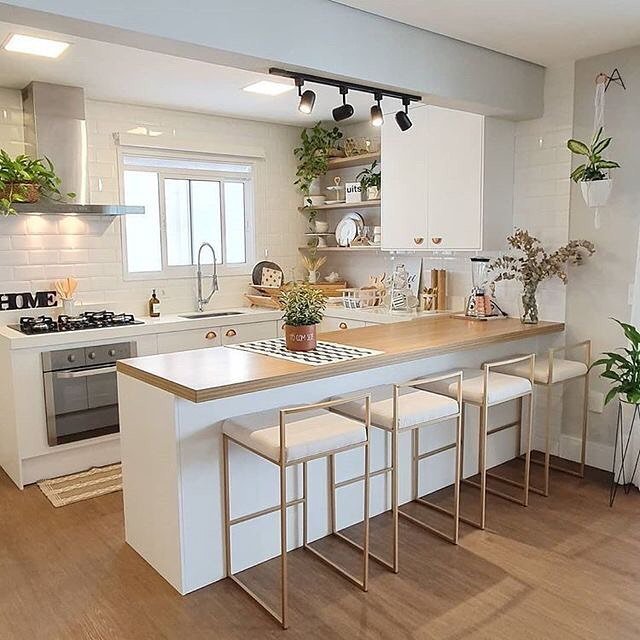
This kitchen stands as a wonderful example of contemporary home design at its finest. It is bright, neat, and beautifully balanced between cool white surfaces and warm natural wood finishes. The space feels open, well-organized, and welcoming all at once. It is the kind of kitchen that could easily appear in a home décor publication, yet still carries the genuine warmth of a real living space. Every element has been selected with thought and care, and the outcome is a room that is both highly practical and visually pleasing. From the smooth white cabinets to the gold-framed bar stools, from the hanging indoor plants to the natural wood open shelves, this kitchen reflects the taste of someone who values both good design and everyday comfort equally.
The Kitchen Island
The central island is clearly the heart of this kitchen. It serves several roles at once — a surface for food preparation, a dining counter, a social space, and a visual focal point. The island has a light wood top that provides warmth against the white base below. A small black and white geometric tray sits on the surface, adding a playful pattern detail to the otherwise soft and neutral setting. A small green potted plant placed on the island brings freshness and a natural touch right to the centre of the room.
On the outer facing side of the island, three bar stools are arranged neatly, inviting people to sit, eat, or simply spend time near the kitchen. These stools are a very strong design choice — they feature padded cream seats and slender gold metal legs, making them feel both comfortable and stylish. They are contemporary without being unwelcoming, and their warm metallic legs tie in beautifully with the other gold details across the room.
Cabinets and Storage
The kitchen uses a tidy arrangement of flat white cabinets both above and below the counter line. These cabinets are clean and minimal in style, with gold or warm-toned drawer handles appearing in select spots to add a polished finishing touch. The absence of heavy decorative details keeps the design feeling light and uncluttered.
A particularly attractive storage feature is the set of open wooden shelves fixed to the wall near the window. These shelves hold a mix of useful and decorative items — dishes, bowls, small containers, and cups — arranged in a relaxed but considered way. The warm wood of the shelves echoes the island surface and the floor, maintaining the consistent natural tone running through the design. Open shelving adds personality to any kitchen and gives the space a lived-in, genuine quality that closed cabinets alone cannot provide.
Appliances and Fixtures
The appliances are sleek, modern, and well-placed within the overall layout. A gas stove with multiple burners sits along the back cooking wall, looking both professional and practical. Below it sits a built-in oven in a matching finish, contributing to the clean and streamlined appearance of the cooking zone. Above the stove, a wall-mounted extraction hood handles ventilation efficiently while maintaining the tidy visual flow of the space.
The kitchen sink is positioned along the back counter near the window, paired with a tall and gracefully curved silver tap. Placing the sink near a window is a practical and thoughtful decision, as it brings natural light into the washing area and provides a pleasant outlook for whoever is standing there.
On the island surface, a small kitchen appliance in a soft rosy tone adds a gentle hint of colour and personality to the neutral setting — a small but charming detail that reveals the personal touch of the homeowner.
Lighting
Lighting plays a significant role in making this kitchen feel as good as it looks. The most eye-catching lighting feature is the track lighting system mounted on a dark rail running across the ceiling above the island. Several adjustable spotlight fittings are attached to this rail, each one able to be pointed precisely where light is needed. This type of lighting is both very practical and visually striking — it gives the kitchen a subtle professional edge while still sitting comfortably within the warm and relaxed overall feel of the room.
Alongside the track lighting, a large window behind the stove area allows natural daylight to fill the space throughout the day. A flush ceiling light panel provides soft, even general lighting across the whole room. Together, these three light sources ensure the kitchen is always well-lit and pleasant at any hour.
Plants and Greenery
One of the most charming qualities of this kitchen is the generous use of indoor plants. Green leafy plants are placed throughout the space — on the open shelves, hanging near the window, sitting on the island, and resting in corners on the floor. This approach brings a natural, organic softness into what could otherwise feel like a very structured and polished environment.
The plants include trailing vines, broad-leafed varieties, and small potted specimens, all in shades of lively, fresh green. They sit beautifully against the white walls and cabinets, and their natural, uneven forms add visual interest and a relaxed energy to the room. The presence of so many thriving plants also gives the impression of a home that is genuinely cared for and enjoyed.
The Floor
The pale oak wooden flooring running through the kitchen is one of the most grounding features of the space. It is warm in colour, smooth underfoot, and laid in wide planks that make the floor feel generous and open. A small natural woven mat placed near the stove area adds a cosy, tactile layer to that part of the room and softens the overall hardness of the kitchen surfaces. It is a small detail that contributes a great deal of everyday warmth to the cooking zone.
The Overall Mood and Atmosphere
The mood of this kitchen is one of calm, modern comfort. It feels like a space put together by someone who appreciates good design but also understands that a kitchen must work well for daily life. Nothing here feels excessive or overdone. Every item has a function, and every item looks good while carrying out that function. The kitchen feels tidy without being cold, stylish without being distant, and personal without feeling busy or crowded.
It is the kind of kitchen where mornings feel enjoyable, where meals are a pleasure to prepare, and where evenings spent sitting at the island with people you care about feel natural and easy.
Design Lesson
This kitchen demonstrates the strength of simplicity and consistency in interior design. By keeping the colour choices to white, wood, and gold, and by repeating those tones throughout every part of the room, the result is a space that feels completely unified and settled. The plants introduce life. The lighting adds focus and warmth. The bar stools create a social dimension. The open shelves bring in character. Every part contributes something meaningful, and nothing feels out of place.

The Natural Dining Space: Earthy, Warm & Quietly Beautiful
Introduction
This dining area is a stunning example of natural, organic interior design at its most refined. It is a space that feels grounded, calm, and deeply connected to the natural world. Every material used here — wood, rattan, linen, woven fiber — speaks the same quiet language of nature and simplicity. The room does not try too hard or shout for attention. Instead, it draws you in gently with its soft colours, warm textures, and thoughtful arrangement. It is the kind of space where you feel immediately at ease, where conversations flow naturally, and where a meal shared with others becomes something genuinely special. This dining area is proof that great interior design does not always need bold colours or dramatic gestures — sometimes, the most beautiful spaces are the ones that feel most like the natural world around us.
The Colour Palette
The colours used throughout this space are soft, muted, and deeply harmonious. The dominant tones are warm beige, soft sage green, pale grey, and natural wood brown — a palette drawn entirely from nature itself. The walls carry a quiet, dusty sage green tone that feels both calming and sophisticated. This is not a bright or vivid green but rather a muted, aged version of the colour that feels timeless and gentle on the eyes.
The natural wood tones of the ceiling beams, the table surface, the mirror frame, and various accessories reinforce the earthy warmth of the space. Wood appears everywhere here, and its consistent presence ties the entire room together. Against these warm wood tones, the soft white linen tablecloth provides a clean, fresh surface that lightens the overall mood without disrupting the natural warmth of the room.
Small touches of dusty blue-green appear in the cushions, the plates, and the cutlery handles, adding a gentle cool note that balances the warmth of the wood and prevents the palette from feeling too heavy or too similar in tone throughout.
The Woven Pendant Light
The single most striking feature of this dining space is undoubtedly the large woven pendant light hanging directly above the table. This light fitting is made from woven natural fiber — likely bamboo or rattan — and is constructed in a tiered, drum-like shape that is both sculptural and functional. It is large, confident, and beautifully crafted, serving as the visual centrepiece of the entire room.
The open weave pattern of the shade allows light to pass through in all directions, casting a warm, dappled glow across the table and the surrounding space. When lit, it would create beautiful patterns of light and shadow across the ceiling and walls, adding a magical, organic quality to the atmosphere. Even unlit, as it appears in this image, it is a remarkable decorative object in its own right — a piece of handcraft that brings artisan quality and natural texture into the heart of the room.
The choice of a woven natural fiber light fitting over a dining table is a very deliberate and very effective design decision. It reinforces the natural theme of the space, adds considerable visual drama, and creates an intimate, sheltered feeling above the table that makes the dining area feel like its own distinct and special zone within the room.
The Dining Table and Setting
The dining table itself is a strong, solid piece finished in warm natural wood. Its surface is clean and honest, without any artificial coating or heavy staining, allowing the natural grain and character of the wood to remain visible and appreciated. The table is long enough to seat several people comfortably, making it a genuinely social and generous piece of furniture.
The table has been set with considerable care and a wonderful eye for detail. A soft white linen tablecloth or table runner covers the centre of the surface, adding a layer of softness and elegance to the setting. On top of this, round woven placemats in natural fiber are positioned at each seat, providing a warm and textural base for each place setting.
The plates and dishes are in a muted, earthy grey-green tone that coordinates beautifully with the cushions on the bench and the overall colour palette of the room. They are stacked in a relaxed, layered way that feels casual and inviting rather than stiff or formal. The cutlery features handles in a soft teal blue tone, which is a lovely detail — small but meaningful, adding a quiet pop of colour to each setting without disrupting the natural harmony of the table.
At the centre of the table, a collection of small glass vases holds fresh green and white flowers and foliage, arranged in a relaxed, natural style. This floral centrepiece is one of the most charming aspects of the whole dining setup — it is simple, fresh, and alive, bringing the garden indoors in the most unpretentious and beautiful way. The transparent glass vases allow the stems and water to be seen, adding another layer of natural, honest beauty to the arrangement.
The Built-in Bench Seating
Along one side of the dining table sits a built-in upholstered bench, which is a practical and aesthetically pleasing seating solution. This bench runs the full length of the table on that side and is topped with soft, comfortable cushioning in a neutral, warm-toned fabric. Against the bench, several scatter cushions in dusty sage green and soft blush tones are arranged in a relaxed and welcoming manner.
This style of bench seating is popular in European homes and creates a very particular kind of warmth and intimacy at the dining table. It allows several people to sit together side by side in a way that feels communal and connected. It also makes very efficient use of space and, when dressed with cushions as it is here, looks extremely inviting and comfortable. The cushion colours — soft green and gentle pink — pick up tones from across the room and add to the sense of a carefully considered and unified design.
The Large Mirror
Behind the bench seating, a large rectangular mirror with a natural wood frame is mounted on the wall. This mirror is one of the most clever and impactful features of the space. Firstly, it reflects the kitchen area behind the dining room, creating a visual connection between the two spaces and giving a sense of depth and continuity to the overall floor plan. Secondly, and perhaps more importantly, it reflects the window opposite, bouncing natural light deep into the dining area and making the room feel significantly brighter and more spacious than it would otherwise be.
The natural wood frame of the mirror is wide and substantial, giving the mirror the quality of a large piece of wall art rather than simply a functional reflective surface. It adds warmth and structure to the wall while softening what might otherwise be a flat, plain surface. The reflection of the sage green kitchen cabinets, the stainless steel appliances, and the garden view through the window all combine within the mirror to create a rich, layered visual experience that adds enormous depth and interest to the dining room.
The Exposed Ceiling Beams
Looking upward, the ceiling of this space features exposed wooden beams arranged in a grid-like pattern across the ceiling surface. These beams are pale and natural in tone, clearly crafted from the same family of wood materials used throughout the rest of the room. They add architectural interest, warmth, and a strong sense of character to the space that a plain, flat ceiling simply could not provide.
Exposed beam ceilings of this kind are associated with farmhouse, countryside, and traditional European home design. They give a room a sense of history and craft, suggesting a space that has been built with care and quality. Here, they are kept pale and clean rather than dark and heavy, which keeps the overall mood of the room light and airy rather than rustic and enclosed. Small ceiling spotlight fixtures are also visible along the beams, providing practical directed lighting to supplement the main pendant light above the table.
Connection to the Kitchen
Through the large mirror and through the open plan layout, the kitchen area is clearly visible beyond the dining space. The kitchen features sage green cabinetry in a panelled, traditional style that matches the wall colour of the dining area perfectly. A dark stone or slate countertop provides a strong contrast against the green cabinets, and stainless steel appliances including an oven are visible, giving the kitchen a practical, well-equipped feel. A small arrangement of fresh flowers or a plant sits on the kitchen counter, carrying the natural greenery theme from the dining area into the cooking space as well. This visual and physical connection between the dining room and the kitchen creates a very natural, flowing living environment where cooking and eating feel like connected parts of the same enjoyable daily experience.
The Flooring
The pale, wide-planked wooden flooring running through both the dining area and the hallway beyond is another key element that unifies the entire space. It is warm in tone, smooth, and consistent, providing a calm and steady base that allows all the other natural textures in the room — the woven pendant, the rattan chair, the linen tablecloth — to stand out against it. The floor connects every part of the space visually and reinforces the commitment to natural, honest materials that defines this interior from top to bottom.
The Hallway Beyond
To the left of the dining area, a hallway leads deeper into the home, glimpsed through a warm-toned wooden door frame. The flooring continues seamlessly from the dining space into the hallway, reinforcing the sense of a connected, flowing home. The pale walls and natural light visible in the hallway suggest that the same calm, natural design language continues throughout the rest of the house, making this dining space feel like one beautifully considered part of a larger, cohesive whole.
The Overall Mood and Atmosphere
The atmosphere of this dining space is one of unhurried, natural elegance. It does not feel designed to impress or to show off. It feels designed to comfort, to welcome, and to make the people within it feel genuinely at home. The natural materials, the soft colours, the fresh flowers, the generous lighting, and the warm wood surfaces all work together to create a space that feels deeply human and deeply restful.
It is a room that suits a long, leisurely lunch just as well as a quiet evening dinner. It is a space where people would naturally want to linger, to refill their glasses, and to keep the conversation going long after the food is finished.

The Cosy Boho Kitchen: White, Wood & Wonderful Everyday Living
Introduction
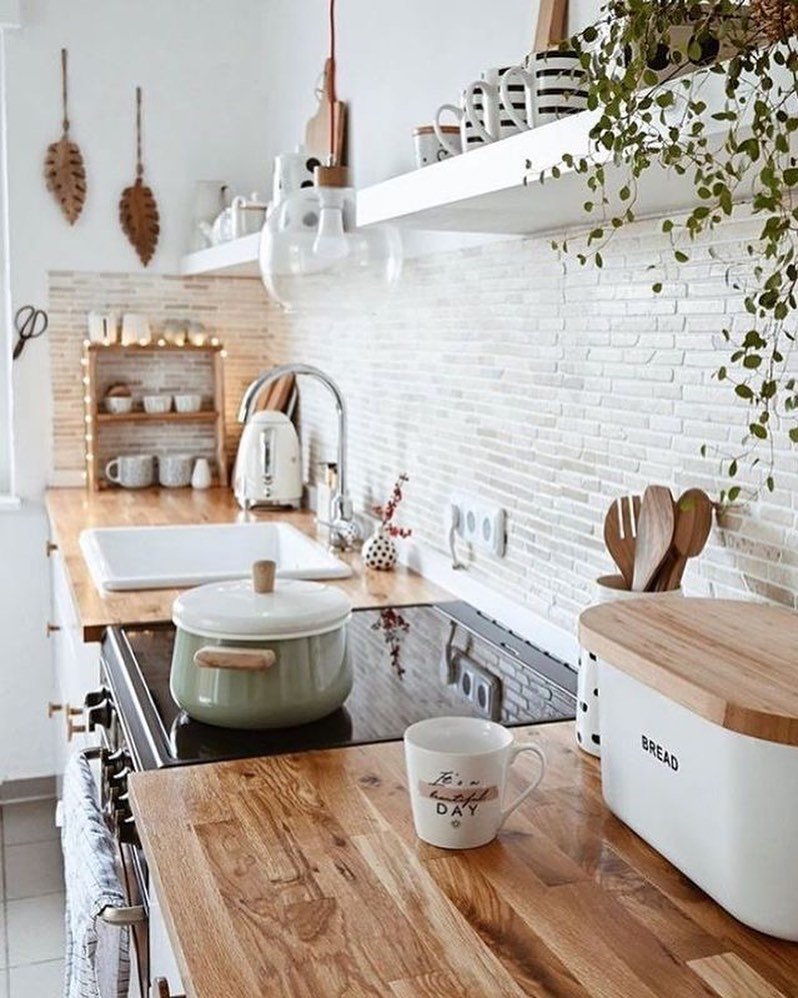
This kitchen is a genuinely heartwarming space that perfectly captures the spirit of relaxed, natural home living. It is the kind of kitchen that feels like it belongs to a real person with real taste — not a showroom, not a catalogue page, but an actual living space filled with personality, warmth, and carefully chosen everyday objects. The combination of white walls, warm wooden countertops, textured brick-style wall covering, trailing green plants, and charming handcrafted accessories creates an atmosphere that is both visually appealing and deeply comfortable. Every corner of this kitchen tells a small story, and together those stories add up to a space that feels genuinely alive and lovingly maintained.
The Colour Palette
The colour story of this kitchen is built on a foundation of soft white and warm natural wood. The walls are white, the cabinets are white, the shelving is white, and many of the accessories and kitchen items are also white. This consistent use of white throughout the space creates a bright, clean, and open feeling that makes the kitchen feel larger and more airy than it might actually be. However, this is far from a cold or clinical white kitchen. The warmth comes flooding in through the rich, honey-toned wooden countertops that run the full length of the cooking area. These wooden surfaces are full of natural grain, texture, and character, and they bring an enormous amount of earthy warmth to the space. Small touches of soft sage green appear in the cooking pot on the stove, and muted terracotta brown shows up in the decorative leaf wall hangings and the pendant light cord, adding gentle depth to the overall palette without disrupting its natural harmony.
The Wooden Countertops
One of the most beautiful and defining features of this kitchen is undoubtedly the wooden countertop surface that stretches across the entire cooking and preparation area. This is not a thin or delicate surface — it is a solid, chunky, generously wide wooden worktop made from what appears to be light oak or a similar pale hardwood. The grain of the wood is clearly visible and full of natural variation, giving the surface a rich, honest quality that no artificial material could replicate. Wooden countertops of this kind bring a warmth and tactile quality to a kitchen that stone or laminate surfaces simply cannot match. They feel good to touch, they look beautiful in natural light, and they age gracefully over time, developing more character with every passing year. The wooden surface here works in perfect harmony with the white cabinets and the white brick-textured wall behind it, creating a layered, natural look that feels both current and timeless.
The Textured Wall Covering
Running along the full length of the kitchen wall between the countertop and the shelving above is a beautifully textured wall surface that resembles pale, whitewashed brick or stacked stone. This surface adds an enormous amount of visual interest and tactile depth to the kitchen without introducing any additional colour. It is white, like the rest of the kitchen, but its three-dimensional texture means it catches light differently at different times of day, creating subtle shadows and highlights that keep the wall feeling alive and interesting. This kind of textured wall treatment is a very clever design choice in a white kitchen because it adds visual richness without adding visual noise. It gives the eye something interesting to look at while still maintaining the calm, clean atmosphere of the overall space. It also has a slightly rustic, handcrafted quality that fits perfectly with the natural, boho-inspired character of the rest of the kitchen.
The Open Shelving
Above the countertop and textured wall, a set of white open shelves runs along the upper portion of the kitchen wall. These shelves are home to a charming and carefully arranged collection of white mugs, ceramic containers, glass jars, and small decorative items. The objects on the shelves are predominantly white, which keeps everything feeling unified and uncluttered, but there is enough variety in shape, size, and texture to make the display feel interesting and personal rather than sterile or uniform. Several striped white mugs hang from small hooks or stand upright on the shelf, giving the display a casual, everyday quality that feels genuinely lived-in. Most beautifully of all, a trailing green plant spills over the edge of the upper shelf, its long vines and small rounded leaves cascading downward in a wonderfully organic and relaxed manner. This trailing plant is one of the most charming details in the entire kitchen — it softens the hard edges of the shelf, introduces a living, breathing element into the upper portion of the room, and adds a touch of natural beauty that no bought decoration could replicate.
The Pendant Lighting
Hanging from the ceiling above the countertop area is a simple but very stylish pendant light made from a clear glass bulb suspended on a warm terracotta or copper-toned fabric cord. This type of exposed bulb pendant light is a favourite in Scandinavian and boho-inspired interiors because it is honest, simple, and warm. There is no shade, no elaborate fitting — just the bulb itself, glowing warmly, suspended on its coloured cord. The terracotta tone of the cord picks up the same earthy brown tones seen in the decorative leaf wall hangings nearby, creating a small but satisfying colour connection across different parts of the room. When lit in the evening, this pendant would cast a warm, golden glow across the wooden countertop below, creating a beautifully intimate and cosy atmosphere in the cooking area.
The Decorative Wall Hangings
On the white wall to the left of the main cooking area, a set of decorative leaf-shaped wall hangings are displayed. These pieces appear to be made from dried or pressed natural materials — possibly dried palm leaves, pressed botanical specimens, or handcrafted pieces made from natural fiber or wood. They are warm brown in tone and organic in shape, bringing a touch of nature-inspired artisan craft to the wall. Wall decorations of this kind are very much at home in a boho or natural-inspired kitchen. They add personality, warmth, and a handmade quality to the space without requiring much room or drawing too much attention. They sit quietly on the wall and contribute to the overall story of a kitchen that values natural materials, honest craft, and personal expression.
The Kitchen Sink Area
The sink area sits along the main countertop run and features a deep white rectangular sink paired with a tall, curved chrome tap. The sink is clean and simple in style, fitting neatly into the wooden countertop surface without any elaborate surround or framing. Near the sink, a small ceramic vase holds a few stems of a delicate red-berried plant, adding a tiny but lovely touch of natural colour and botanical beauty to the practical washing area. A small bottle of dish soap and a few other everyday items sit nearby, reminding us that this is a working kitchen where real meals are prepared and real life is lived.
The Background Shelving Unit
Further back in the kitchen, visible in the softer focus of the background, sits a small freestanding wooden shelving unit adorned with warm fairy lights. This unit holds additional mugs, bowls, and ceramic pieces, and the soft glow of the fairy lights wrapped around it gives that corner of the kitchen a wonderfully warm and magical quality. It is the kind of detail that makes a kitchen feel truly personal — a small, handcrafted corner of warmth and light that transforms an ordinary storage area into something genuinely delightful.
The Overall Mood and Atmosphere
The overall mood of this kitchen is one of warm, relaxed, everyday beauty. It does not feel designed for perfection or performance. It feels designed for living — for slow mornings with a good cup of coffee, for unhurried afternoons baking bread, for quiet evenings preparing a simple meal with good ingredients. Everything in this kitchen has been chosen with care, but nothing feels precious or untouchable. The wooden surfaces invite you to rest your hands on them. The mugs on the shelf invite you to pick one and fill it. The trailing plant invites you to pause and appreciate the small, quiet beauty of growing things. This is a kitchen that nourishes not just the body but the soul.
Design Lesson
This kitchen teaches a beautiful lesson about the power of layering natural textures and keeping a consistent, honest material palette. By combining white surfaces with warm wood, textured walls, handcrafted accessories, and living plants, the designer has created a space that feels rich and interesting without ever feeling busy or overwhelming. Every element contributes something meaningful, and the result is a kitchen that feels deeply personal, deeply comfortable, and deeply beautiful in the most unpretentious way possible.

The Open Plan Dream Home: Bright, Airy & Beautifully Connected
Introduction
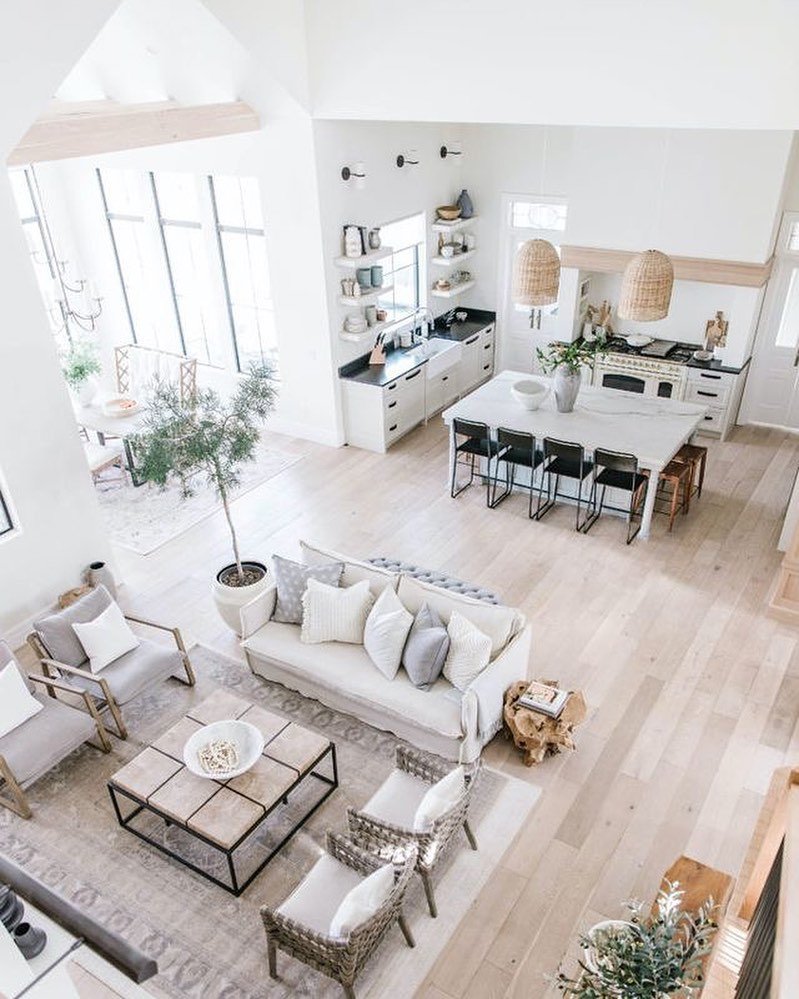
This image offers a breathtaking bird’s eye view of a large, open plan living space that seamlessly connects a generous sitting room with a fully equipped modern kitchen. Seen from above, the full scale and beauty of this home becomes immediately apparent. It is a space of remarkable openness, flooded with natural light, decorated in a calm and consistent palette of white, pale wood, soft grey, and warm natural textures. Every zone within this open plan layout has its own distinct purpose and personality, yet everything flows together so naturally that the entire space feels like one unified, beautifully considered home. This is the kind of living space that many people dream of — generous, light-filled, thoughtfully designed, and full of warmth despite its considerable size.
The Bird’s Eye View Perspective
Viewing a home from directly above is a genuinely rare and revealing experience. From this elevated perspective, we can appreciate the full layout, the proportions of each zone, the flow of space between areas, and the way furniture has been arranged to create distinct but connected living environments. What strikes you immediately from this viewpoint is just how much open floor space exists throughout the home. The pale wooden floor stretches uninterrupted from the sitting area all the way through to the kitchen, acting as a single continuous surface that ties every part of the home together. The layout is generous, well-planned, and free of unnecessary clutter, allowing each area to breathe and feel spacious even within a shared open plan arrangement.
The Colour Palette
The colour palette of this home is one of its most immediately striking qualities. The dominant tone is a soft, warm white that covers the walls, the kitchen cabinets, the sofa, and many of the soft furnishings throughout the space. This is not a harsh or brilliant white but rather a gentle, creamy white that feels warm and welcoming rather than sharp or clinical. Against this white foundation, the pale blonde wooden flooring adds a consistent layer of natural warmth that runs through every part of the space. Soft grey tones appear in the sofa cushions, the area rug, and various decorative accessories, providing quiet depth and sophistication without introducing any harshness. Touches of black in the kitchen island bar stools, the window frames, and the kitchen countertop edges add a grounding, contemporary contrast that keeps the overall palette from feeling too soft or washed out. Together these tones create a palette that feels current, refined, and deeply liveable.
The Living Area
Taking up the lower half of the visible space, the sitting room is arranged with great care and a clear understanding of how people actually use and move through a living space. At the centre of the seating arrangement sits a large, generously proportioned sofa upholstered in a soft, light-toned fabric and dressed with an abundance of cushions in white, cream, and pale grey. The sofa is deep and inviting, the kind you sink into rather than perch on. Flanking the sofa on either side are two armchairs with natural woven or rattan-style frames and cream cushioned seats. These chairs bring a wonderful organic, handcrafted texture into the sitting area and complement the natural wood tones seen throughout the rest of the home beautifully.
In front of the sofa sits a coffee table arrangement that is both practical and visually interesting. The table appears to be a modular or sectional design with a dark metal frame and wooden or stone inset tops, giving it a contemporary yet natural feel. On top of the coffee table, a simple white bowl holds a small decorative arrangement. Beside it, a raw wood stump or natural wood side piece adds an unexpectedly earthy and organic touch to the seating area — a reminder that natural materials in their most unprocessed form can be just as beautiful as anything more refined. The entire seating arrangement sits on a large area rug in a soft, muted tone that anchors the furniture grouping and defines the sitting room zone within the larger open plan space.
The Tall Ceilings and Dramatic Windows
One of the most architecturally impressive features of this home is visible in the upper left portion of the image — a soaring double-height or vaulted ceiling with a set of very large, floor-to-ceiling windows framed in dark metal. These windows are extraordinary. They rise to a considerable height and allow an enormous amount of natural light to pour into the space, illuminating the entire open plan area from that side of the room. The dark metal window frames provide a striking architectural contrast against the white walls and act as a bold, graphic design element in their own right. Through the windows, the branches of a tree are visible, suggesting a garden or outdoor space just beyond, and reinforcing the connection between the interior and the natural world outside.
Positioned near these windows is a tall, slender indoor tree in a large white pot — one of the most dramatic and impactful plant choices possible for an interior space. This tree rises to a considerable height and its delicate branching structure is visible against the bright light of the windows behind it. A single tall indoor tree like this has the ability to transform the scale and atmosphere of a room entirely, filling vertical space in a way that no piece of furniture can and bringing the organic, living quality of nature into even the most architectural of interiors.
The Kitchen Area
Occupying the upper right portion of the open plan space, the kitchen is a beautifully designed and well-equipped cooking environment that manages to feel both professional and warmly domestic at the same time. The kitchen is built around a large central island with what appears to be a pale marble or stone countertop surface. This island is generous in size and serves as the social and functional heart of the kitchen, with a row of sleek black metal bar stools lined up along one side, inviting people to sit, eat, and engage with whoever is cooking.
Above the island hang two large woven pendant lights in natural rattan or bamboo fiber. These lights are substantial in size and beautifully crafted, their warm natural tone providing a striking contrast against the white ceiling and walls of the kitchen. They bring the same organic, natural material quality that appears in the sitting area chairs and the coffee table into the kitchen zone, creating a sense of visual continuity across the whole open plan space.
The kitchen cabinetry is white and clean in style, with a mix of upper and lower units providing generous storage throughout. Open shelving on one wall holds a curated collection of ceramics, jars, mugs, and small decorative objects in neutral and earthy tones, adding personality and warmth to the kitchen without creating any sense of clutter. A dark countertop surface on the preparation area near the sink provides a sophisticated contrast to the white cabinets, and what appears to be a range-style cooker in a vintage-inspired design adds considerable character and charm to the cooking zone.
The Open Shelving in the Kitchen
The open shelves visible along the kitchen wall are a particularly appealing feature of this space. Styled with a thoughtful mix of functional and decorative items — ceramic bowls, coloured mugs, glass jars, small vases, and organic accessories — these shelves add a great deal of personality and lived-in warmth to the kitchen. The items on the shelves have been arranged with a relaxed but considered approach, mixing heights and shapes in a way that feels natural and genuine rather than overly staged. This style of open kitchen shelving is popular in homes that value both practicality and aesthetics, as it keeps frequently used items within easy reach while also allowing the homeowner to express their personal taste and style through the objects they choose to display.
The Flooring
The pale, wide-planked wooden flooring that runs throughout the entire visible space is one of the most important and impactful design decisions in this home. Its tone is a very light, almost bleached blonde wood that feels Scandinavian in character — calm, clean, and full of subtle natural warmth. Because this flooring runs continuously from the sitting room through to the kitchen without any break or change of material, it acts as a powerful unifying element that holds the entire open plan space together. It is the visual thread that connects every zone, every area, and every corner of this home into one coherent and harmonious whole. The floor also reflects light beautifully, contributing to the overall brightness and airiness of the space.
The Flow Between Spaces
What makes this open plan home particularly successful as a design is the effortless way in which the different zones flow into one another. There are no jarring transitions, no abrupt changes of style or material, no area that feels disconnected from the rest. The sitting room flows naturally into the dining and kitchen areas through the consistent use of flooring, colour palette, and material choices. The woven textures of the sitting room chairs are echoed in the pendant lights above the kitchen island. The natural wood tones of the coffee table are reflected in the warm wood accessories on the kitchen shelves. The white of the sofa and cushions is mirrored in the white kitchen cabinets and the white walls throughout. Every design decision has been made with an awareness of the whole, and the result is a home that feels completely unified and deeply harmonious from every angle.
The Natural Elements
Throughout this home, natural materials and living plants play a vital role in softening what might otherwise feel like a very clean and architectural space. The tall indoor tree near the windows is the most dramatic of these natural elements, but it is supported by numerous smaller touches — the woven rattan chairs, the natural wood stump beside the sofa, the woven pendant lights in the kitchen, the organic accessories on the open shelves, and the various plants and greenery visible in different corners of the space. Together, these natural elements bring life, warmth, and an organic quality to the home that prevents it from ever feeling cold or overly designed. They remind us that the best interiors always maintain a connection to the natural world, no matter how refined or contemporary their overall aesthetic might be.
The Overall Mood and Atmosphere
The mood of this home is one of generous, luminous calm. It feels like a space designed for people who value openness, light, and the kind of quiet, understated beauty that comes from quality materials and considered design rather than bold gestures or decorative excess. It is a home that would feel just as comfortable on a busy weekday morning as it would on a slow, peaceful Sunday afternoon. The open plan layout encourages connection — between the people cooking and those relaxing, between the inside and the outside world visible through those magnificent windows, and between the different areas and activities of daily home life.

Modern Luxury Kitchen Design: A Warm Minimalist Masterpiece
Introduction
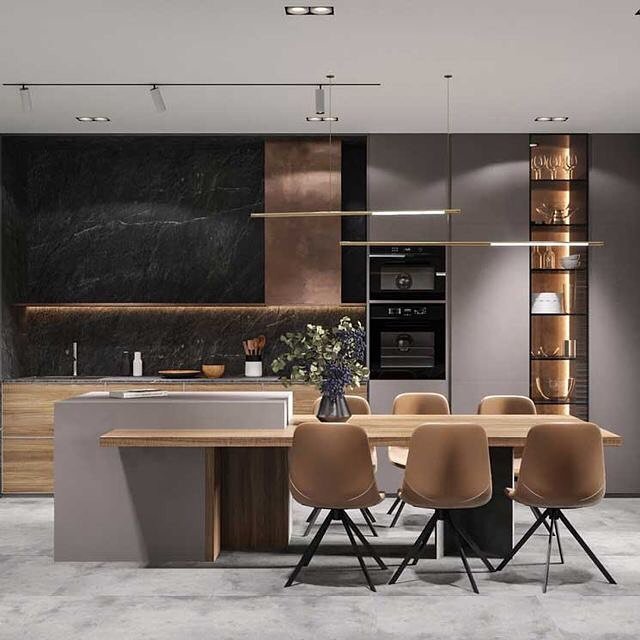
This kitchen presents a refined example of modern luxury blended with functional minimalism. Every element feels intentional, from the dark stone wall to the soft wood finishes and elegant metallic accents. The overall composition creates a space that is not only practical for cooking and dining, but also visually calming and highly sophisticated.
Strong Material Contrast
One of the most striking features of this kitchen is its beautiful contrast of materials. The deep black textured wall adds drama and depth, while the natural wood cabinetry and dining surface bring warmth and balance. The smooth matte gray finishes soften the composition, preventing the darker tones from feeling too heavy.
This combination of stone, wood, and metal creates a layered interior that feels rich without becoming overwhelming.
Elegant Layout and Functionality
The layout is designed with both style and efficiency in mind. The kitchen island connects naturally to the dining table, forming a continuous social and functional zone. This arrangement encourages conversation, shared meals, and a smooth cooking experience.
Built-in appliances are neatly integrated into the tall cabinetry, which helps maintain a clean and uncluttered look. The open display shelf on the right introduces a decorative feature, allowing curated objects to become part of the design story.
Lighting as a Design Feature
Lighting plays a major role in defining the atmosphere of this space. The slim linear pendant lights above the island and dining area add a sense of elegance and architectural precision. Their minimalist form complements the kitchen’s clean lines while giving the room a contemporary identity.
Soft internal shelf lighting and under-cabinet illumination enhance the textures of the materials and create a warm, welcoming mood.
Color Palette and Mood
The color palette is composed of charcoal black, warm oak, bronze, taupe, and soft gray. These tones work together to create a mood that feels serene, mature, and upscale. Instead of relying on bright colors, the design uses subtle tonal harmony to express luxury.
This approach makes the kitchen timeless and adaptable, suitable for both modern homes and high-end interior concepts.
Furniture and Styling Details
The dining chairs contribute softness with their curved forms and warm leather-like finish. Their shape contrasts nicely with the straight architectural lines of the cabinetry and table. A carefully placed floral arrangement adds life and organic movement, making the space feel more personal and inviting.
Even the decorative accessories are kept minimal, which helps the room maintain its polished and editorial appearance.

The Art of Modern Culinary Design: Balancing Texture and Light
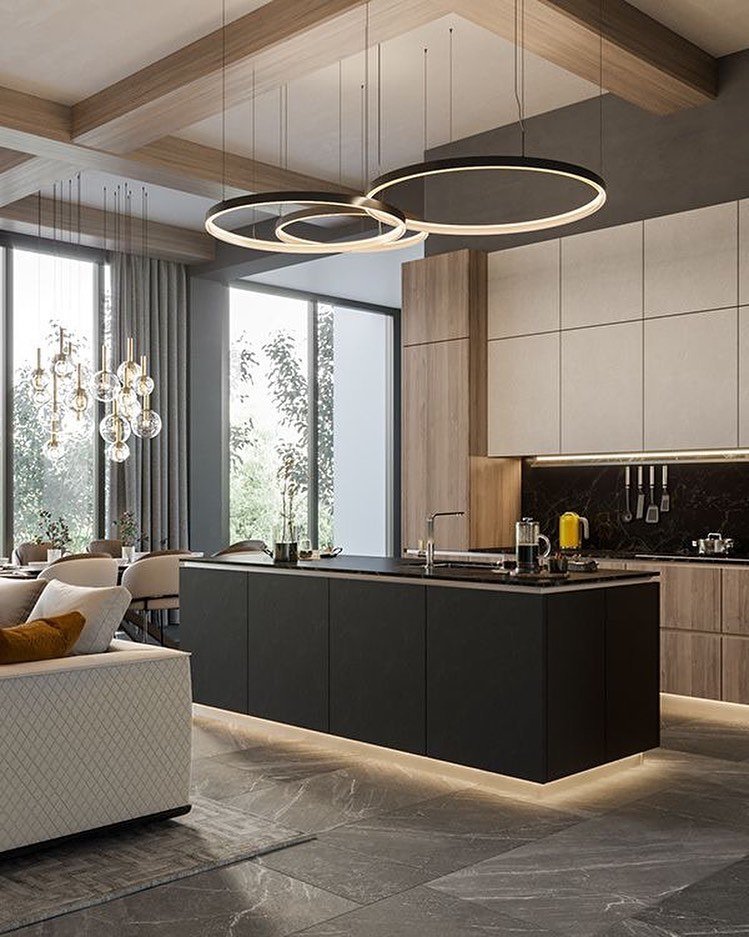
In the world of interior architecture, the kitchen has evolved from a mere utility space into the sophisticated heart of the home. The design showcased here is a masterclass in Modern Organic Minimalism, where sleek industrial lines meet the warmth of natural materials.
A Symphony of High-Contrast Materials
The primary visual impact of this kitchen comes from its bold use of contrast. By pairing matte charcoal cabinetry with light oak wood grains, the design achieves a grounded yet airy feel.
The Monolithic Island: The central island acts as a visual anchor. Its dark, handle-less facade provides a clean, uninterrupted silhouette that highlights the luxury of the stone flooring.
Textural Depth: Notice the backsplash—a rich, dark marble with subtle veining. It adds a layer of organic complexity against the flat planes of the upper cream cabinets.
Natural Elements: The exposed wooden ceiling beams bridge the gap between “modern cold” and “rustic warm,” making the high-ceilinged space feel intimate and inviting.
Layered Lighting as a Design Tool
Lighting in this space isn’t just functional; it’s sculptural. To replicate this look, one must consider three distinct layers:
Statement Fixtures: The oversized, interlocking halo pendants over the island serve as a geometric focal point. They provide soft, diffused task lighting without obstructing the view.
Architectural Accents: The use of under-cabinet LED strips and kickboard lighting (toe-kick lights) creates a “floating” effect for the island and cabinetry. This adds a futuristic glow and enhances safety during evening hours.
Natural Integration: Floor-to-ceiling windows allow the shifting daylight to play off the different textures—from the gloss of the marble to the grain of the wood—ensuring the room looks different at every hour of the day.
The Open-Concept Flow
This kitchen doesn’t exist in a vacuum. It seamlessly transitions into the living and dining areas through a shared color palette and material language.
Spatial Harmony: The use of the same gray stone tiling throughout the entire floor plan eliminates visual “stops,” making the living area feel expansive.
The Dining Transition: By placing a delicate, multi-bulb chandelier in the dining nook, the designer creates a secondary “zone” that feels distinct but remains stylistically tethered to the main kitchen.
Deep Dive: The Nuances of Sophisticated Kitchen Architecture
To truly understand why this design works, we have to look past the surface. It isn’t just a “pretty kitchen”—it is a carefully engineered environment that uses psychology, light physics, and spatial awareness to create a premium living experience.
The Psychology of “Floating” Furniture
One of the most striking features is the illuminated toe-kick at the base of the island. In traditional design, islands can feel like heavy, immovable blocks that “shrink” the room.
The Illusion of Weightlessness: By installing recessed LED strips at the base, the island appears to hover above the floor. This trick lightens the visual load of the room, making the floor space feel continuous and much larger than it actually is.
Safety and Ambiance: Beyond looks, this provides “pathway lighting.” It’s bright enough to navigate the kitchen for a midnight snack without needing to turn on harsh overhead lights that disrupt your sleep cycle.
Mastering the “Mix and Match” Wood Tones
Many homeowners fear mixing different wood types, but this space proves it is the key to a high-end, custom look.
Vertical vs. Horizontal Grain: The tall pantry cabinets use a vertical wood grain to draw the eye upward, emphasizing the height of the room. Meanwhile, the ceiling beams use a more rugged, horizontal texture to “embrace” the room, providing a sense of shelter.
The Neutral Bridge: The off-white (cream) upper cabinets act as a “neutral bridge.” They prevent the dark marble and the warm wood from clashing, serving as a visual palate cleanser that keeps the kitchen looking bright and hygienic.
The Geometric Language of Circular Lighting
The choice of circular halo pendants is a deliberate architectural move to soften the room.
Breaking the Grid: Most kitchens are full of sharp 90-degree angles (countertops, cabinets, islands). If you add square lights, the room feels rigid and clinical. The interlocking circles break that “grid,” adding a sense of movement and fluidity.
Scale and Proportion: Because the hoops are thin and hollow, they occupy a massive amount of visual space without blocking the line of sight. You can see through them to the cabinetry and the view outside, maintaining an “open-air” feeling.
Tactile Material Selection: Matte vs. Gloss
In a luxury kitchen, how a surface feels is as important as how it looks. This design utilizes a multi-sensory approach:
Leathered or Matte Finishes: The charcoal island features a matte finish. Unlike high-gloss surfaces, matte finishes absorb light rather than reflecting it, which hides fingerprints and gives the stone a soft, velvet-like appearance.
Reflective Accents: To prevent the room from looking “flat,” small reflective hits are added—the chrome faucet, the glass pendant bulbs in the distance, and the polished marble backsplash. These “glint points” attract the eye and add a sense of cleanliness and “newness.”
Verticality and the “Skyline” Effect
One of the most effective techniques used here is the variation in cabinet heights, which mimics a city skyline.
Floor-to-Ceiling Integration: The light oak pantry on the left extends all the way to the ceiling beams. This “stretches” the room vertically, making the ceiling appear higher than it is. It also eliminates the “dust trap” gap often found above standard cabinets.
The Floating Upper Tier: By contrast, the cream-colored upper cabinets are set lower and do not reach the ceiling. This creates a horizontal “gap” of negative space that allows the wall to breathe, preventing the kitchen from feeling like a solid, heavy wall of storage.
Beam Alignment: Notice how the wooden ceiling beams are aligned with the cabinetry lines. This creates a “track” for the eye to follow, providing a sense of architectural order and intentionality.
Advanced Color Theory: The 60-30-10 Rule
This kitchen is a textbook example of professional color balancing, ensuring that dark tones don’t become depressing and light tones don’t become boring.
60% Dominant Neutral (Gray/Stone): The flooring and the dark island dominate the visual field, providing a sophisticated, “expensive” foundation that hides wear and tear.
30% Secondary Texture (Light Oak/Cream): The wood grain and upper cabinets provide the “warmth.” Without this 30%, the kitchen would feel like a cold laboratory.
10% Accent (Black/Gold/Yellow): Small pops of black in the lighting frames, the chrome of the faucet, and even the single yellow kettle on the counter provide the “punctuation marks” that make the design spicy and personalized.
Ergonomics of the “Social Kitchen”
Modern design assumes that the cook is no longer isolated. The layout is engineered for multi-person flow:
The Overhang Principle: The countertop on the island extends slightly beyond the base. This isn’t just for looks; it creates a “knee zone,” allowing guests to pull up bar stools and interact with the chef without being in the way of the prep area.
Zone Lighting Control: A high-end setup like this likely uses “scenic lighting.” With a single switch, the owner can transition from “Prep Mode” (all lights bright) to “Dinner Mode” (overhead lights off, toe-kick and under-cabinet lights dimmed) to create an intimate lounge atmosphere.
The Interaction of Natural and Artificial Elements
The massive floor-to-ceiling windows do more than just provide a view; they act as a dynamic wallpaper.
Color Reflection: The green from the trees outside is reflected in the polished surfaces of the kitchen. This introduces a “hidden” color palette of soft greens and earthy browns that changes with the seasons—vibrant in summer, golden in autumn.
Shadow Play: As the sun moves, the heavy ceiling beams cast moving shadows across the flat cabinet faces. This adds “natural animation” to the room, making the space feel alive and connected to the rhythm of the outdoors.
Materials Science: Durability Meets Luxury
Finally, the choice of a dark stone floor with wide-format tiles is a strategic move for longevity.
Seamlessness: Large-format tiles (30×60 or larger) mean fewer grout lines. This creates a monolithic look that mimics a single slab of stone, which is a hallmark of ultra-luxury real estate.
Thermal Mass: In a room with this much glass, stone floors act as a thermal battery, absorbing heat from the sun during the day and slowly releasing it at night, helping to regulate the home’s temperature naturally.

The Bold Transition: Deep Forest Green Meets Warm Gold Accents
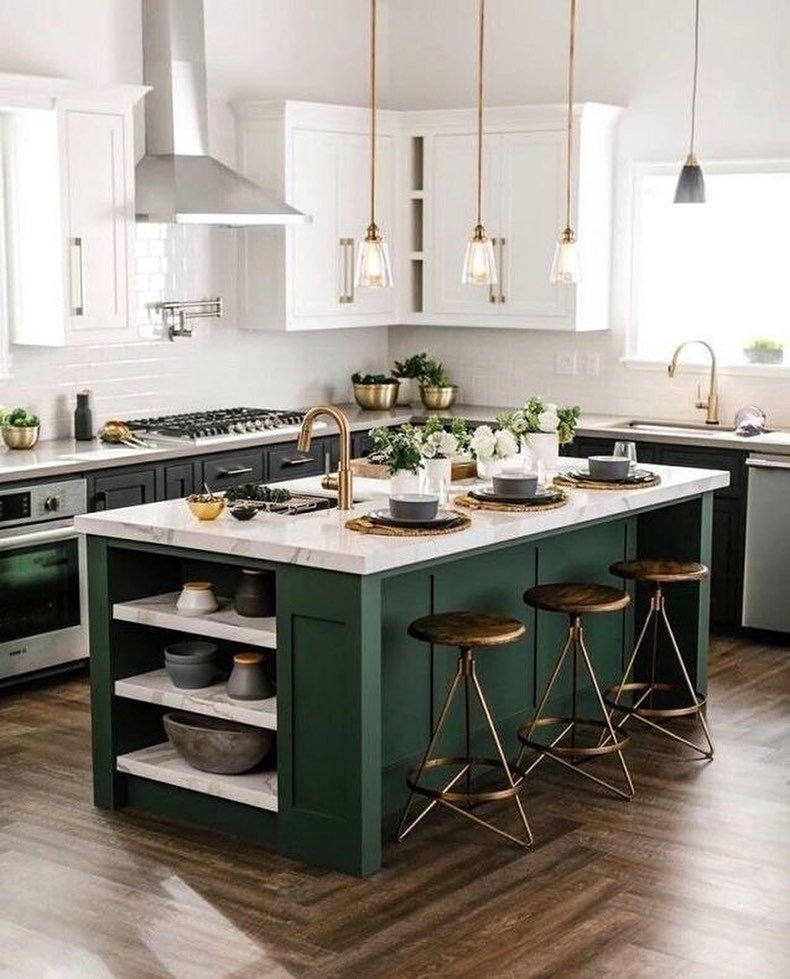
The evolution of modern home design has moved toward “Transitional Style,” a perfect marriage of traditional comfort and contemporary minimalism. This kitchen serves as a premier example of how color can define a room’s personality. The choice of a deep forest green for the central island breaks away from the monotony of all-white kitchens, providing a sophisticated, earthy anchor that feels both grounded and luxurious. This jewel-toned base creates a stunning visual foundation that allows the lighter elements of the room, such as the white Shaker-style cabinetry and polished subway tiles, to pop with crisp clarity.
Strategic Material Layering and Metallic Harmony
What truly elevates this design is the expert use of mixed textures and metallic finishes. The integration of warm gold and brass—found in the bridge-style faucets, the pendant stems, and the legs of the bar stools—introduces a radiant warmth that offsets the coolness of the green and white palette. These pieces are balanced by the natural texture of the wood flooring, which is laid in a rich grain pattern to add warmth underfoot. The countertops feature delicate veining that mimics natural stone, providing a smooth, reflective surface that bridges the dark lower cabinetry with the airy upper shelving.
Architectural Lighting and Spatial Flow
Lighting in this kitchen is used to define zones and enhance the room’s vertical volume. The three glass-domed pendants over the island are hung at a precise height to provide task lighting for food preparation while remaining transparent enough to keep the space feeling open. Natural light from the large window plays a critical role, bouncing off the white backsplash to ensure the deep green elements never make the room feel dark or cramped. This clever use of both artificial and natural light ensures the kitchen remains vibrant from morning until night.
Social Ergonomics and Functional Detail
Beyond the aesthetic appeal, the layout is meticulously planned for a high-performance lifestyle. The kitchen island is not just for storage; it is a multi-functional workstation featuring a built-in prep sink and integrated open shelving. The shelving at the end of the island allows for the display of curated ceramics, turning everyday items into part of the decor. By placing the stove and main sink on the perimeter and a prep sink on the island, the work triangle is expanded, allowing for multiple people to cook and socialize simultaneously without crossing paths. This design represents the modern kitchen as the true social heart of the home, where style meets seamless utility.
The Psychology of Color and Material Contrast
At the heart of this design is a sophisticated use of color psychology. The forest green used for the island isn’t just a trend; it is an earthy, “grounding” hue that brings a sense of tranquility and nature into the home. Because green sits in the center of the visible spectrum, it is the easiest color for the human eye to process, making this kitchen feel restful despite its high-contrast elements. By keeping the perimeter cabinets white, the designer ensures the kitchen remains bright and airy, while the dark green island acts as a visual anchor that prevents the space from feeling unmoored or overly clinical.
The Geometry of Industrial-Chic Seating
The bar stools are a critical component of the room’s architectural language. Their tripod-style gold frames introduce a geometric, industrial edge that contrasts with the traditional Shaker-style cabinet doors. The circular wooden seats echo the warmth of the flooring, creating a “material bridge” that connects the floor to the island countertop. This repetition of wood and gold creates a rhythm throughout the room, guiding the eye from the floor up to the pendant lights, ensuring the design feels cohesive rather than a collection of random objects.
Reflective Surfaces and Light Diffusion
Notice the interaction between the stainless steel range hood and the glossy subway tile backsplash. This pairing is strategic for light management. The polished tiles act as a series of tiny mirrors, bouncing light from the window and the pendants into the deeper corners of the kitchen. Meanwhile, the matte finish of the forest green cabinetry absorbs light, which prevents the dark color from creating harsh glares. This balance of reflective and absorbent surfaces is what gives the room its “glow,” making it look just as good in low evening light as it does in the bright midday sun.
Advanced Culinary Workflow: The Prep Sink Advantage
From a functional standpoint, this kitchen is a “dual-zone” powerhouse. The inclusion of a gold bridge faucet on the island creates a dedicated preparation zone separate from the main cleanup area by the window. This allows one person to wash vegetables or fill pots at the island while another handles the heavy cleaning at the primary sink. This separation of “wet” and “dry” tasks is a hallmark of professional-grade kitchen design, reducing cross-traffic and making the cooking process significantly more efficient for families or those who enjoy entertaining.
The Art of Open-End Island Architecture
The decision to leave one end of the island open with tiered shelving is a masterstroke in “Transitional” styling. In many modern kitchens, the island can look like a solid, heavy block of wood. By introducing marble-topped open shelves, the designer lightens the visual weight of the island. These shelves serve as a “curated gallery” for the homeowner, providing a space to display artisanal bowls or cookbooks. This moves the kitchen away from being a purely utilitarian room and turns it into an extension of the home’s living and decor space.