Designing the Heart of the Home A Step-by-Step Layout Guide

Mediterranean-Infused Modern Elegance

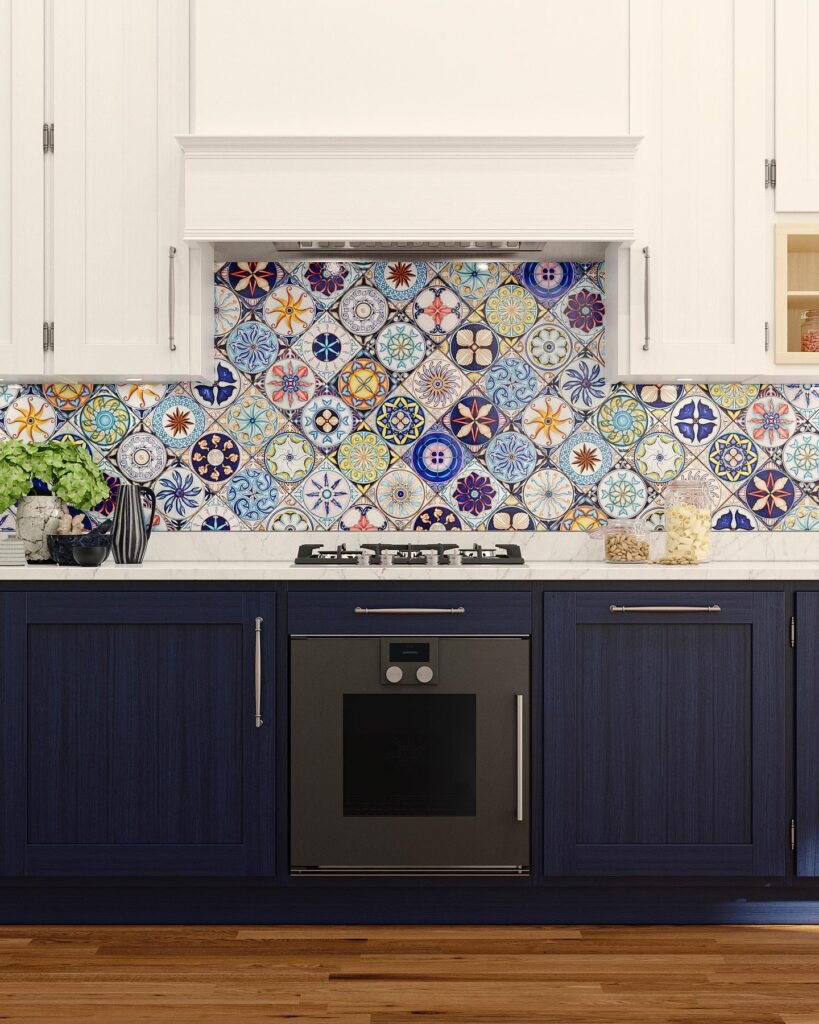
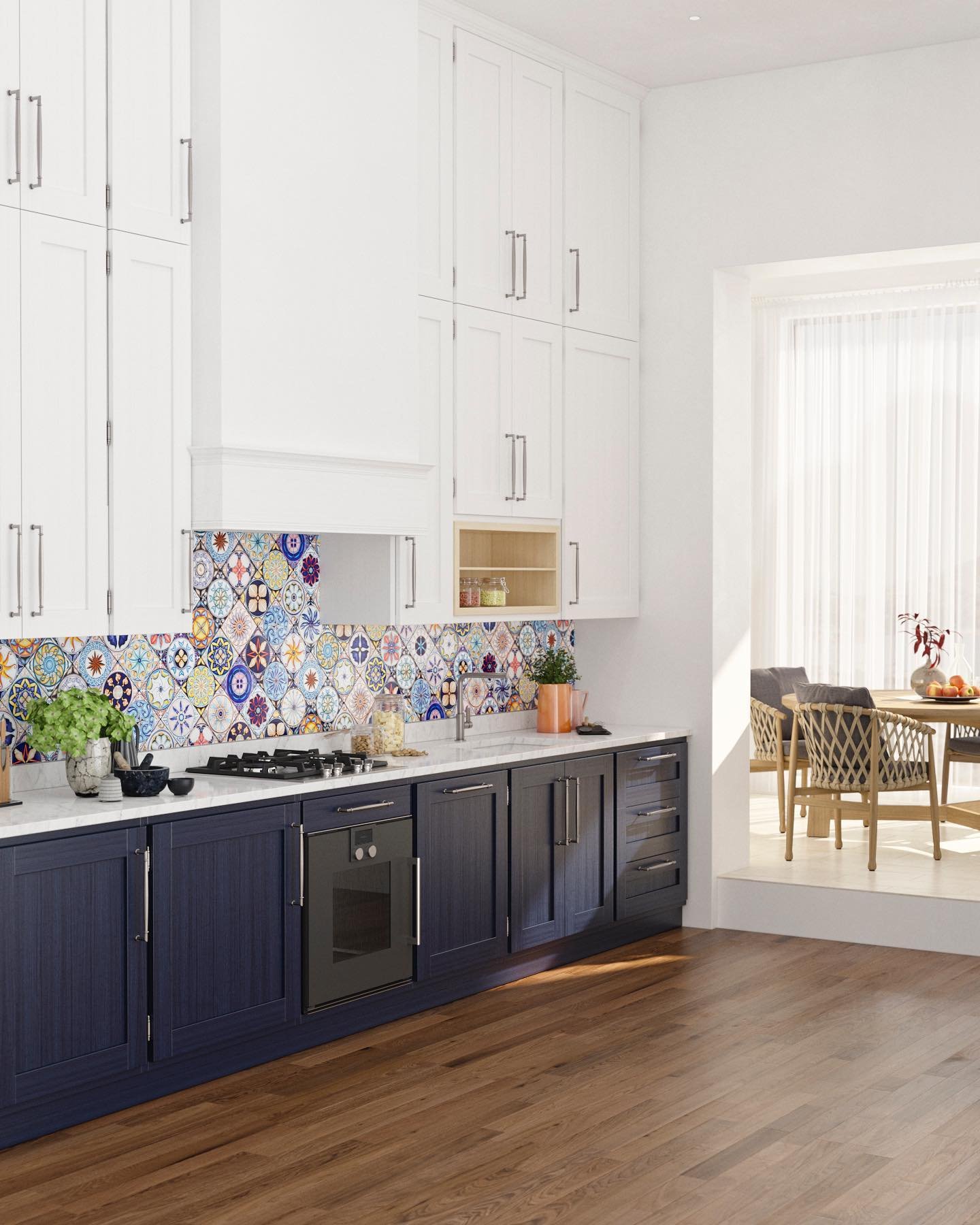
This kitchen is a stunning display of high-contrast design, blending deep, moody tones with vibrant Mediterranean patterns. The lower cabinetry features a navy blue wood grain finish, which provides a rich, tactile foundation that feels both nautical and sophisticated. This is balanced by floor-to-ceiling white upper cabinets, which utilize the room’s significant vertical height to create a sense of grandeur while providing expansive, hidden storage.

Artistic Pattern and Geometric Focus

The visual center of the room is the vivid Mediterranean tile backsplash. This feature serves as the kitchen’s primary “art piece,” introducing a mosaic of intricate circular patterns in shades of ochre, cobalt, and terracotta. By keeping the surrounding walls and countertops a clean, solid white, the designer allows the backsplash to pop, injecting energy and a “travel-inspired” soul into a modern, minimalist framework.

Architectural Scale and Lighting

The design makes masterful use of vertical space and natural illumination:

  • Towering Cabinetry: The three-tiered upper cabinets reach toward the ceiling, emphasizing the home’s height and creating a clean, monolithic look that eliminates visual clutter.

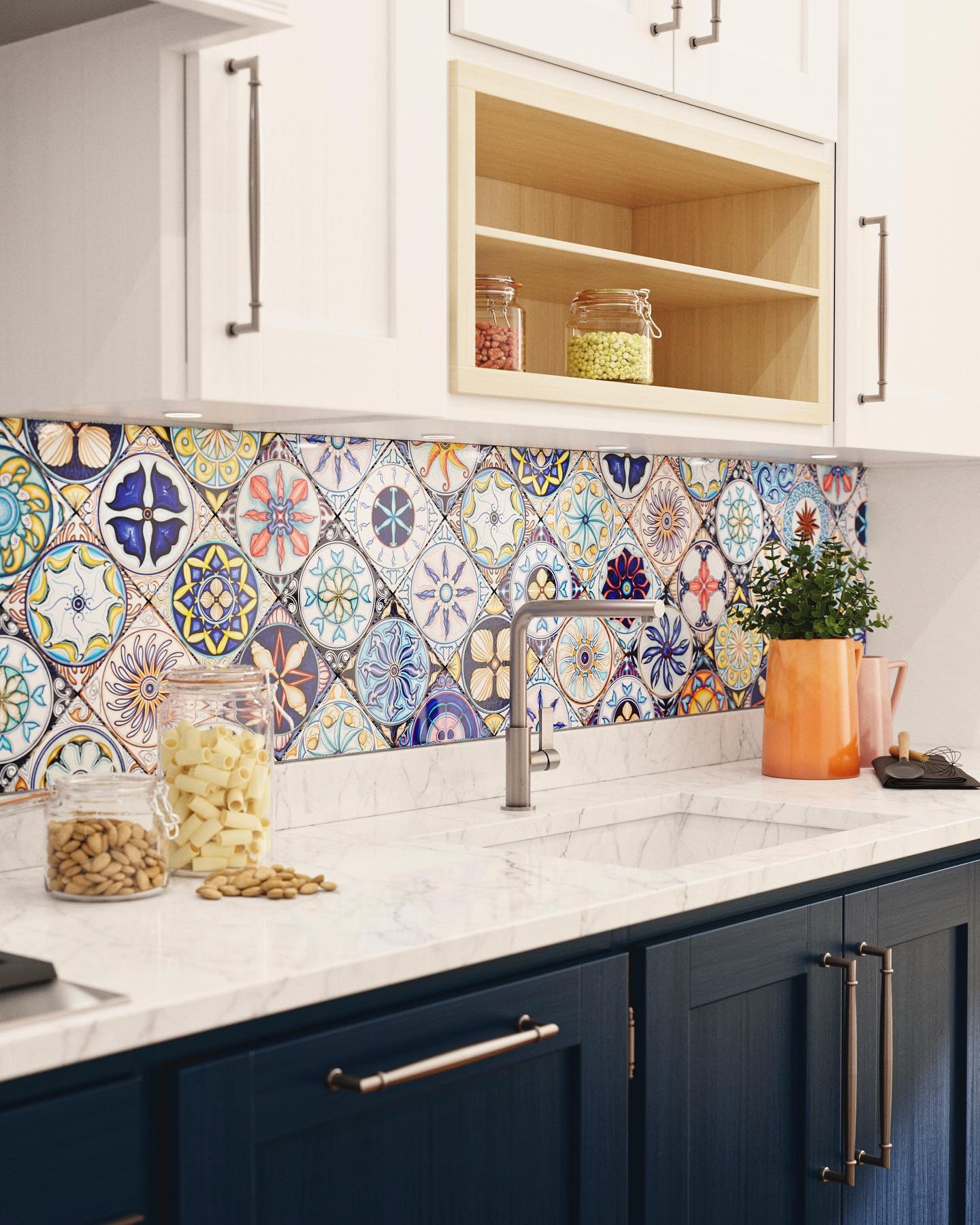
  • Open Niche Detail: A single light-wood open shelf is integrated into the white cabinetry, providing a small “breath” of organic warmth and a place to display glass spice jars.

  • Sun-Drenched Transition: The kitchen opens into a bright dining area through a wide, casing-free archway. This connection allows soft light from the sheer-curtained windows to flow over the dark wood floors, highlighting the natural grain and sheen of the timber.

Material Synthesis and Texture

The selection of materials creates a balanced sensory experience throughout the open-concept layout:

  • Stone and Steel: White marble or quartz countertops provide a cool, polished surface for food prep, while the integrated black glass cooktop and minimalist silver handles offer a contemporary, streamlined finish.

  • Warm Wood Foundation: The medium-toned hardwood flooring runs horizontally, visually widening the space and providing an earthy contrast to the cool navy and white cabinets.

  • Natural Fiber Dining: In the background, woven “lattice” chairs and a round wooden table introduce “Modern Organic” textures, softening the sharp lines of the kitchen cabinetry and making the transition to the dining zone feel natural and relaxed.

Functional and Fluid Layout

This “single-wall” or I-shaped kitchen layout is designed for maximum efficiency in an open-plan home. By keeping all major appliances and prep surfaces on one side, the design maintains a clear thoroughfare to the dining area. The inclusion of lush greenery in a stone pot and a copper-toned vase on the counter introduces small pops of life and metallic warmth, ensuring that even with its high-end, clean-lined aesthetic, the kitchen feels like a vibrant, lived-in heart of the home.

Grand-Scale Symmetry and Verticality

The defining characteristic of this kitchen is its extraordinary vertical scale. By extending the white shaker-style cabinetry to the full height of the ceiling, the design creates a monolithic architectural presence that makes the room feel taller and more expansive. The use of a stacked cabinet configuration—where smaller cupboards sit atop standard-sized ones—provides a clever solution for storing seasonal or rarely used items, keeping the lower work zones completely free of clutter.

The Psychology of Color Blocking

The designer employs a sophisticated “weighted” color strategy to ground the high-ceilinged space:

  • Navy Base: The deep, indigo-stained lower cabinets provide a heavy visual foundation. The visible wood grain prevents the dark color from looking flat, adding a layer of natural texture that feels premium and custom-built.

  • White Canopy: The transition to crisp white upper cabinets and walls ensures the room remains bright and airy, reflecting the natural light pouring in from the adjacent dining area.

  • Patterned Bridge: The mosaic tile backsplash acts as the connective tissue, using colors from both the dark base and the light top to unify the entire color story.

Mediterranean Artistry and Pattern Play

The backsplash is a masterclass in Modern Mediterranean styling. Each tile features a unique, kaleidoscopic pattern reminiscent of traditional Portuguese or Spanish azulejos. The circular geometry within the tiles provides a soft counterpoint to the sharp, straight lines of the cabinetry and the long, horizontal run of the white marble countertops. This “patterned interruption” prevents the minimalist design from feeling clinical, adding a sense of hand-crafted history and global character.

Seamless Open-Concept Transition

The kitchen is designed to be seen as part of a larger, cohesive living environment:

  • The “Invisible” Threshold: A slight change in floor elevation and a wide, open archway separate the kitchen from the dining room without the use of doors. This maintains a continuous line of sight and allows for a shared social atmosphere.

  • Warmth Underfoot: The medium-toned hardwood floors run seamlessly through both rooms, their warm amber hues providing a necessary organic contrast to the cool navy and white surfaces.

  • Zonal Lighting: While the kitchen relies on integrated task lighting, the dining area in the background features a soft, diffused glow through sheer curtains, creating a layered lighting effect that changes as you move through the house.

Tactical Material Selection

Every finish in this space has been selected for its balance of durability and high-end aesthetics:

  • Polished Quartz/Marble: The continuous white countertop offers a massive prep surface that is as functional as it is beautiful.

  • Integrated Tech: The sleek black cooktop and built-in oven are flush-mounted, maintaining the streamlined “single-wall” profile.

  • Metallic Accents: The tall, slim faucet and minimalist silver hardware add a subtle industrial glint, echoing the clean lines of the towering white cabinetry.

Natural and Organic Softening

To bridge the gap between the structured kitchen and the relaxed dining area, “Modern Organic” elements are peppered throughout. The inclusion of woven rattan dining chairs and a solid wood table in the background introduces soft, curved silhouettes. These natural textures, paired with indoor greenery and a copper-toned accent vase on the counter, ensure the space feels like a vibrant, welcoming home rather than just a high-concept showroom.

Modern Mediterranean Contrast

This kitchen design masterfully pairs deep, atmospheric tones with high-energy patterns to create a vibrant culinary workspace. The shaker-style lower cabinetry is finished in a rich indigo wood grain, providing a dark, grounded foundation. This is contrasted by bright white upper cabinets that extend toward the ceiling, maximizing vertical space and keeping the overall atmosphere light and airy.

Kaleidoscope Artistry

The definitive feature of the room is the intricate mosaic backsplash. Drawing inspiration from traditional Southern European tilework, the pattern features a variety of kaleidoscopic circles and geometric stars in a palette of cobalt, mustard, and terracotta. By placing this busy, colorful art piece against a clean white countertop, the design creates a focused “visual anchor” that breathes personality into the minimalist layout.

Architectural Depth and Textures

The space utilizes a mix of natural and contemporary materials to build visual interest:

  • Organic Foundation: Medium-toned hardwood floors run horizontally, their natural amber grain softening the cool tones of the navy cabinetry.

  • Minimalist Hardware: Slim, brushed silver handles provide a sleek, functional accent that mirrors the clean lines of the integrated cooktop.

  • Niche Styling: A single light-wood open shelf is tucked into the white cabinetry, offering a subtle organic touch for displaying glass canisters or small kitchen essentials.

Integrated Culinary Flow

The layout is streamlined for a high-performance, single-wall configuration. The matte black oven is flush-mounted into the dark cabinets for a seamless look, while the polished white stone countertops provide ample prep space. To soften the architectural lines, fresh greenery in a textured stone pot and a copper-toned vase add pops of life and warmth to the counter, resulting in a space that feels both high-end and welcoming.

Architectural Symmetry and Dynamic Scaling

The design relies on vertical expansion to create a sense of high-end luxury. By stacking the white shaker cabinetry in three distinct tiers, the kitchen utilizes every inch of wall height, effectively drawing the eye upward and making the ceiling feel significantly higher. This cabinetry choice acts as an architectural “skin” for the room, hiding clutter behind a clean, uniform facade while providing an immense amount of storage.

Material Fusion: Natural meets Synthetic

The aesthetic success of the space is found in its deliberate pairing of diverse materials:

  • Textured Indigo Base: The lower cabinets are not a flat color but a deep navy wood stain. This allows the natural grain of the timber to remain visible, providing a tactile, organic quality that prevents the dark hue from feeling too heavy or artificial.

  • Polished Quartz Boundaries: The thick white countertops provide a stark, horizontal “break” between the colorful backsplash and the dark cabinetry. This reflective surface helps bounce light from the adjacent dining area back into the kitchen’s work zones.

  • Amber Woodwork: The horizontal planks of the medium-toned wood floor offer a warm, golden foundation. This amber tone is a direct “color cousin” to the ochre yellows found in the mosaic tiles, creating a subtle but powerful visual link.

Mediterranean Focal Point and Color Theory

The mosaic backsplash is the psychological heart of the room. It uses a “kaleidoscopic” arrangement of circular patterns that introduce a sense of motion and artisanal charm. The color palette within the tiles—cobalt blue, terracota red, and sunflower yellow—perfectly balances the room’s primary colors.

  • Blue-on-Blue: The cobalt in the tiles echoes the navy of the lower cabinets.

  • Warmth vs. Cool: The yellow and red segments of the pattern provide the necessary “heat” to offset the cool tones of the blue and white, resulting in a perfectly balanced color temperature.

Fluid Connectivity and Open-Plan Logic

The transition into the dining room is handled with “invisible” architectural boundaries. A wide, casing-free archway allows the two rooms to share natural light and social energy. In the background, the dining furniture—specifically the lattice-back chairs and round timber table—mirrors the artisanal and geometric themes of the kitchen. The woven textures of the chairs provide a soft, “Modern Organic” counterpoint to the hard, straight lines of the cabinetry, ensuring the entire home feels cohesive, traveled, and sophisticated.

Tactical Functional Details

Beyond the broad strokes, the kitchen is optimized for high-performance use:

  • Integrated Appliances: The black glass cooktop and flush-mounted oven are treated as dark “blocks” that blend into the navy cabinetry, maintaining a streamlined, non-interrupted profile.

  • Minimalist Hardware: Long, thin silver bar pulls emphasize the verticality of the upper cabinets and the horizontal length of the lower ones, acting as sleek, metallic “pinstripes.”

  • Organic Punctuation: Small additions, like the terracotta-toned vase and the lush potted greens, serve as “living” decor that softens the transition from the functional kitchen to the relaxed living spaces.

The Synergy of “Single-Wall” Efficiency

The architectural layout of this kitchen utilizes a linear, single-wall configuration, which is an expert choice for modern, open-concept homes. By concentrating all appliances, storage, and prep areas along one boundary, the design preserves the maximum amount of floor space for movement and social interaction. This layout transforms the kitchen from a closed-off utility room into a “gallery wall” that serves as the backdrop for the entire living area.

Advanced Proportional Engineering

The visual impact is driven by a strict adherence to geometric proportions:

  • Vertical Stacking: The upper cabinetry is divided into three distinct horizontal bands. This “rule of thirds” creates a sense of rhythmic order. The topmost cabinets are designed to be flush with the ceiling, which prevents the “dust shelf” effect and makes the wall appear like a solid structural element.

  • The “Floating” Effect: The choice of a crisp white for the upper 70% of the wall allows the heavy navy base to feel grounded but not overwhelming. The white surfaces effectively “disappear” into the surrounding architecture, leaving the colorful backsplash and dark lower units to take center stage.

The “Jewelry” of the Kitchen: Hardware and Fixtures

Every metallic element has been chosen to provide a cohesive, streamlined look:

  • Elongated Bar Pulls: The thin, polished silver handles are oriented vertically on the uppers and horizontally on the lowers. This orientation reinforces the “grid” of the kitchen, emphasizing the soaring height of the white cabinets and the expansive width of the navy drawers.

  • Professional-Grade Plumbing: The high-arch chrome faucet acts as a sleek, sculptural centerpiece on the countertop. Its metallic sheen mirrors the hardware, creating a unified “metallic story” that ties the plumbing to the cabinetry.

Contextual Flow and Dining Integration

The kitchen does not exist in a vacuum; it is designed to communicate with the sun-drenched dining area in the background:

  • The Archway Portal: The wide, clean-lined opening acts as a frame, turning the dining room into a “second act.” The sheer white curtains in that space mirror the white upper cabinets, providing a visual link across the rooms.

  • Organic Counterpoints: In the dining area, the interwoven lattice chairs introduce a softer, more complex texture than the smooth kitchen cabinets. This transition from “slick and modern” to “textured and organic” signals a shift from a workspace (kitchen) to a relaxation space (dining).

  • Color Echoes: The light wood of the dining table and chairs perfectly matches the small open shelving niche in the kitchen, ensuring that the warm timber tones are distributed evenly throughout the entire floor plan.

Strategic Styling for Real-World Use

The final layer of the design involves “curated utility.” Instead of hiding everything away, the designer uses the countertops to add life:

  • Botanical Vibrancy: Potted greenery is placed at the far left, providing a burst of natural color that contrasts with the indigo wood.

  • Copper Accents: A metallic vase or pitcher near the sink introduces a warm, rose-gold tone. This warmth pulls out the terracotta and ochre shades from the Mediterranean backsplash, making the color palette feel intentional and deeply layered.

  • Seamless Tech: The black glass cooktop is a masterclass in “hidden functionality.” By matching the dark tones of the oven and lower cabinets, it minimizes visual noise, allowing the intricate tile patterns above it to remain the undisputed hero of the room.

Enchanting Rustic Attic Retreat

This kitchen design masterfully transforms a compact attic space into a warm, “Cottagecore” sanctuary. The architecture celebrates its structural history by highlighting heavy timber beams wrapped in delicate fairy lights, which provide a soft, whimsical glow against the sloped ceilings. A large overhead skylight serves as the primary light source, flooding the room with sunshine and creating an airy, open feel that defies the typical constraints of a loft conversion.

Organic Material Harmony

The color and material palette is a thoughtful study in natural textures and muted tones:

  • Honey-Toned Butcher Block: The thick wooden countertops and matching dining table create a continuous sense of organic warmth that is soft to the touch.

  • Dove Gray Cabinetry: Lower shaker-style cabinets in a gentle gray provide a sophisticated, contemporary foundation that balances the rustic wood elements.

  • Classic Farmhouse Elements: A crisp white apron-front sink and retro-inspired cream appliances introduce a touch of nostalgia and bright, clean accents.

Curated Open Styling

To maintain a sense of space under the angled roof, the design utilizes open wooden shelving supported by traditional corbels. This approach allows the walls to “breathe” while providing a stage for a curated collection of white ceramics, trailing indoor ivy, and flickering candles. A strategically placed arched window-pane mirror above the sink further enhances the room’s depth, reflecting light and mimicking the presence of an additional window.


Modern Industrial Gallery Kitchen

This interior showcases a bold, “Moody Luxe” aesthetic that blends sharp geometric patterns with high-end industrial finishes. The focal point is a striking starburst-patterned wallpaper that creates a high-contrast, energetic backdrop. This graphic intensity is balanced by oversized, monochromatic photography and a lush “urban jungle” of indoor palms, resulting in a space that feels like a sophisticated art gallery fused with a functional culinary hub.

Luxe Contrasts and Textures

The design achieves a grounded, expensive feel through deliberate material choices:

  • Deep Charcoal Foundations: The matte navy or charcoal cabinetry on the island provides a strong visual anchor against the light-toned wood floors.

  • Marble and Brass: Thick white marble countertops with subtle veining offer a reflective surface that is elevated by professional-grade brass fixtures and slim metallic hardware.

  • Cognac Leather Accents: Round bar stools with rich tan leather cushions introduce a warm, organic texture that pops against the dark cabinetry.

Architectural Zoning

The layout uses subtle architectural shifts to define different living zones within an open-concept plan. A slight elevation change in the flooring separates the prep zone from the lounge area, while black-framed internal windows and exposed wooden lintels add a sense of historical “loft” character. Minimalist halo pendant lighting hangs horizontally over the island, providing a wide pool of light without obstructing the view of the bold wall decor.


Stately Grandmillennial Heritage

This kitchen is a vivid celebration of the “Grandmillennial” trend, combining historic design elements with daring color choices. The cabinetry is finished in a saturated forest green, creating a moody and regal atmosphere. Massive crown moldings and leaded glass-front displays allow the user to showcase heirloom silver and fine china, turning everyday storage into a shimmering decorative feature.

Artisanal and Bold Accents

The space is defined by its “Maximalist” approach to texture and color:

  • Soapstone and Subway Tile: Matte dark soapstone countertops and an integrated farmhouse sink provide a velvet-like texture that contrasts with the rhythmic, reflective white subway tile backsplash.

  • Vibrant Red Focal Point: A daring crimson lacquered chandelier breaks the green-and-white color scheme, injecting a playful, eclectic energy into the stately room.

  • Heritage Details: A built-in wooden plate rack and a vibrant patterned runner rug introduce “English Country” charm, ensuring the high-end finishes feel comfortable and lived-in.


Mediterranean Modern Fusion

This design utilizes a “single-wall” layout to maximize efficiency while making a massive stylistic statement. The towering floor-to-ceiling white cabinetry emphasizes the room’s vertical scale, while the navy blue wood-grain lowers provide a textured, nautical foundation. The visual bridge between the two is a vivid mosaic backsplash featuring kaleidoscopic patterns in cobalt, ochre, and terracotta, giving the kitchen a globally-inspired soul.

Seamless Open-Plan Flow

The kitchen is designed for a fluid transition into a sun-drenched dining area:

  • Natural Connectivity: A wide, casing-free archway allows light from sheer curtains to reach the deep-toned hardwood floors, highlighting the natural grain of the timber.

  • Organic Materials: A light-wood open niche in the cabinetry and woven lattice chairs in the dining zone introduce “Modern Organic” textures that soften the sharp, modern lines of the kitchen.

  • Minimalist Precision: Integrated black glass appliances and slim silver bar pulls maintain a streamlined profile, ensuring the intricate tilework remains the undisputed star of the room.

The Architecture of Comfort and Light

The first image captures a kitchen that excels in spatial psychology, turning the traditional “attic” constraints into a cozy asset. By wrapping exposed cedar beams in fairy lights, the design shifts the focus from the low, sloping ceiling to the warmth and charm of the structural bones. The over-sized skylight is the functional hero, providing “passive lighting” that minimizes the need for electricity during the day and offers a vertical view that makes the small footprint feel limitless.

High-Contrast Industrial Artistry

The second space transitions into a Modern Industrial aesthetic where the design is treated as a curated gallery.

  • The Backsplash as Canvas: The starburst geometric wallpaper isn’t just a covering; it acts as a high-energy focal point that replaces the need for excessive decor.

  • Texture “Sandwich”: The room uses a clever layering of materials—starting with light oak floors, moving to matte navy cabinetry, and topping it with white marble. This creates a visual “sandwich” that balances weight and brightness.

  • Organic Softening: The use of cognac leather stools and oversized greenery provides a necessary “organic break” from the sharp lines of the wallpaper and metal-framed windows.

The Regal “Grandmillennial” Kitchen

The third design is a deep dive into traditional heritage with a modern twist.

  • Forest Green Saturation: Using a single, deep color for all cabinetry—including the massive crown moldings—creates a “monolithic” look that feels incredibly high-end and established.

  • The “Luxe Cabinet” Effect: By using leaded glass doors with interior lighting, the cabinets double as display cases for heirloom silver, adding a shimmering, multi-dimensional texture to the wall.

  • Primary Color Pop: The decision to hang a crimson lacquered chandelier against the green backdrop is a classic use of complementary colors to create “visual friction,” ensuring the room feels eclectic and personalized rather than like a showroom.

Mediterranean-Modern Fusion

The final design utilizes Modern Mediterranean elements to create a travel-inspired sanctuary.

  • Vertical Logic: The floor-to-ceiling white cabinetry utilizes the full height of the room, acting as a bright “frame” for the colorful mosaic tilework.

  • The “Jewelry” Details: Slim silver bar pulls and a minimalist gooseneck faucet provide the metallic “jewelry” that gives the kitchen its contemporary polish.

  • Open-Concept Breathability: The casing-free archway leading to the dining area allows the hardwood flooring to run uninterrupted, creating a “long-view” that expands the perception of the home’s square footage.


Key Design Takeaways for 2026:

ElementStrategyResult
BacksplashesBold Geometrics & MosaicsActs as the primary art piece of the room.
CabinetrySaturated Tones (Navy/Green)Adds grounded luxury and architectural depth.
Material MixWood + Stone + LeatherCreates a “Modern Organic” feel that is tactile and warm.
LightingLayered (Pendants + Sconces + Fairy)Defines “zones” and sets the emotional mood of the space.


Architectural Grandeur meets Parisian Chic

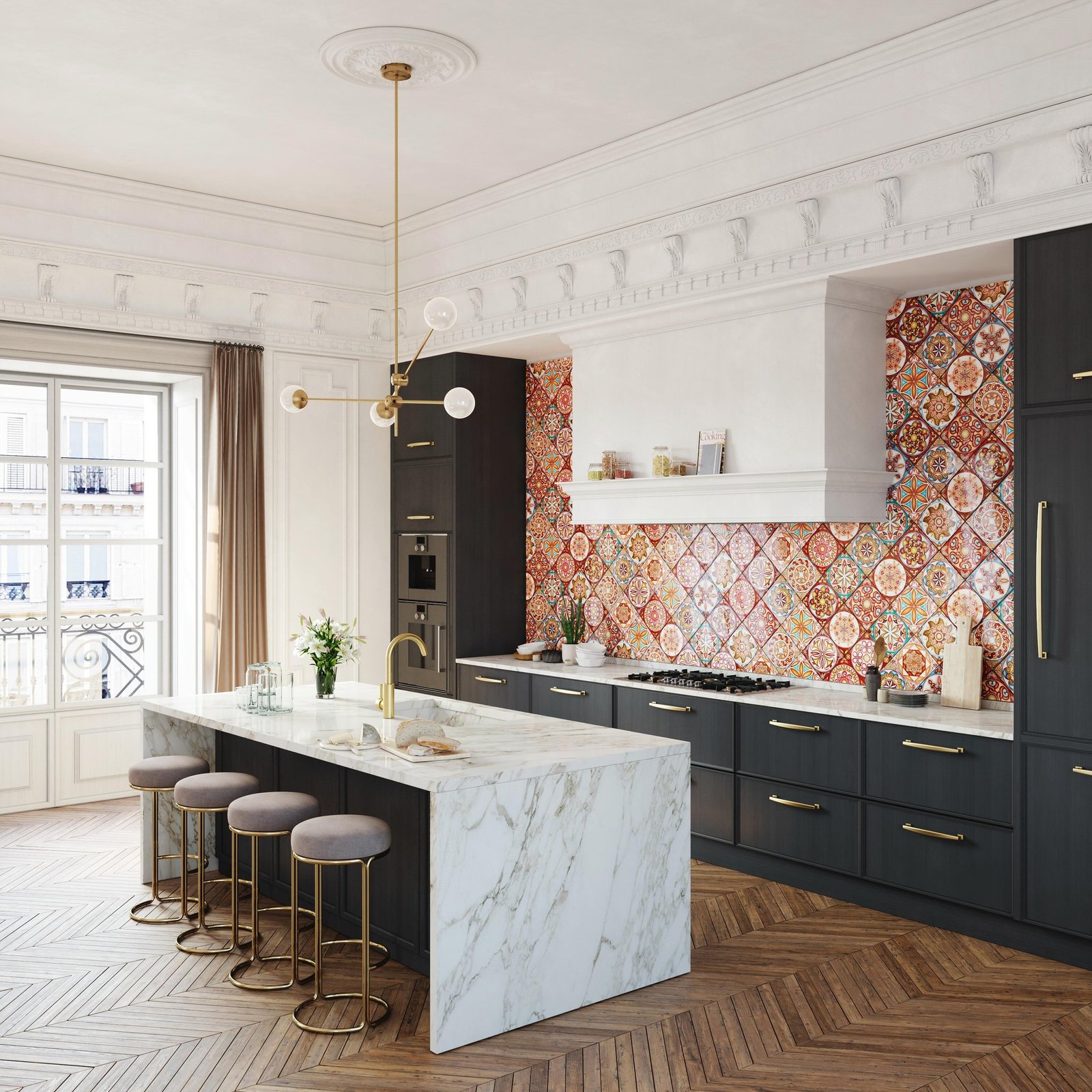
This kitchen is a masterclass in Neoclassical fusion, where historic architectural bones are revitalized by bold, contemporary finishes. The room is defined by its soaring ceilings, intricate crown molding, and decorative corbels, which create a palatial atmosphere. Large French doors with delicate iron railings flood the space with natural light, highlighting the rich texture of the herringbone oak floors that ground the expansive room.

The Power of Saturated Contrast

The design utilizes a high-contrast color story to define different functional zones:

  • Matte Charcoal Cabinetry: The perimeter cabinets and tall storage units are finished in a deep, matte black. This “weighted” color choice provides a sophisticated, modern anchor that allows the classical wall details to pop.

  • Carrara Marble Waterfall: The center island features a dramatic waterfall edge in white marble with soft gray veining. This massive, monolithic piece acts as a luminous bridge between the dark cabinets and the warm wood floors.

  • Brushed Gold Accents: Slim golden hardware and a minimalist gooseneck faucet introduce a “jewelry-like” finish, adding a touch of warmth and luxury to the cool stone and dark wood.

Mediterranean Artistry and Focal Points

The visual heart of the kitchen is the vibrant mosaic backsplash, which spans the entire cooking wall.

  • Warm Tonal Palette: The tiles feature intricate circular and geometric patterns in shades of terracotta, ochre, and sun-drenched orange. This “heat” perfectly offsets the cool charcoal and white marble found elsewhere.

  • Framed Range Hood: A grand, white-mantel style vent hood “breaks” the pattern, providing a clean architectural resting point for the eyes and a shelf for displaying culinary essentials.

Modern Proportions and Fluidity

Despite its grand scale, the kitchen is designed for social connectivity and effortless flow.

  • Minimalist Lighting: A sleek, multi-arm gold chandelier with globe bulbs hangs from a decorative ceiling rose, blending mid-century modern style with classic French architecture.

  • Plush Integrated Seating: The island is paired with low-profile bar stools featuring gray velvet cushions and slender gold frames. This choice ensures the seating is comfortable for long gatherings without obstructing the view of the beautiful cabinetry.

  • Integrated Solutions: Professional-grade ovens are seamlessly built into the dark cabinetry, maintaining a streamlined profile that prioritizes the room’s artful decor over industrial utility.

The Convergence of Heritage and Avant-Garde

This kitchen design represents a high-level Neoclassical-Modern fusion, characterized by the tension between 19th-century European architectural details and 21st-century minimalist surfaces. The soaring ceiling height is treated as a primary design element; by leaving the upper walls white and adorned with ornate plaster moldings, the room maintains an airy, museum-like quality that prevents the dark cabinetry from feeling claustrophobic.

Masterful Flooring and Directional Flow

The herringbone oak flooring is a critical component of the room’s “visual path.” The chevron-style pattern creates a rhythmic sense of movement that leads the eye toward the floor-to-ceiling French doors. This classic wood treatment provides the essential organic warmth needed to soften the sharp, masculine lines of the matte charcoal storage units.

The Anatomy of the Island Focal Point

The kitchen island is not just a workspace; it is a monolithic sculpture.

  • The Waterfall Logic: By continuing the marble slab down the sides to the floor, the design creates a seamless “stone block” effect. This hides the structural supports and provides a clean, luminous contrast against the dark background.

  • Functional Luxury: The deep, integrated sink and sleek gold faucet turn a chore-focused area into a high-design feature.

  • Transparent Seating: The bar stools use slender gold frames to keep the floor-view open, ensuring the intricate pattern of the wood remains visible.

Color Theory: Tempering Cool with Warm

The design utilizes a “temperature-balanced” palette to ensure the space feels welcoming:

  • Cool Components: The matte black cabinets, white marble, and gray velvet upholstery represent the “cool” side of the spectrum, providing a sense of calm and order.

  • Warm Counterpoints: The terracotta and ochre backsplash provides the “heat.” This wall of vibrant pattern acts as a symbolic hearth, radiating warmth and energy into the prep area. The brushed gold accents—on the hardware and the globe chandelier—further echo this warmth.

Strategic Lighting and Proportions

The modern globe chandelier serves as a deliberate stylistic “clash” against the traditional ceiling rose. This juxtaposition is the hallmark of contemporary luxury; it signals a curated, non-formulaic approach to interior design. The lighting is positioned at a height that defines the “dining and social zone” of the island without obstructing the view of the grand range hood and its architectural shelving.

Integrated “Hidden” Performance

To maintain the gallery-like aesthetic, the technical aspects of the kitchen are carefully camouflaged. The induction cooktop is almost invisible against the white marble, while the professional ovens are stacked within the charcoal wall units, appearing as sleek glass inserts. This approach prioritizes architectural purity, ensuring that the first thing a guest sees is the art and the architecture, not the appliances.

Design Analysis: The Intersection of Rustic, Modern, and Organic Styles

These three spaces showcase a sophisticated range of contemporary interior design, moving from bold graphic statements to serene, layered neutrals and high-contrast historical renovations.


1. The Modern Organic Kitchen (High Contrast & Timber)

This kitchen is a masterclass in Modern Organic design, defined by the tension between sharp graphic patterns and raw, natural materials.

  • The Focal Point: An intricate, circular black-and-white tile backsplash provides a rhythmic, artistic backdrop. By framing this pattern within a custom oak shelving unit, the design turns functional storage into a curated gallery.

  • Vertical Layering: The design uses a “weighted” base of matte charcoal cabinetry to support a warm, horizontal-planked timber vent hood. This choice shifts the kitchen’s vibe from clinical to artisanal.

  • Tactile Elements: The combination of a crisp white farmhouse sink, professional black range, and warm oak floors creates a sensory-rich environment that feels both high-end and grounded.

2. The Transitional Breakfast Nook (Serene & Social)

This corner demonstrates how to maximize a small footprint using Transitional styling, which bridges the gap between traditional and modern aesthetics.

  • Architectural Integration: The L-shaped banquette features off-white shaker paneling that perfectly matches the kitchen cabinetry, making the seating feel like a permanent structural feature.

  • Sensory Warmth: A cognac leather seat cushion introduces an organic pop of color and luxury, while the dark walnut pedestal table and spindle chair provide a solid visual anchor.

  • Zonal Lighting: The oversized white cone pendant acts as a “halo,” defining the nook as a private sanctuary within the larger home. The symmetrical abstract art adds a sophisticated, gallery-like finish.

3. The Rustic Heritage Kitchen (History & Glow)

This space represents a Rustic-Cottagecore transformation, focusing on warmth, history, and the clever use of overhead light.

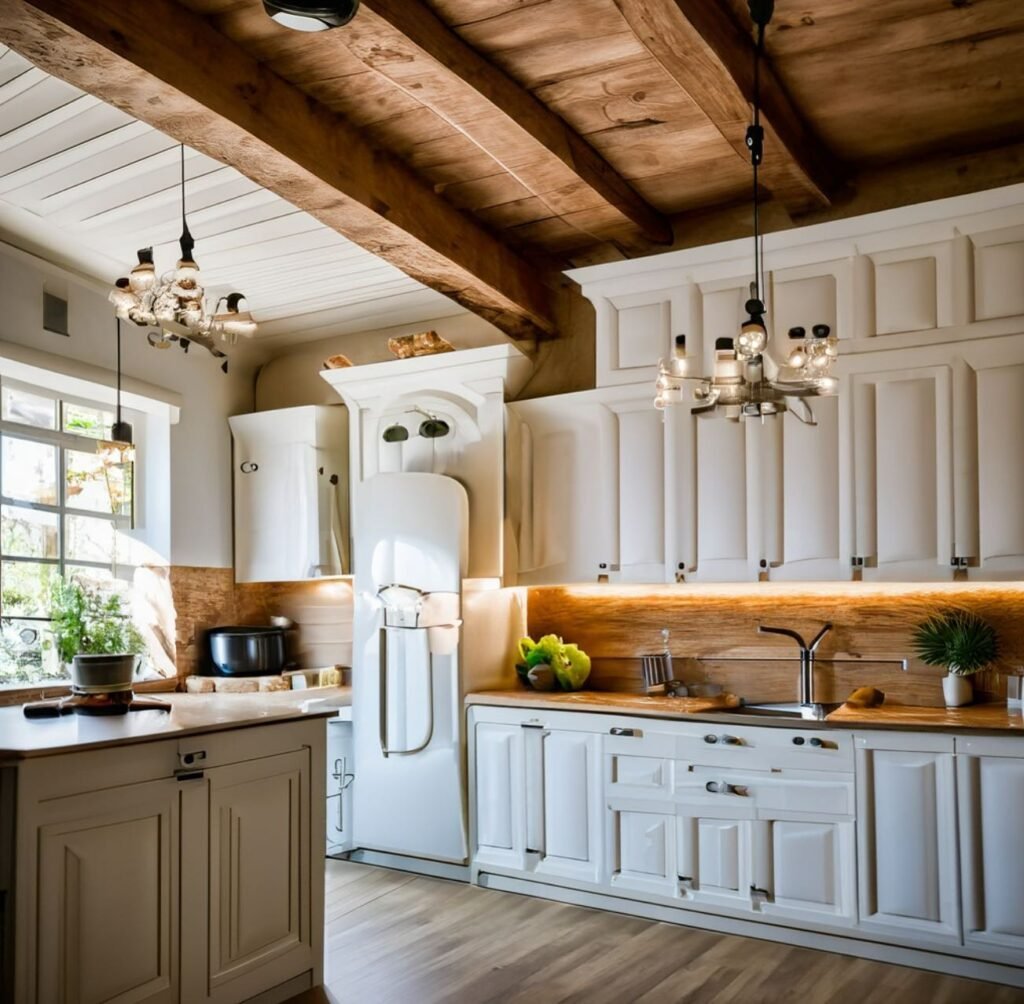
  • Structural Honesty: The design celebrates the home’s original heavy timber beams, which are left exposed to provide architectural weight. The light-toned wood ceiling planks mirror the floors, creating a cohesive “wood envelope.”

  • Warmth and Illumination: Under-cabinet LED strips and industrial-style chandeliers create a layered, golden glow that highlights the honey-toned butcher block countertops.

  • Unique Profile: The cabinetry features a distinctive, ornate top molding that mimics traditional furniture, while the retro-inspired white appliances add a touch of nostalgia. The result is a space that feels like a cozy, light-filled retreat tucked away in a converted loft or cottage.


Material and Color Summary:

SpaceColor PaletteKey MaterialsAesthetic Goal
Kitchen 1Charcoal, Oak, MonochromeReclaimed Wood, Patterned TileArtisanal Industrial
Dining NookCream, Cognac, SlateLeather, Marble, WalnutSophisticated Comfort
Kitchen 2Honey Wood, Warm WhiteButcher Block, Exposed TimberRustic Sanctuary

Detailed Design Breakdown: Styles, Materials, and Mood

These spaces represent the cutting edge of 2026 interior trends, where the focus has shifted toward “high-tactility” environments. They balance bold, individualistic patterns with the grounding influence of organic textures like wood, leather, and stone.


1. Modern Organic Kitchen (Image 6)

This kitchen is a masterclass in Modern Organic design, defined by the tension between sharp graphic patterns and raw, natural materials.

  • The Focal Point: An intricate, circular black-and-white tile backsplash provides a rhythmic, artistic backdrop. By framing this pattern within a custom oak shelving unit, the design turns functional storage into a curated gallery.

  • Vertical Layering: The design uses a “weighted” base of matte charcoal cabinetry to support a warm, horizontal-planked timber vent hood. This choice shifts the kitchen’s vibe from clinical to artisanal.

  • Tactile Elements: The combination of a crisp white farmhouse sink, professional black range, and warm oak floors creates a sensory-rich environment that feels both high-end and grounded.

2. Transitional Breakfast Nook (Image 8)

This corner demonstrates how to maximize a small footprint using Transitional styling, which bridges the gap between traditional and modern aesthetics.

  • Architectural Integration: The L-shaped banquette features off-white shaker paneling that matches the kitchen cabinetry, making the seating feel like a permanent structural feature.

  • Sensory Warmth: A cognac leather seat cushion introduces an organic pop of color and luxury, while the dark walnut pedestal table and spindle chair provide a solid visual anchor.

  • Zonal Lighting: The oversized white cone pendant acts as a “halo,” defining the nook as a private sanctuary. The symmetrical abstract art adds a sophisticated, gallery-like finish.

3. Rustic Heritage Kitchen (Image 5)

This space represents a Rustic-Cottagecore transformation, focusing on warmth, history, and the clever use of overhead light.

  • Structural Honesty: The design celebrates the home’s original heavy timber beams, which are left exposed to provide architectural weight. The light-toned wood ceiling planks mirror the floors, creating a cohesive “wood envelope.”

  • Warmth and Illumination: Under-cabinet LED strips and industrial-style chandeliers create a layered, golden glow that highlights the honey-toned butcher block countertops.

  • Unique Profile: The cabinetry features a distinctive, ornate top molding that mimics traditional furniture, while the retro-inspired white appliances add a touch of nostalgia.


Material and Color Summary:

FeatureKitchen 1 (Image 6)Dining Nook (Image 8)Kitchen 2 (Image 5)
Primary PaletteCharcoal, Oak, MonochromeCream, Cognac, SlateHoney Wood, Warm White
HardwareMatte Black / StainlessBrass / BronzeIndustrial Chrome / Black
BacksplashBold Geometric CirclesMarble Subway TileNatural Wood / Stone
VibeArtisanal IndustrialSophisticated ComfortRustic Sanctuary

Visual Design Principles Used:

  • The Rule of Thirds: Notice how the textures are layered vertically (Floor, Cabinets, Backsplash/Hood) to keep the eye moving.

  • Mixed Textures: Every space uses at least three distinct textures (e.g., smooth marble, rough wood, supple leather) to create a “lived-in” luxury feel.

  • Contrast Balancing: Darker elements (charcoal cabinets or walnut tables) are always balanced by light-reflecting surfaces (white sinks or marble tile) to ensure the rooms feel bright and spacious.

Strategic Design Evolution: Beyond the Surface

This collection of interiors represents a shift in modern residential design toward narrative-driven spaces. Instead of sticking to a single “catalog” look, these rooms use a layered approach to mix time periods and textures.


The Architecture of the “Feature Wall”

Across several of these designs, the backsplash is reimagined as a full-scale art installation rather than a utility surface.

  • Graphic Discipline: In the Modern Organic kitchen, the black-and-white circular tiles are “tamed” by the horizontal and vertical lines of raw oak shelving. This prevents a busy pattern from overwhelming the room, instead creating a rhythmic backdrop for curated ceramics.

  • Saturated Storytelling: In the Mediterranean and Neoclassical examples, the use of terracotta, ochre, and cobalt tiles introduces a “travel-inspired” soul. By pairing these vibrant mosaics with massive blocks of neutral color—like matte charcoal cabinets or white marble islands—the design achieves a perfect balance between high energy and sophisticated restraint.

Materiality and the “Weighted” Base

A recurring technical strategy in these high-end spaces is the weighted foundation:

  • Dark Foundations: Designers are increasingly using deep indigo, forest green, or charcoal for lower cabinetry. This “grounds” the room visually.

  • Light Canopies: To prevent the space from feeling heavy, the upper thirds are often kept bright with white cabinetry that extends to the ceiling or open timber shelving. This draws the eye upward, emphasizing ceiling height and architectural moldings.

  • Organic Connectors: Materials like cognac leather, herringbone oak, and butcher block act as the “connective tissue.” They provide the warmth necessary to bridge the gap between cold stone (marble/quartz) and dark-painted wood.

Spatial Flow and Sensory Layering

These designs prioritize how a person moves and feels within the space:

  • The Social Island: The move toward waterfall marble edges and integrated seating turns the kitchen island into a social monolith. It is no longer just for prep; it’s a sculptural furniture piece that anchors the home’s open-concept flow.

  • Illumination as Mood: Notice the move away from standard recessed “can” lights toward layered lighting.

    • Task Lighting: Sleek sconces and under-cabinet LEDs for work.

    • Statement Lighting: Oversized globe chandeliers or cone pendants that act as “zonal markers,” defining the dining or lounging areas within a larger room.

  • Softened Modernism: By introducing “imperfect” elements—like woven rattan chairs, textured stone vases, or live greenery—these rooms avoid the clinical feel of traditional minimalism, achieving an aesthetic that is both luxurious and deeply livable.

Summary of Design “Personalities”

StylePrimary EmotionDefining Physical Characteristic
Neoclassical LuxeGrandeurOrnate Plaster Moldings + Marble Waterfall
Modern MediterraneanVibrantKaleidoscopic Mosaics + Navy Wood Grain
Modern OrganicGroundedRaw Timber Accents + Matte Black Finishes
Cottagecore LoftWhimsicalExposed Beams + Warm “Hearth” Lighting
Transitional NookIntimateLeather Banquettes + Symmetrical Art

Similar Posts

Leave a Reply

Your email address will not be published. Required fields are marked *