
Industrial Avant-Garde and Professional Precision
A bold trend in contemporary design is the integration of professional-grade materials into residential settings.
Mirror-Finish Metals: High-shine stainless steel islands with seamless, rounded edges create a futuristic, “monoblock” look that reflects the surrounding space.
Architectural Bones: Exposed ductwork and support pillars are often left visible to celebrate a building’s urban heritage.
Bespoke Hardware: Brass and gold accents, such as recessed handles or corner brackets, provide a luxurious “jewelry” effect against industrial steel or matte black surfaces.
Modern Farmhouse and Transitional Warmth
Combining traditional charm with clean lines, the modern farmhouse aesthetic prioritizes natural light and airy proportions.
Volumetric Design: Vaulted shiplap ceilings and exposed wooden trusses increase the sense of vertical space.
Organic Foundations: Herringbone oak flooring and woven textures bring warmth to otherwise monochromatic white palettes.
Classic Fixtures: Apron-front farmhouse sinks and brass swing-arm wall sconces bridge the gap between vintage and modern functionality.
Monochromatic Minimalism and Sculptural Detailing
Minimalist kitchens focus on Reducing visual noise through integrated technology and seamless surfaces.
Handle-less Cabinetry: High-gloss or matte panels with push-to-open mechanisms allow the kitchen to blend into the home’s architecture.
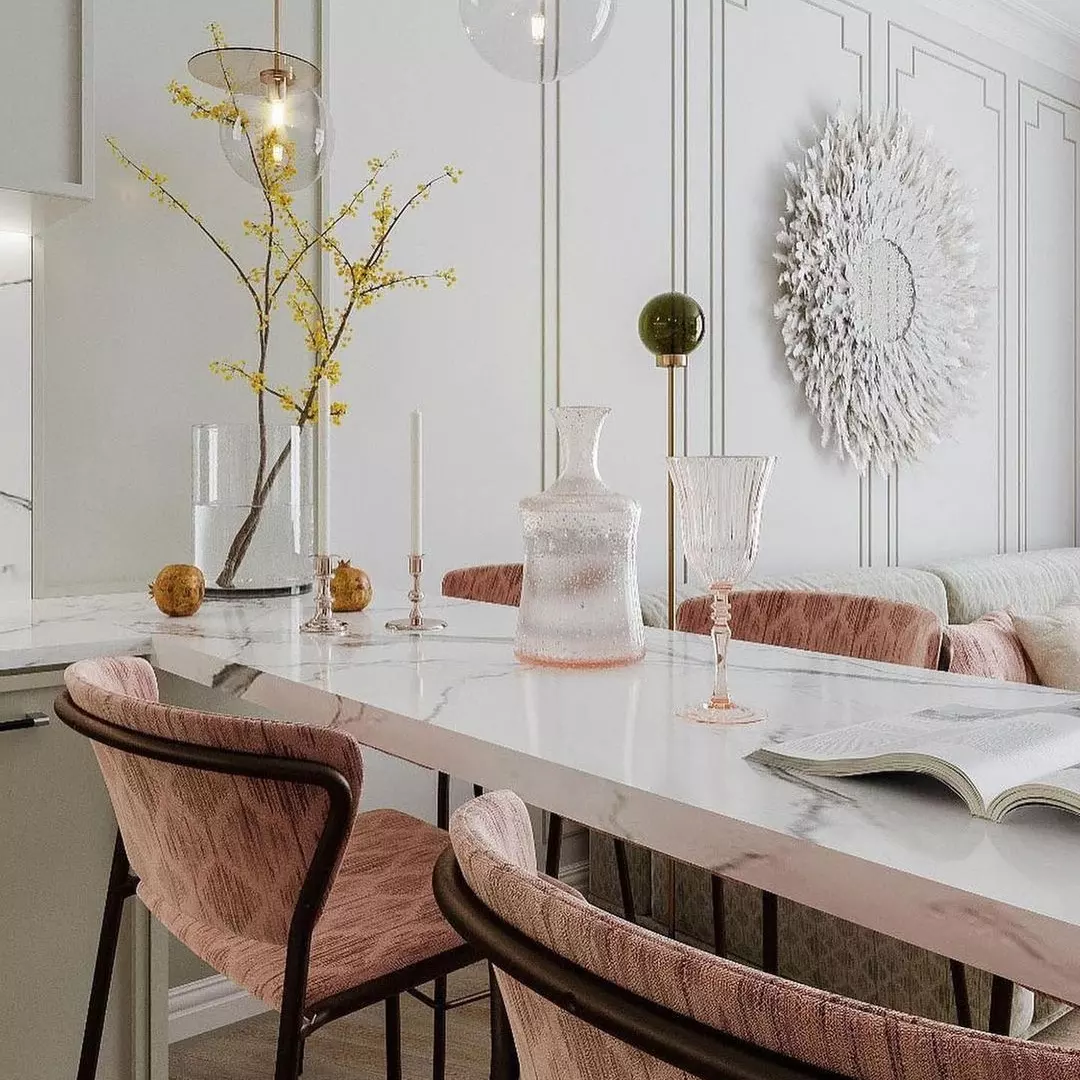
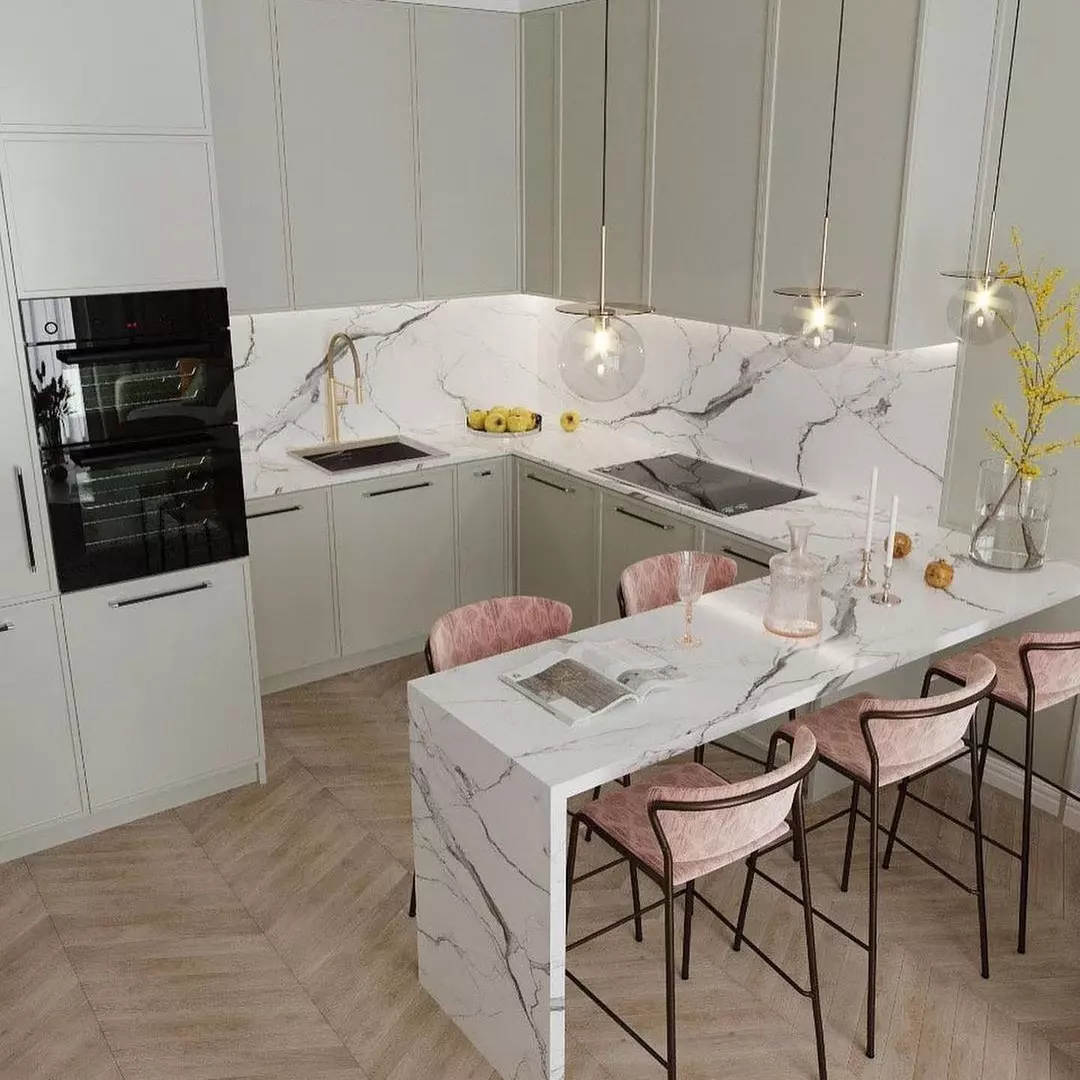
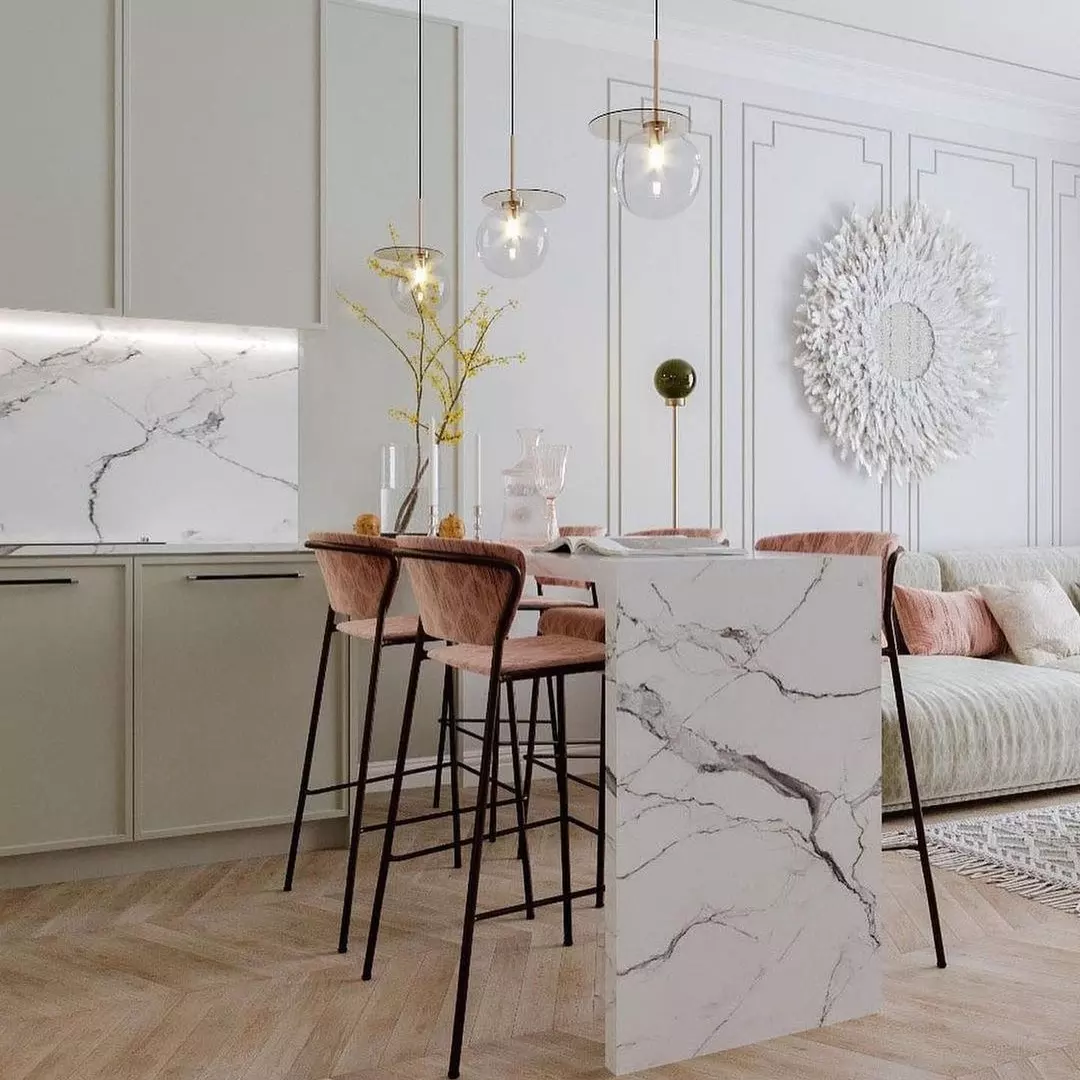
Mixed-Material Islands: Waterfall marble edges are frequently paired with cantilevered wood breakfast bars to offer both elegance and tactile warmth.
Artistic Illumination: Mid-century gold chandeliers or glass globe pendants act as sculptural centerpieces above functional prep areas.
Refined European Heritage
Grand, custom-built kitchens continue to draw from European artisanal traditions.
Bold Color Palettes: Royal blue cabinetry accented with intricate brass framing creates a sophisticated, “maximalist” environment.
Historical Textures: Barrel-vaulted stone ceilings and hexagonal terracotta flooring provide a sense of timelessness and permanence.
Copper Accents: Oversized range hoods and copper backsplashes serve as dramatic focal points for professional-style cooking zones.
For a closer look at these diverse styles and the materials that define them, explore professional design insights at Kitchen Design Ideas.
 https://www.instagram.com/kitchen.design.ideas
Architectural Foundations: Light and Volume
Modern kitchen design increasingly prioritizes open, airy environments that maximize both natural and artificial light.
Volumetric Space: Many contemporary layouts utilize vaulted shiplap ceilings and exposed wooden trusses to increase vertical volume, creating a sense of grandeur.
Strategic Illumination: The integration of large skylights and expansive windows ensures that prep areas remain flooded with natural light.
Decorative Lighting: Glass globe pendants and mid-century gold chandeliers serve as sculptural centerpieces, adding geometric interest above monolithic islands.
Material Mastery: Industrial Strength vs. Organic Warmth
The choice of materials defines the primary “soul” of the culinary space, often contrasting hard, engineered surfaces with natural textures.
The Monoblock Aesthetic: A standout trend is the use of mirror-polished stainless steel islands. These reflective surfaces make large functional structures feel almost transparent while providing a professional-grade workspace.
Natural Stone Artistry: Monolithic marble islands with dramatic waterfall edges remain a hallmark of luxury, offering a cool, organic counterpoint to high-gloss cabinetry.
Tactile Balancing: To soften modern lines, designers frequently incorporate light oak herringbone flooring, woven baskets, and velvet-upholstered seating.
Bespoke Detailing and Custom Colorways
Customization allows for the injection of bold personality into the highly functional kitchen zone.
Heritage Craftsmanship: Traditional designs may feature royal blue cabinetry accented with intricate brass framing and copper backsplashes, celebrating Old-World artisanal techniques.
Minimalist Integration: High-gloss, handle-less storage walls create a “hidden” kitchen look, where high-end appliances and glassware displays are built directly into seamless architectural panels.
Hardware as Jewelry: Metallic pops, such as brushed gold recessed handles or brass swing-arm wall sconces, act as refined accents against neutral palettes.
Functional Social Hubs
The modern island has evolved beyond a prep station into a multi-functional social anchor.
Layered Islands: Designs often feature cantilevered wood breakfast bars over stone bases, creating dedicated zones for casual dining and social interaction.
Professional Amenities: Integrated cooktops and custom wooden cutting board insets allow for a seamless transition between professional cooking and entertaining.
For further inspiration on these diverse styles and the latest in premium materials, visit Kitchen Design Ideas.
https://www.instagram.com/kitchen.design.ideas
The Bold Aesthetic of Matte Black and Gold
The foundation of this kitchen is its striking matte black cabinetry. While dark kitchens can sometimes feel enclosed, this design uses a high-contrast strategy to maintain a sense of luxury. Every drawer and cabinet is accented with ornate gold corner brackets and hardware, adding a “jewelry” effect that catches the light. This metallic detailing, paired with a crisp white marble backsplash, ensures the workspace remains bright and visually dynamic against the dark surfaces.
Urban Industrial Foundations and Natural Warmth
The kitchen is set within a loft-style environment, celebrated through exposed black structural pillars and visible ductwork. To prevent the industrial elements from feeling too cold, the designer integrated rich herringbone oak flooring. The warm, natural tones of the wood, combined with a large solid-timber dining table, provide a vital organic balance. This mix of “hard” industrial steel and “soft” natural wood creates a layered, lived-in atmosphere that is perfect for both gourmet cooking and social entertaining.
Artistic Lighting and Curated Styling
Lighting plays a central role in defining the room’s character. A large mid-century modern chandelier with conical black shades acts as a sculptural focal point over the dining area, while minimalist globe pendants illuminate the marble island. The space is further personalized with curated decor, including silver serving platters and fresh greenery, which add a “boutique hotel” feel to the home. This attention to detail ensures the kitchen feels like a curated gallery rather than just a utility space.
Design Highlights for High-End Living:
Zoned Open-Plan Layout: A seamless transition from a professional-grade prep zone to an expansive social dining area.
Refined Metallics: Consistent use of gold and brass across faucets, lighting, and cabinet trim for a unified look.
Texture Layering: The combination of smooth marble, matte lacquer, and grained wood for a multi-dimensional feel.
The Aesthetic of Architectural Monochromatism
The defining feature of this space is the seamless integration of the cabinetry and walls. By using a soft sand-colored finish for both the upper and lower flat-panel cabinets, the kitchen achieves a unified, architectural look that minimizes visual clutter. The oversized, matching range hood is built into the wall structure, creating a powerful horizontal focal point that anchors the entire room. This monochromatic approach is further enhanced by the large arched doorway, which introduces a classic European architectural element that floods the space with natural light.
A Centerpiece of Stone and Light
At the heart of the kitchen is a massive marble waterfall island. The thick slab of stone extends all the way to the floor on both sides, providing a solid, monolithic presence. The subtle veining in the stone adds the only natural pattern to the room, preventing the neutral palette from feeling flat.
Above the island, a row of six spherical glass pendant lights is suspended at varying heights. These transparent globes add a layer of delicate, geometric interest without blocking the view of the beautiful cabinetry and stone surfaces behind them.
Refined Materials and Soft Textures
To balance the hard surfaces of the stone and lacquer, the designer introduced soft, tactile elements:
Gold-Toned Seating: Four minimalist bar stools with plush cream upholstery and slender gold frames line the island, adding warmth and a touch of glamour.
Metallic Accents: Slim gold hardware on the cabinets and matching dual faucets provide a consistent, high-end “jewelry” effect throughout the space.
Seamless Flooring: The high-gloss white flooring reflects the abundant light, making the expansive room feel even more open and airy.
Design Takeaways for an Elegant Home:
Tone-on-Tone Layering: Using slightly different shades of the same neutral color across various materials (wood, stone, metal) creates a sophisticated, multi-dimensional look.
Scale and Proportion: In large spaces, oversized elements like a massive island or a wide range hood are necessary to keep the design from feeling sparse.
Minimalist Lighting: Clear glass fixtures are an excellent way to provide illumination and style while maintaining an open, uncluttered visual field.
Industrial Avant-Garde: The Mirror-Finish Masterpiece
One of the most provocative designs in this collection is the ultra-modern, mirror-polished stainless steel island. By utilizing a high-shine surface instead of traditional matte metal, the island reflects the entire room, creating an “invisible” mass that makes the kitchen feel more expansive. This look is balanced with organic elements, such as glass cloche terrariums and rustic wooden cabinetry, proving that industrial design can feel curated and artistic.
Transitional and Farmhouse Serenity
The collection also highlights the enduring popularity of transitional and modern farmhouse aesthetics. These spaces prioritize natural light and architectural character:
Vaulted Structures: Many designs feature exposed wooden trusses or pitched shiplap ceilings to increase vertical volume.
Natural Illumination: Large windows and strategically placed skylights ensure that workspaces remain bright and connected to the outdoors.
Textural Balance: Glossy subway tiles often meet matte Shaker-style cabinetry, accented by brass swing-arm sconces or gold-toned hardware.
The Art of Bespoke European Heritage
In contrast to minimalist trends, the collection explores grand, custom-built kitchens inspired by historic European design. A standout is the royal blue custom kitchen, which features intricate brass framing and a massive professional-grade range. Other designs utilize barrel-vaulted stone ceilings and custom metalwork to create a sense of Old-World grandeur. These kitchens celebrate craftsmanship through:
Mixed Metals: Combining copper backsplashes, brass trims, and stainless steel prep surfaces.
Classic Foundations: Patterned cement tiles or hexagonal terracotta flooring provide essential warmth and history.
Architectural Framing: The use of brick arches or ornate ceiling moldings to define functional zones.
Modern Organic Minimalism
For a more contemporary “quiet luxury” feel, several designs embrace monochromatic palettes of sand, beige, and soft stone. These kitchens often feature:
Handle-less Cabinetry: High-gloss or matte panels that create a seamless, furniture-like appearance.
Sculptural Lighting: Mid-century gold chandeliers or glass globe pendants that add a soft geometric contrast to sharp lines.
Waterfall Islands: Dramatic marble or stone islands that serve as both a high-end prep station and a social hub.