
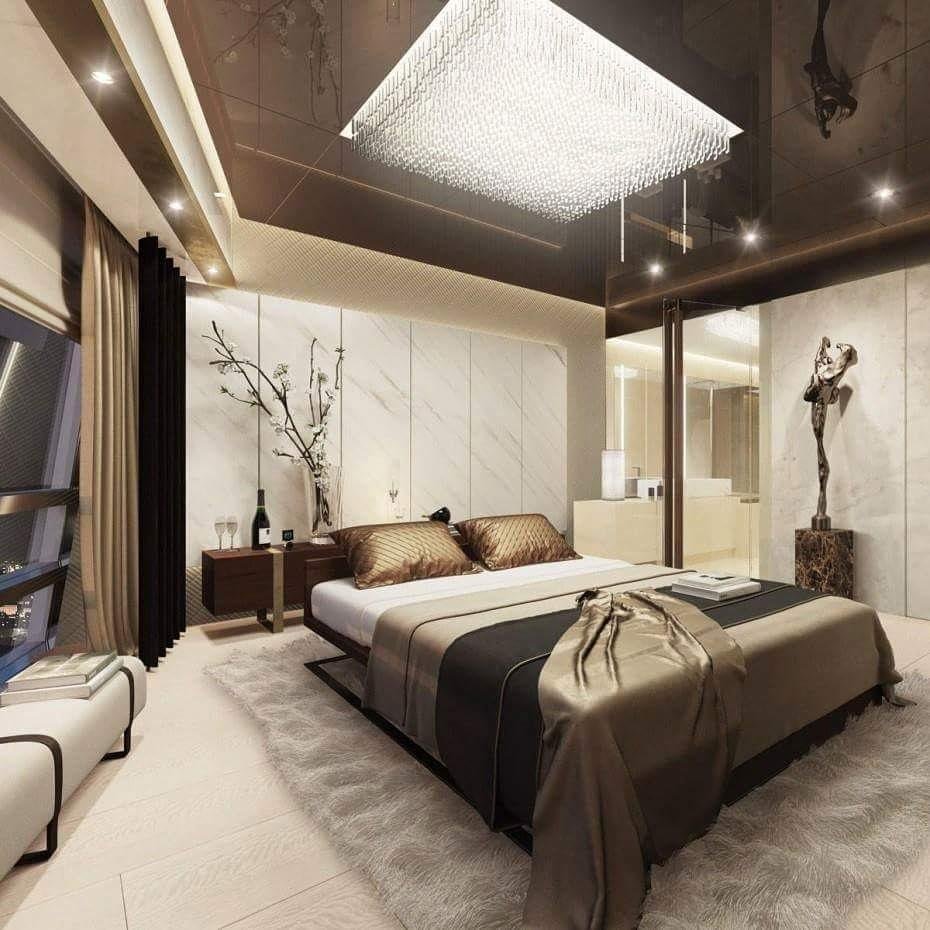
The Art of the Elevated Suite: A Deep Dive into Modern Luxury
Creating a bedroom that feels both opulent and cozy is a delicate balancing act. This space achieves harmony by focusing on three core pillars: reflective surfaces, soft textures, and structural depth.
1. The Multi-Dimensional Ceiling
One of the most striking features is the coffered ceiling design. By combining a matte perimeter with a high-gloss, chocolate-toned center panel, the room gains incredible visual depth. The oversized, rectangular crystal chandelier acts as “ceiling jewelry,” reflecting off the glossy surfaces to make the room feel larger and more vibrant.
2. Materiality: Marble & Metallics
The walls utilize large-format marble paneling, which provides a clean, architectural backdrop. To prevent the stone from feeling cold, the design integrates warm metallics through bronze and gold silk bedding. Dark wood nightstands anchor the bed, adding an organic element that grounds the sophisticated stone and glass surroundings.
3. Textural Layering
A luxury room must appeal to the sense of touch. The ultra-plush, high-pile shag rug provides a soft landing for feet, contrasting beautifully against the sleek, light-colored hardwood flooring. Furthermore, the floor-to-ceiling blackout curtains in a heavy charcoal fabric add a sense of drama while ensuring the room remains a functional, quiet retreat.
4. Curated Decor and Art
Rather than cluttering the space, every piece of decor is intentional. The tall, slender branches in a glass vase mimic the height of the room, while a bronze figurative statue on a marble plinth adds a gallery-like feel. This signals that the room is not just for sleeping, but is a curated space for appreciation and rest.
Essential Design Takeaways
The Color Palette Focus on a sophisticated neutral base of cream, beige, and charcoal. Use metallic accents like gold and bronze to add “jewelry” to the room without overwhelming the senses.
Layered Lighting To achieve this glow, use a three-tier lighting strategy: recessed spotlights for general visibility, hidden cove lighting for ambiance, and a statement chandelier to serve as the room’s focal point.
Spatial Flow If you have an ensuite bathroom, consider a glass partition. This maintains an open, “airy” feel throughout the suite while clearly defining different functional zones.
The “Hero” Piece Choose a statement bed with a low profile. This allows the wall treatments and ceiling features to remain the stars of the show, preventing the room from feeling top-heavy or cramped.
The Masterclass in Modern Luxury Design
Creating a space of this caliber requires more than just expensive furniture; it requires a deep understanding of how light, shadow, and material interact.
1. Masterful Ceiling Architecture
The ceiling is often the “forgotten wall,” but here it is the primary focal point. By using a recessed coffered design with a high-gloss finish, the room creates a mirror effect that doubles the perceived height of the space. This architectural detail adds a layer of grandeur that separates standard rooms from luxury suites.
2. Integrated Statement Lighting
Beyond the stunning crystal chandelier, the room utilizes hidden LED cove lighting along the perimeter. This “invisible” light source washes the walls in a soft glow, highlighting the texture of the marble and creating an ambient mood that is perfect for relaxation after dark.
3. The Power of Large-Format Marble
Using expansive marble slabs on the walls instead of traditional paint or wallpaper introduces a sense of permanence and weight. The subtle veining in the stone provides a natural, organic pattern that feels sophisticated rather than busy, serving as a neutral backdrop for the more vibrant metallic accents.
4. Sophisticated Metallic Tones
The use of bronze, gold, and champagne tones in the bedding and pillows adds “warmth” to the cool stone walls. These shimmering fabrics catch the light from the chandelier, ensuring the bed looks inviting and plush. Mixing these metallics with dark charcoal drapery provides the high-contrast look essential for modern aesthetics.
5. Organic and Sculptural Elements
To prevent the room from feeling too clinical or sharp, the design incorporates soft organic shapes. The tall floral arrangement adds a touch of nature, while the bronze statue provides a vertical silhouette that draws the eye upward. These pieces act as the “soul” of the room, giving it a curated, gallery-like personality.
6. Sensory Textural Contrast
Design is as much about touch as it is about sight. The juxtaposition of the sleek, cold marble walls against the incredibly soft, oversized shag rug creates a sensory experience. This layering of “hard and soft” materials is a signature move in high-end interior design to ensure a space feels comfortable despite its formal appearance.
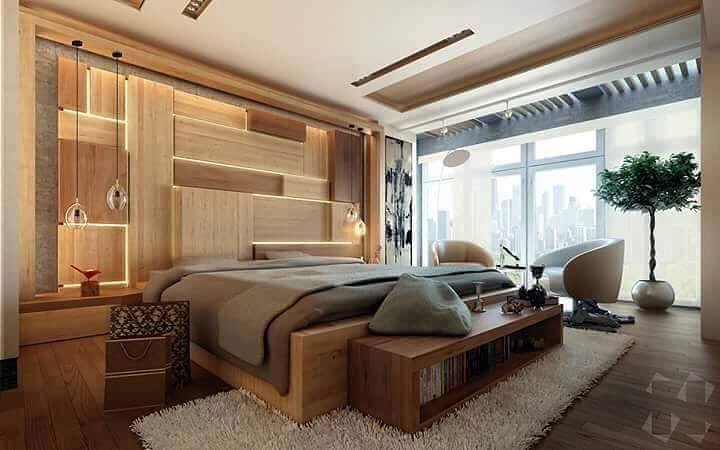
Defining Modern Organic: A Sanctuary of Wood and Light
The beauty of this room lies in its ability to feel expansive yet intimate. By utilizing a monochromatic wood palette, the design achieves a seamless flow that connects the walls, floor, and furniture into one cohesive narrative.
1. The Architectural Feature Wall
The most prominent element is the custom wood-paneled headboard wall. Instead of a flat surface, this wall uses varying depths and rectangular geometric blocks to create a 3D effect. The integration of horizontal LED strip lighting between the panels adds a futuristic glow, highlighting the natural grain of the timber and providing a soft, indirect light source that is perfect for evenings.
2. Natural Light and Urban Connection
The floor-to-ceiling windows act as a living canvas, bringing the city skyline into the room. By keeping the window treatments minimal and using sheer, light-filtering fabrics, the room maximizes natural daylight. This connection to the outside world prevents the heavy use of wood from making the space feel closed in, maintaining a bright and airy atmosphere.
3. Layered Ambient Lighting
In addition to the illuminated wall, the room features delicate glass pendant lights suspended over the bedside areas. These globes provide focused “task lighting” for reading while adding a touch of elegance. The combination of recessed ceiling spots and the warm glow from the feature wall ensures that the lighting can be adjusted to suit any time of day.
4. Functional Minimalist Furniture
The bed frame and the end-of-bed bench are crafted from the same warm wood as the walls, reinforcing the minimalist theme. The bench serves a dual purpose as both a seating area and a bookshelf, proving that luxury design can also be highly functional. The low profile of the furniture ensures that the view out of the window remains unobstructed.
5. Biophilic Design Elements
To soften the linear architecture, the room incorporates biophilic elements like the potted indoor tree and organic-shaped lounge chairs. These curves provide a necessary contrast to the sharp lines of the woodwork. The inclusion of greenery improves air quality and adds a vibrant pop of color that breathes life into the neutral color scheme.
6. Grounding with Soft Textures
To balance the hard wooden surfaces, a plush, off-white area rug is placed under the bed. This adds a crucial layer of physical comfort and acoustic dampening. The mix of stone-grey bedding and soft upholstery on the seating creates a tactile variety that makes the room feel cozy and lived-in rather than just a showroom.
The Architecture of Comfort: A Deep Dive into Organic Design
This room proves that a minimalist color palette doesn’t have to be boring. Through clever layering and lighting, the space feels rich and detailed without the need for excessive decor.
1. The Sculptural “Block” Headboard Wall
The standout feature is the custom-built geometric wall. By using varying thicknesses of wood panels, the designer has created a rhythmic, 3D surface. This avoids the flat look of traditional walls and instead creates a sense of “architectural depth.” The recessed LED strips tucked behind these blocks turn the entire wall into a soft, glowing lantern, which is much more relaxing than harsh overhead lighting.
2. Material Continuity and Visual Flow
One of the secrets to the room’s high-end feel is the “envelope” effect. The wood from the floors continues up into the cabinetry, the bed frame, and the feature wall. This continuity creates a seamless visual flow that makes the room appear larger and more cohesive. It eliminates visual “noise,” allowing the mind to rest more easily in the environment.
3. The Urban Indoor-Outdoor Synergy
The design strategically positions the bed to face the expansive glass windows. This “biophilic” approach prioritizes the view and natural light, making the city skyline feel like a part of the room’s wallpaper. The use of a tall, slender indoor tree in the corner further blurs the line between the interior and the exterior, bringing a breath of fresh air into the urban setting.
4. Multi-Tiered “Glow” Lighting Strategy
The lighting in this room is functional art. You have three distinct layers:
The Accent Layer: The LED strips in the wall that highlight the wood grain.
The Task Layer: The delicate glass pendant teardrops for bedside reading.
The Ambient Layer: Subtle ceiling spotlights and natural light. Together, these layers allow the inhabitant to completely change the mood of the room with the flip of a switch.
5. Curated Furniture Silhouettes
The furniture is chosen for its “low-slung” profile. The bed sits low to the ground, and the bench at the foot of the bed is open-framed. This ensures that the sightlines across the room remain clear, emphasizing the spaciousness of the floor plan. The rounded, “tulip-style” lounge chairs by the window provide a soft, curvy contrast to the straight lines of the woodwork.
6. Tactical Texture and Sound Dampening
In a room with so many hard surfaces (wood, glass, stone), acoustics are vital. The high-pile, “cloud” rug under the bed serves two purposes: it provides a soft sensory experience for the feet and acts as a sound absorber, ensuring the room feels quiet and intimate rather than echoey. The stone-grey linens add a final layer of matte texture that complements the warmth of the timber.
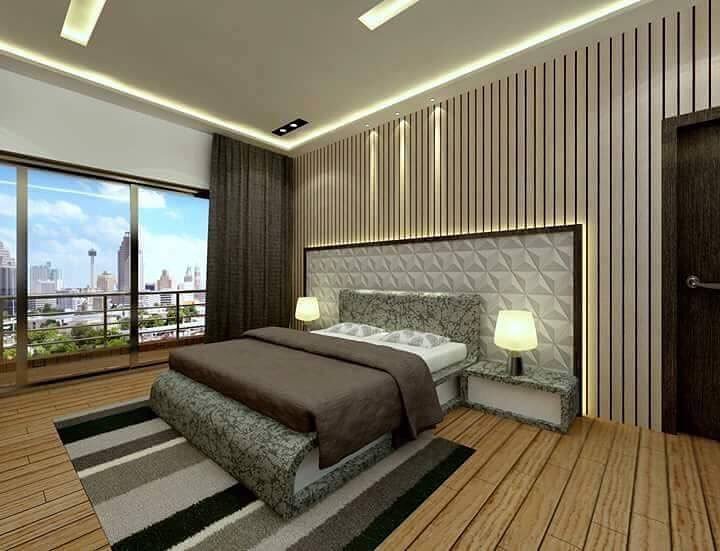
The Geometry of Sleep: A Masterclass in Linear Design
The success of this space lies in its use of repetition and contrast. By layering vertical lines against geometric textures, the room achieves a dynamic energy that is balanced by a neutral, calming color palette.
1. The Vertical Slat Feature Wall
The defining element of the room is the floor-to-ceiling vertical slat wall. These thin, dark lines serve two purposes: they draw the eye upward to make the ceiling feel higher, and they provide a sophisticated “pinstripe” effect. This architectural backdrop adds a sense of order and modern rhythm to the entire suite.
2. 3D Geometric Headboard Inlay
To create a focal point, the design features a large rectangular inlay behind the bed with a 3D diamond-patterned texture. This white-on-white geometric relief adds tactile interest without introducing a new color, maintaining the room’s minimalist integrity while providing a soft, padded aesthetic for the sleeping area.
3. Curved Bed Frame and Textural Contrast
While the walls are defined by straight lines, the bed frame introduces a soft, sweeping curve at the foot. Upholstered in a grey mottled fabric, it provides a “soft” counterpoint to the rigid wooden floors. This curvature breaks the linear dominance of the room, making the bed itself feel like an inviting island of comfort.
4. Integrated Glow and Task Lighting
The lighting plan is highly strategic. Perimeter cove lighting tucked into the ceiling creates a “floating” effect, washing the upper walls in a soft, golden glow. This is complemented by modern, bell-shaped bedside lamps that provide warm task lighting, ensuring the space feels cozy and intimate in the evening.
5. Multi-Tone Striped Area Rug
Underneath the bed, a large area rug with wide horizontal stripes of charcoal, grey, and cream grounds the furniture. The horizontal stripes of the rug interact with the vertical slats of the wall to create a “grid” effect, which is a hallmark of high-end metropolitan design.
6. Urban Connectivity and Drapery
The expansive glass sliding doors offer an unobstructed view of the city skyline, making the urban environment part of the room’s décor. Deep charcoal floor-to-ceiling curtains provide a heavy, luxurious frame for the view, allowing for total privacy and light control when needed.
Architectural Precision: A Deep Dive into Linear Elements
This design moves away from traditional decor and instead uses the structure of the room itself to provide visual interest. It is a perfect example of how “pattern-on-pattern” can work in a minimalist setting.
1. The Vertical Pinstripe Wall Effect
The black vertical slats against the light wood backdrop act like a custom architectural installation. Beyond just looking modern, these slats create a “vertical stretch,” tricking the eye into seeing the room as much taller than it actually is. The repetition of these lines creates a rhythmic, calming background that anchors the bed without the need for traditional artwork.
2. The 3D Relief Headboard Panel
The white padded inlay features a “low-poly” or faceted diamond texture. Because the panel is monochromatic, it relies entirely on shadow and light to reveal its pattern. This adds a layer of quiet luxury; it doesn’t shout for attention with bright colors, but rather rewards the viewer with intricate detail upon closer inspection.
3. The “Crescent” Upholstered Bed Frame
The bed frame breaks the room’s rigid geometry with its distinct curved footboard. The “mottled” or salt-and-pepper fabric provides a textured, organic feel that contrasts with the smooth wood slats. This curve is essential because it softens the room’s overall “hardness,” signaling that this is a place of comfort and rest despite the sharp architectural lines.
4. Perimeter “Wash” and Glow Lighting
The lighting is designed to “bathe” the surfaces rather than point directly at them. The recessed ceiling lights are positioned to graze the slat wall, casting subtle shadows that emphasize the 3D nature of the wood. The glowing white bedside lamps act as symmetrical anchors, providing a warm, diffused light that balances the cool urban view from the window.
5. Geometric Flooring and Rug Interaction
The design utilizes a “layered line” technique on the floor. The wide, natural grain of the wooden floorboards runs horizontally, while the striped rug sits atop them. This creates a “criss-cross” visual foundation. The rug’s broad stripes in varying shades of grey and cream help define the “sleeping zone” within the open floor plan, providing a soft tactile transition for bare feet.
6. Framing the Urban Canvas
The floor-to-ceiling glass creates a “living wall” that changes with the time of day. By using dark, slate-grey drapes, the designer creates a heavy visual frame for the city. When the curtains are open, the city becomes the primary color source; when closed, the room becomes a secluded, dark-toned cocoon for deep sleep.
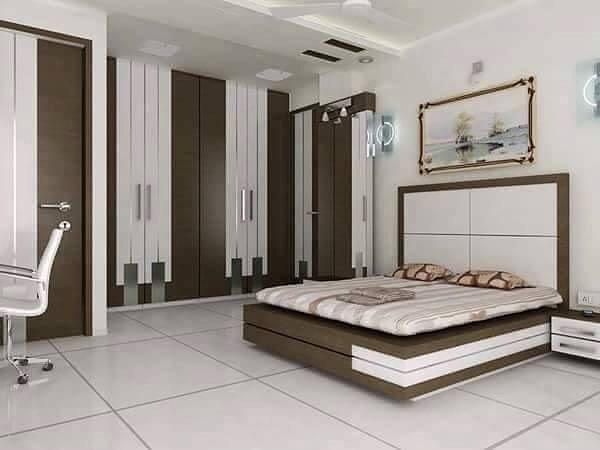
The Power of Contrast: Contemporary Two-Tone Bedroom Design
The beauty of this room lies in its “Graphic Contrast.” By using only two primary tones—deep espresso wood and crisp white—the designer creates a space that feels visually organized and strikingly modern.
1. Integrated Wardrobe Architecture
The most impressive feature is the floor-to-ceiling custom wardrobe system. Rather than using solid wood doors, which could feel heavy, the design incorporates vertical white “piano-key” inserts. These white panels break up the dark wood surface, adding a rhythmic verticality that makes the ceiling appear higher. The staggered heights of the white sections create a dynamic, modern pattern that doubles as architectural art.
2. The Low-Profile Floating Bed
The bed frame follows the “Platform Style,” sitting low to the ground to maintain an open feel in the room. The dual-tone theme is continued here, with white horizontal stripes cutting through the dark wood base. This “banding” effect provides a sense of stability and grounds the furniture, making the bed look like a custom piece of sculpture rather than just a place to sleep.
3. Symmetrical Headboard and Nightstands
The headboard is divided into four clean quadrants with a thin dark frame, echoing the geometric precision found in the wardrobe. The integrated floating nightstands are perfectly aligned with the bed frame, creating a seamless horizontal line across the wall. This symmetry is a hallmark of contemporary design, as it provides a sense of balance and calm that is essential for a sleeping area.
4. Reflective Flooring and Spatial Expansion
The use of large-format white floor tiles with subtle grey grout lines creates a reflective surface that bounces light throughout the room. This “mirror effect” on the floor makes the dark wood elements feel lighter and prevents the room from feeling cramped. The light-colored floor acts as a neutral canvas, allowing the bold dark-and-white furniture to take center stage.
5. Functional Lighting and Modern Accents
The lighting plan is diverse, featuring recessed ceiling spotlights and unique circular “halo” wall sconces. These sconces add a futuristic touch, providing soft ambient light that contrasts with the traditional gold-framed landscape painting above the bed. This mix of modern technology and classic art gives the room a “collected” feel, showing that contemporary spaces can still have a touch of traditional personality.
6. The Integrated Workspace
By matching the door and the office chair to the room’s primary tones, the designer has created a functional “work-from-home” corner that doesn’t feel out of place. The white ergonomic chair disappears against the white walls, while the dark wood door anchors the corner. This proves that even in a smaller room, a dedicated workspace can be incorporated without disrupting the aesthetic flow.
The Symmetry of Style: A Deep Dive into High-Contrast Living
This bedroom moves away from “soft” decor and instead uses bold blocks of color to define the architecture of the space. Every element is designed to be part of a larger, integrated system.
1. The “Piano Key” Wardrobe System
The wardrobe is the architectural anchor of the room. Rather than a standard closet, this is a custom floor-to-ceiling installation. The vertical white inserts are placed at varying heights against the dark wood, creating a “staggered” visual rhythm. This design choice serves a clever purpose: it breaks up the heavy dark mass of the wood, making the storage feel light and airy while adding a custom, bespoke feel to the room.
2. Integrated Platform Bed Geometry
The bed is designed with a “floating platform” aesthetic. By using horizontal white stripes—or “banding”—across the dark wood base, the designer creates a sense of motion. This horizontal lines counter the vertical lines of the wardrobe, creating a balanced “grid” across the room. The low profile of the bed ensures that the room maintains an open, spacious feel, which is essential for modern urban living.
3. The Quadrant Headboard Design
The headboard acts as a piece of minimalist art. Divided into four equal white panels within a dark wooden frame, it provides a clean, symmetrical backdrop for sleep. This “four-quadrant” approach is a classic modern technique that adds subtle detail without introducing busy patterns or unnecessary colors. It keeps the focus on the pure geometry of the space.
4. Reflective Flooring for Visual Expansion
The choice of oversized, high-gloss white floor tiles is a strategic move to maximize light. Because the furniture uses deep, dark wood, the reflective floor acts as a mirror, bouncing natural and artificial light upward. This prevents the dark tones from “shrinking” the room and ensures the space feels bright and energetic even on cloudy days.
5. Futuristic “Halo” Lighting Accents
One of the most unique features is the pair of circular wall sconces. These “halo” lights provide a soft, diffused glow that contrasts with the sharp, straight lines of the furniture. This addition of “circular” geometry softens the room’s overall hardness. The mix of these futuristic lights with a traditional gold-framed painting shows how modern design can successfully bridge the gap between “new” and “classic.”
6. Seamless Workplace Integration
The room effectively balances rest and productivity. By using a white ergonomic chair and a matching dark wood door, the transition from the sleeping area to the workspace is almost invisible. The desk area feels like a natural extension of the room’s architecture rather than an afterthought, proving that a home office can be stylish and unobtrusive.
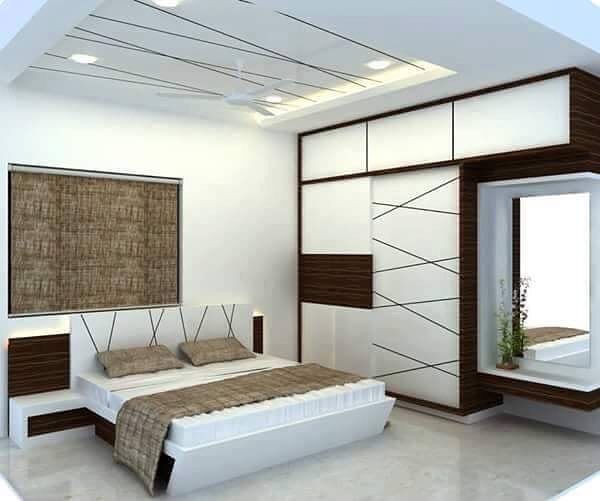
The Intersection of Style: A Deep Dive into Abstract Modernism
The core philosophy of this room is visual movement. By applying a consistent “slashing” line motif across multiple surfaces, the designer has created a space that feels dynamic and cohesive.
1. The Kinetic Ceiling Architecture
Unlike standard flat ceilings, this room features a recessed tray ceiling adorned with dark, intersecting diagonal lines. This “kinetic” pattern mimics the look of modern art and draws the eye upward, immediately increasing the perceived height of the room. The integrated recessed spotlights are positioned at the corners of the tray, ensuring that the light washes evenly over the geometric pattern.
2. The Integrated Wardrobe and Vanity Suite
The storage system is a masterclass in custom cabinetry. It combines white matte panels with dark espresso wood in a “staggered” block layout. The middle sliding door features the signature intersecting line motif, which visually bridges the gap between the white storage blocks and the dark wood sections. This asymmetrical design keeps the large wardrobe from feeling bulky or monotonous.
3. The “Float” Vanity and Dressing Mirror
Integrated directly into the wardrobe unit is a sleek, cantilevered vanity. By “floating” the dressing table off the ground, the designer maintains the open floor space, which is a key trick for making urban bedrooms feel larger. The large, backlit mirror provides excellent illumination for grooming while adding a soft, ambient glow to that corner of the room.
4. Symmetrical Headboard Design with Hidden Lighting
The headboard continues the abstract line theme, featuring thin dark lines that fan out in a V-shape. This creates a sense of “expansion” behind the bed. Small recessed light pockets are built into the side of the headboard units, providing a soft night-light effect that highlights the texture of the wall without the need for bulky bedside lamps.
5. Earthy Textural Balance
To soften the sharp, “high-tech” lines of the architecture, the room incorporates earthy tones. The textured brown window blind and the matching bed runner introduce an organic, fabric-like feel. These elements provide a necessary sensory contrast to the smooth, reflective floor tiles and the hard-edged cabinetry.
6. The Minimalist Floating Bed Frame
The bed itself features a clean, white platform base that matches the room’s primary color. The low profile and the lack of a traditional footboard ensure that the visual path from the door to the window remains clear. This “unobstructed” layout is essential for maintaining the clean, minimalist energy that defines 2026 interior trends.
The Art of Linear Movement: A Deep Dive into Kinetic Interiors
This design focuses on breaking the “box” feel of a standard room. By using intersecting lines, the space feels more like a dynamic environment and less like a static four-walled enclosure.
1. The “Shattered” Ceiling Concept
The ceiling serves as the room’s “fifth wall.” By applying dark, thin lines that criss-cross over the recessed white tray, the designer creates a shattered or kinetic effect. This draws the gaze upward and provides a sense of infinite height. The white ceiling fan is chosen to blend in, ensuring that the dark lines remain the primary architectural statement above the bed.
2. The Integrated Multi-Zone Wardrobe
The cabinetry is a brilliant example of “Zone Mapping.” Instead of a single uniform closet, the wardrobe is divided into white storage blocks, dark wood accents, and a central sliding panel with the signature abstract motif. This asymmetry makes the furniture feel lighter and more like a wall mural. It hides the massive amount of storage behind a facade that looks like high-end modern cabinetry.
3. The Cantilevered “Floating” Vanity
The dressing area is carved out of the wardrobe unit itself, creating a seamless transition from storage to grooming. By “cantilevering” the vanity shelf—attaching it to the wall without legs—the floor space remains completely visible. This is a vital design trick for urban apartments, as seeing more of the floor automatically makes a room feel larger and more organized.
4. Geometric Harmony in the Headboard
The headboard acts as the central anchor of the “visual fanning” effect. The dark lines on the white headboard panel are designed to lead the eye outward, creating a sense of width. To add a layer of luxury, the designer integrated “light pockets” on either side of the bed. These recessed niches provide a soft, warm glow that highlights the wood grain and eliminates the need for cluttered nightstand space.
5. Balancing the “Hard” and “Soft”
With so many smooth, reflective surfaces like the polished tiles and matte panels, the room needs “visual weight” to feel cozy. The choice of the coffee-brown textured window blind and the matching waffle-knit bed runner provides this. These earthy, fabric-heavy elements absorb light and sound, ensuring the room feels like a soft retreat despite its sharp, angular architecture.
6. The “Invisible” Lighting Scheme
The lighting in this room is felt rather than seen. Apart from the central fan light, the room relies on recessed “can” lights and hidden LEDs behind the mirror and headboard. This “wash” of light emphasizes the 3D texture of the wardrobe and the gloss of the floor, creating a futuristic “glow” that makes the room feel high-end and technologically advanced.
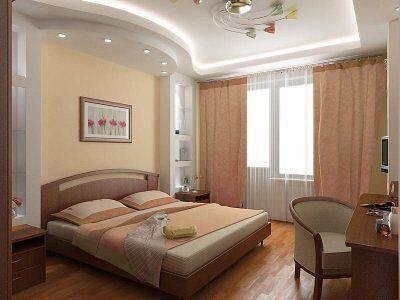
This bedroom design is a beautiful example of Soft Transitional Warmth, prioritizing curved silhouettes and a cozy, sun-kissed color palette. It is a perfect blueprint for creating a room that feels lived-in, nurturing, and architecturally unique without being overly sharp or cold.
The Beauty of Curves: A Deep Dive into Transitional Warmth
The success of this design lies in its “Organic Flow.” By moving away from rigid squares and embracing soft, sweeping arcs, the room feels more natural and relaxing to the eye.
1. The Sculptural S-Curve Ceiling
The ceiling is the most innovative feature of the room. Instead of a traditional flat tray, it uses a multi-layered S-curve soffit. This architectural wave divides the room visually and houses hidden LED cove lighting. The “glow” from the ceiling creates a halo effect that softens the entire atmosphere, making the room feel like it is perpetually bathed in the light of a sunset.
2. The Recessed Accent Headboard Wall
The bed is nestled into a slightly recessed wall section, which creates a “niche” or “cocoon” effect. The wall is painted in a warm cream-beige, providing a gentle contrast to the white shelving units on either side. This layering adds depth to the room and makes the sleeping area feel more private and secure within the larger space.
3. Warm Peach and Terracotta Tones
The color story focuses on “Warm Neutrals.” By using peach-toned drapes and terracotta-hued bedding, the room achieves a vibrant yet soothing energy. These colors are known to promote a sense of well-being and comfort, making them an ideal choice for a master suite designed for total relaxation.
4. Integrated Vertical Display Shelving
To maximize storage without cluttering the floor, the design incorporates floor-to-ceiling recessed shelving units. These white “cubby” style shelves provide a home for small decor items and books. By keeping these units white and vertical, they act as pillars that anchor the bed while maintaining an airy, open feel.
5. Mixed Lighting for Maximum Ambience
The room features a sophisticated “Four-Tier” lighting strategy:
Recessed Spotlights: For direct task lighting.
Cove Lighting: For a soft, ambient glow.
Natural Light: Maximized by the sheer white under-curtains.
Whimsical Fixture: A unique, multi-colored ceiling light that adds a playful, artistic touch to the center of the room.
6. Classic Woodwork and Comfortable Seating
The use of honey-toned wood for the bed frame, nightstands, and vanity adds an element of “Traditional Craftsmanship” to the modern layout. The curved lounge chair by the window encourages a transition from “sleeping” to “living,” providing a dedicated spot for morning coffee or evening reading.
The Architecture of Serenity: A Deep Dive into Curved Design
In this space, every element is designed to lead the eye gently from one corner to the next. The focus is on soft transitions rather than abrupt changes in material or color.
1. The Multi-Tiered “Wave” Ceiling
The ceiling is the primary architectural statement of the room. By using an asymmetrical S-curve soffit, the designer breaks the rigid “box” shape of the bedroom. This “wave” serves a functional purpose as well, hiding the LED strip lights that cast a soft, indirect glow across the ceiling. This eliminates the need for harsh overhead lamps and creates a theater-like ambiance.
2. The Recessed Cocoon Headboard
The wall behind the bed is not just a flat surface; it is a recessed architectural feature. This “niche” design provides a sense of enclosure and security, framing the bed like a piece of art. The creamy beige paint within the recess absorbs the light from the ceiling, creating a warm focal point that anchors the entire room.
3. Warm-Toned Material Palette
The color palette is built on “Sun-Kissed” tones. By layering peach, terracotta, and soft creams, the room feels bright and energized during the day but cozy and intimate at night. These warm hues are complemented by the natural honey-oak finish of the bed frame and flooring, which adds a layer of organic texture to the space.
4. Built-in Vertical “Pillar” Shelving
Instead of using bulky, standalone bookshelves, the designer integrated vertical “cubby” units into the wall structure. These white pillars provide ample space for books and decor without eating into the floor plan. This “integrated storage” approach keeps the room looking organized and ensures that the focus remains on the beautiful curved architecture.
5. The Playful “Solar” Light Fixture
At the center of the room is a unique, whimsical ceiling light with multi-colored glass accents. This fixture acts as the “soul” of the room, adding a touch of personality and color to an otherwise neutral ceiling. It serves as a visual “anchor” that ties the peach curtains and terracotta bedding together, proving that modern rooms can still have a sense of playfulness.
6. Zoned Living for Master Suites
The layout prioritizes more than just sleep. By including a classic curved lounge chair and a sleek wooden vanity/desk area, the room becomes a multi-functional suite. The desk’s smooth, rounded edges echo the curves of the ceiling, showing that the “Soft Transitional” theme is applied consistently from the largest architectural features down to the furniture details.