Cozy Yet Elegant Bedroom Ideas for Ultimate Relaxation

1. Integrated Architectural Headboards

Contemporary luxury is defined by the “Full-Wall” approach. Instead of a standalone bed frame, designers treat the primary wall as a multi-dimensional installation. By extending upholstered panels or wood reliefs from floor to ceiling, the bed becomes a permanent structural anchor. This technique provides a sense of grandeur and provides a stable “horizon line” that makes the room feel wider and more secure.

2. The Multi-Tiered “Glow” Strategy

Professional lighting design avoids harsh, singular sources. Instead, it utilizes a layered approach to control the room’s atmosphere:

  • Ambient Cove Lighting: Hidden LED strips in ceiling recesses provide a soft, shadowless base light.

  • Wall Grazing: Strategic spotlights directed down textured surfaces—such as damask wallpaper or stone slabs—highlight material depth.

  • Floating Effects: Lighting installed at the base of furniture makes heavy platform beds or nightstands appear weightless, adding a futuristic, airy feel.

3. Geometric Precision and Kinetic Energy

To keep minimalist spaces from feeling static, designers introduce “Kinetic Geometry.” This involves the use of intersecting diagonal lines, vertical slat walls, or 3D diamond patterns. These motifs guide the eye across different planes—from the ceiling tray to the wardrobe doors—ensuring the room feels dynamic and curated rather than plain.

4. Acoustic Luxury and Padded Enclosures

As the home becomes a primary retreat, silence has become a marker of wealth. Wall-to-wall padding and heavy, motorized drapery serve as high-performance acoustic buffers. These soft-shell environments dampen external noise and eliminate echoes, creating a “silent chamber” effect that is essential for deep, restorative sleep.

5. High-Contrast Material Mapping

A sharp, metropolitan aesthetic is often achieved through high-contrast color blocking. Pairing deep espresso or charcoal woods with stark, reflective whites creates a clear visual hierarchy. Techniques like “piano-key” cabinetry—alternating dark and light panels—allow for massive storage capacity without the units appearing bulky or overwhelming the room’s scale.

6. Organic Fluidity and Curvilinear Transitions

To balance the rigid lines of modern technology, “Soft Transitional” designs introduce sweeping curves. S-curve ceiling soffits and rounded furniture silhouettes mimic organic forms found in nature. These fluid transitions are psychologically calming, helping to lower the heart rate and foster a more human-centric living space.

7. Reflective Planes and Spatial Expansion

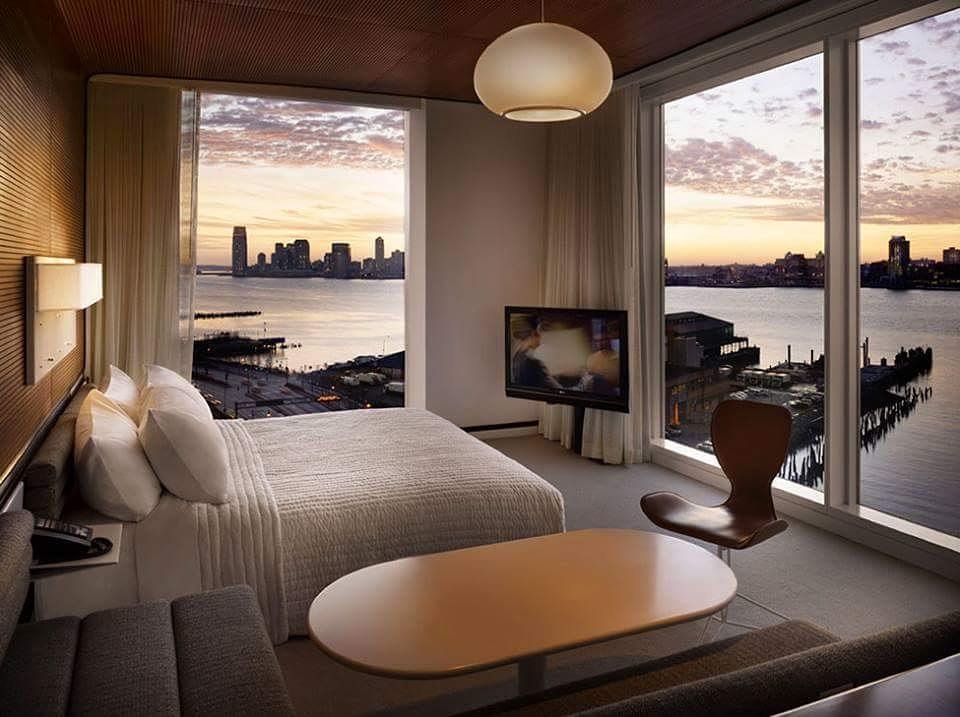
Strategic use of high-gloss surfaces and mirrored panels on ceilings or feature walls is a primary tool for spatial manipulation. By treating a ceiling as a reflective plane, the designer effectively doubles the perceived volume of the room. This is especially effective when reflecting a statement light fixture or an urban view, making even standard suites feel expansive and opulent.

The evolution of high-end bedroom design is moving toward fully integrated architectural ecosystems. Instead of treating a room as a collection of loose items, professional designers now view the floor, walls, and ceiling as a singular, cohesive canvas.


1. The Concept of Total Room Integration

Modern luxury is defined by the disappearance of traditional boundaries. Furniture is no longer “placed” in a room; it is built into the room.

  • Structural Continuity: Custom-built headboards often merge into bedside tables and then transition seamlessly into wall paneling or wardrobes. This creates a “wrapped” feeling that provides psychological comfort.

  • Hidden Utility: Storage solutions are designed to look like architectural wall features. Using push-to-open mechanisms and integrated handles allows massive closets to provide utility without disrupting the visual flow of the space.

2. Architectural Ceiling “Soffits” and Trays

The ceiling is frequently referred to as the “fifth wall” in elite design.

  • Layered Geometry: Using multi-tiered tray ceilings or “soffits” adds immediate depth. These structures are used to define specific zones, such as an S-curve over the bed to highlight the sleeping area.

  • Lighting Pockets: These architectural recesses provide the perfect housing for indirect LED strips, creating a glow that seems to come from the structure itself rather than a bulb.

3. The Science of Layered Illumination

A professionally designed 2026 suite utilizes Light Zonation to control the atmosphere throughout the day.

  • Cove Glow (Ambient): Provides a shadowless, soft light that mimics natural daylight.

  • Wall Grazing (Texture): Lights placed close to a wall to highlight the 3D relief of wood slats, stone, or patterned wallpaper.

  • Floating Effects (Accent): Lighting installed under the bed frame or vanity to give heavy furniture a weightless, futuristic appearance.

4. Acoustic and Tactile Seclusion

In high-end design, “Luxury” is a sensory experience that includes sound and touch.

  • Soft-Shell Walls: Extending upholstered panels wall-to-wall provides high-performance sound dampening. This eliminates echoes and creates a “quiet zone” perfect for rest.

  • Material Contrast: The interplay between “hard” materials (marble, glass, polished metal) and “soft” materials (velvet, silk, high-pile wool) creates a balanced sensory environment that feels both sophisticated and cozy.

5. Kinetic Patterns and Visual Energy

To ensure a minimalist or monochromatic room doesn’t feel static, designers use Kinetic Geometry.

  • Slashing Lines: Intersecting diagonal lines on wardrobes or ceiling trays guide the eye and create energy.

  • Rhythmic Slats: Vertical wood or metal slats create a sense of order and “stretch” the room vertically, making the ceilings appear higher than they are.

The Masterclass in Modern Luxury

Luxury in interior design is no longer just about expensive furniture; it is about creating an immersive environment where the architecture itself tells a story.

1. The Reflective “Infinite” Ceiling

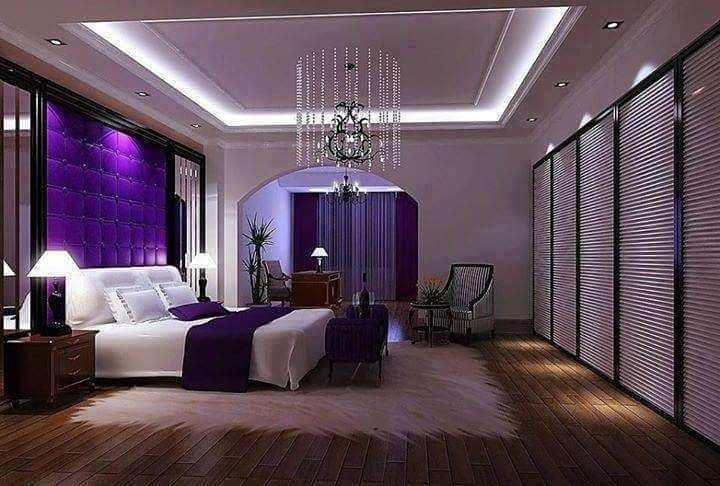
One of the most ambitious features of high-end design is the use of high-gloss or mirrored ceiling panels. By choosing a dark, reflective surface, the designer effectively “removes” the ceiling, creating an illusion of infinite vertical space. When paired with a massive crystal chandelier, the light bounces off the glossy surface, creating a “starlight” effect that makes the room feel cinematic and grand.

2. Natural Stone as an Architectural Foundation

Cladding a primary wall in large-format marble slabs introduces a sense of permanence. Unlike paint or wallpaper, stone has a natural, cooling presence that adds significant “visual weight” to the room. By using vertical metallic dividers between the slabs, the design adds a subtle rhythmic detail that complements the room’s linear profile, grounding the high-gloss elements with an organic, solid base.

3. The Power of Textural Contrasts

A truly luxurious room must appeal to the sense of touch. To balance the “hard” surfaces of marble and glass, the design incorporates “soft” layers:

  • Metallic Silks: Bronze and gold tones in the bedding catch the light and add warmth to the cool stone.

  • Plush Underfooting: An oversized, high-pile shag rug provides a sensory contrast to sleek hardwood or tile floors.

  • Heavy Drapery: Floor-to-ceiling charcoal curtains provide a physical and acoustic barrier, ensuring the room remains a private, quiet retreat.

4. Seamless Spatial Flow with Glass

Modern luxury often utilizes transparent or semi-transparent partitions to define zones. Using floor-to-ceiling glass for an ensuite bathroom maintains a visual “open-concept” flow. It allows the eye to travel through the entire suite without interruption, which is essential for making master suites feel expansive and airy.


The Elegance of Monochromatic Texture

For those who prefer a more nurturing and quiet atmosphere, the focus shifts to Tone-on-Tone layering and soft-touch materials.

5. The “Wall-to-Wall” Padded Headboard

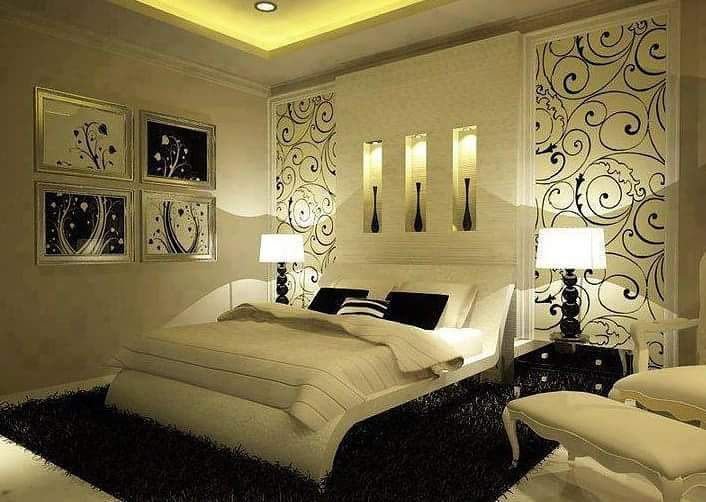
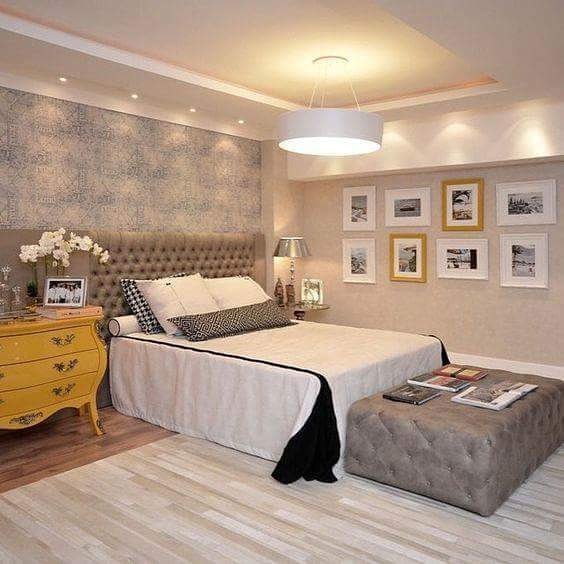
Instead of a traditional bed frame, professional designers often extend the headboard horizontally across the entire width of the wall. This “seamless” upholstery makes the bed feel much larger and acts as an acoustic absorber, deadening echoes for a deeper sleep. The grid-like padding provides a structured yet soft backdrop that feels like a protective cocoon.

6. Wall-Grazing and Ambient Glow

The lighting strategy in a soft-glam room avoids harsh, direct bulbs. Instead, it utilizes Wall-Grazing LEDs hidden in the ceiling. These lights point directly down to catch the texture of patterned wallpaper or fabric panels, creating soft shadows that add depth without the need for bright colors. This “halo” effect makes the architecture appear to glow from within.

7. Glass and Gloss Bedside Integration

To maintain a clean aesthetic, nightstands are often integrated into the wall treatment. Using white gloss finishes with glass tops adds a subtle “sparkle” that echoes the room’s glamorous theme. This mix of high-shine surfaces with matte fabrics ensures the monochromatic scheme stays dynamic and visually interesting.

8. Sophisticated Linen Layering

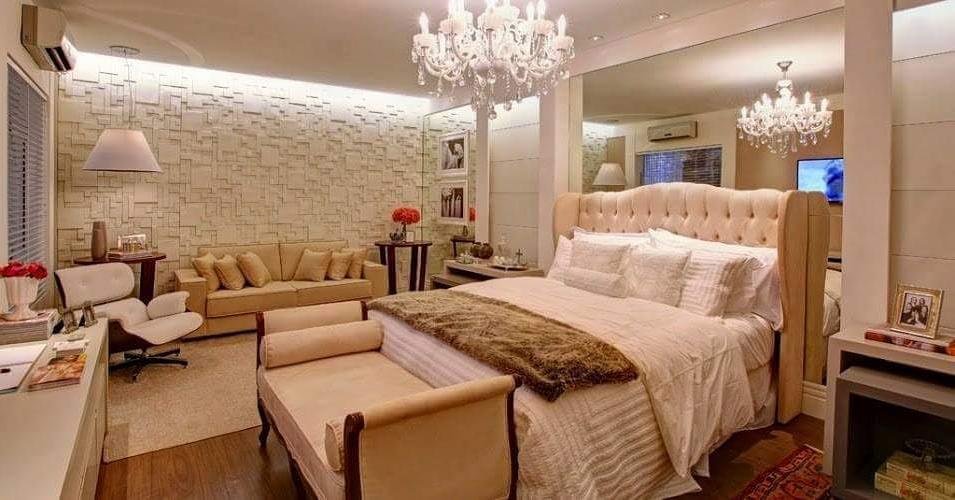
In a neutral room, the bed must be the “Hero Piece.” This is achieved through a triple-layer strategy: a structured quilted coverlet for the base, plush shams for volume, and a cylindrical bolster pillow for a professional finish. Mixing different finishes of the same champagne-beige tone provides the richness required for a high-end look.

Modern master bedroom design in 2026 is moving away from traditional furniture and toward integrated architectural environments. These spaces are defined by how light, geometry, and material textures interact to create a singular, immersive sanctuary.


1. The Core of Integrated Architecture

Luxury is no longer about buying a bed; it is about building a room around the bed. In high-end suites, the headboard is often a full-wall installation that incorporates lighting, storage, and acoustic padding. This “Built-In” philosophy eliminates visual clutter, making the room feel like a permanent, custom-made prestige suite rather than a temporary living space.

2. Three-Tiered Glow Strategy

Professional lighting has moved beyond the single overhead fixture. Designers now use a layered approach to control the mood:

  • Ambient Cove Lighting: LED strips hidden in ceiling recesses provide a soft, shadowless glow.

  • Task Pendants: Low-hanging sculptural lights over nightstands provide focused illumination and act as “room jewelry.”

  • Accent Grazing: Lights directed down a textured wall—like wood slats or 3D wallpaper—highlight the material’s depth.

3. Kinetic Geometry and Linear Rhythm

To give minimalist rooms energy, designers use Kinetic Geometry. This involves intersecting diagonal lines on wardrobes or ceiling trays that create a sense of movement. Additionally, vertical wood or metal slats are used to “stretch” the room vertically, making standard ceilings feel significantly higher and more grand.

4. Acoustic Seclusion and Soft-Shell Design

As urban environments become noisier, the bedroom must function as a high-performance acoustic retreat. Wall-to-wall padded headboards and heavy, motorized drapery serve as sound-dampening features. These “soft-shell” environments eliminate echoes, creating a “silent chamber” effect that is essential for deep sleep.

5. High-Contrast Material Mapping

A sophisticated metropolitan vibe is achieved through Dual-Tone Blocking. Pairing deep espresso wood grains with stark, high-gloss whites creates a sharp visual hierarchy. Innovative “piano-key” designs on wardrobes—alternating light and dark panels—allow massive storage systems to blend into the architectural fabric of the room.

6. Organic Fluidity and Curvilinear Transitions

To balance the sharp edges of modern technology, “Soft Transitional” design introduces sweeping S-curves in ceiling soffits and furniture silhouettes. These organic forms mimic nature, which is psychologically proven to lower heart rates and foster a more human-centric, nurturing environment.

7. Reflective Planes for Spatial Expansion

Strategic use of high-gloss surfaces and mirrored panels on ceilings or feature walls is a primary tool for spatial manipulation. By treating a ceiling as a reflective plane, the designer “doubles” the vertical volume. This creates a sparkling, expansive atmosphere that feels both airy and opulent, regardless of the room’s actual footprint.

1. The Concept of Total Room Integration

Modern luxury is defined by the disappearance of traditional boundaries. Furniture is no longer “placed” in a room; it is built into the structure itself.

  • Structural Continuity: Custom-built headboards often merge into bedside tables and then transition seamlessly into wall paneling. This creates a “wrapped” feeling that provides psychological comfort and a sense of permanence.

  • Invisible Utility: Storage solutions are designed to look like architectural wall features. Using push-to-open mechanisms and integrated handles allows massive floor-to-ceiling closets to provide immense utility without disrupting the room’s visual rhythm.

2. Architectural Ceiling “Soffits” and Trays

The ceiling is frequently referred to as the “fifth wall” in elite design. It is used to manipulate the perception of height and define specific zones within the suite.

  • Layered Geometry: Using multi-tiered tray ceilings or recessed “soffits” adds immediate architectural depth. These structures are often used to mirror the footprint of the bed, creating a vertical anchor for the sleeping zone.

  • Lighting Pockets: These architectural recesses provide the perfect housing for indirect LED strips, creating a glow that appears to come from the structure itself rather than a visible bulb.

3. The Science of Layered Illumination

A professionally designed suite avoids harsh, singular light sources. Instead, it utilizes Light Zonation to control the atmosphere throughout the day.

  • Cove Glow (Ambient): Hidden LEDs in ceiling recesses provide a soft, shadowless light that mimics natural daylight.

  • Wall Grazing (Texture): Lights placed close to a vertical surface to highlight the 3D relief of wood slats, stone, or patterned wallpaper.

  • Floating Effects (Accent): Lighting installed under the bed frame or nightstands to give heavy furniture a weightless, futuristic appearance.

4. Acoustic and Tactile Seclusion

In high-end design, “Luxury” is a sensory experience that includes sound and touch.

  • Soft-Shell Walls: Extending upholstered panels wall-to-wall provides high-performance sound dampening. This eliminates echoes and creates a “quiet zone” perfect for deep, restorative sleep.

  • Material Contrast: The interplay between “Hard” materials (marble, glass, polished metal) and “Soft” materials (velvet, silk, high-pile wool) creates a balanced environment that feels both sophisticated and cozy.

5. Kinetic Patterns and Visual Energy

To ensure a minimalist or monochromatic room doesn’t feel static, designers use Kinetic Geometry to guide the eye.

  • Slashing Lines: Intersecting diagonal lines on wardrobes or ceiling trays create a sense of movement and energy.

  • Rhythmic Slats: Vertical wood or metal slats create a sense of order and “stretch” the room vertically, making standard ceilings appear significantly higher than they are.

The transition toward Integrated Master Suites represents the most significant shift in luxury residential architecture for 2026. This design philosophy moves away from “decorating” a room and focuses instead on architectural environments where every surface is a permanent, functional installation.


1. Total Room Integration: The “Built-In” Standard

High-end design is currently defined by the disappearance of traditional furniture boundaries. In an integrated suite, the bed is not merely placed against a wall; it is part of a floor-to-ceiling installation.

  • Structural Continuity: Custom headboards now merge seamlessly into bedside pedestals and wall-to-wall cabinetry.

  • Monolithic Storage: Wardrobes are treated as architectural “second walls,” using push-to-open technology and hidden tracks to maintain a flush, seamless appearance that conceals massive utility.

2. The Fifth Wall: Kinetic Ceiling Architecture

The ceiling is no longer a passive surface but a primary tool for spatial manipulation.

  • Recessed Geometry: Multi-tiered tray ceilings or “soffits” define specific zones, such as an architectural “halo” above the sleeping area.

  • Mirrored Expansion: Utilizing high-gloss or dark-mirrored ceiling panels effectively doubles the vertical volume of the room, creating an expansive, metropolitan feel.

3. Three-Tiered “Glow” Lighting Systems

Professional interiors in 2026 avoid singular light sources, opting instead for Light Zonation:

  • Ambient Cove Layer: Hidden LED strips in ceiling recesses provide a shadowless, soft foundation of light.

  • Wall Grazing: Strategic spotlights directed down textured surfaces—like wood slats or stone slabs—emphasize material depth.

  • Floating Accents: LED strips installed at the base of furniture make heavy pieces like platform beds appear weightless and futuristic.

4. Acoustic Luxury and Soft-Shell Environments

As home wellness becomes a priority, the bedroom is being redesigned as a high-performance acoustic sanctuary.

  • Wall-to-Wall Upholstery: Floor-to-ceiling padded panels behind the bed provide a “soft” horizon while dampening external noise.

  • Sensory Balance: Designers balance “hard” materials (marble, glass, metal) with “soft” tactile layers (velvet, silk, high-pile rugs) to eliminate echoes and create a peaceful atmosphere.

5. Kinetic Linearism and Visual Order

To keep minimalist spaces from feeling cold, designers utilize Kinetic Geometry.

  • Rhythmic Slats: Vertical wood or metallic slats create structural discipline and “stretch” the room vertically.

  • Slashing Lines: Intersecting diagonal patterns across ceiling trays and wardrobe facades guide the eye, turning static storage into a dynamic mural.

Professional Summary

The secret to an elite interior is Seamless Execution. Every detail, from the hidden curtain pockets in the ceiling to the alignment of the custom joinery, must feel intentional. This “Total Integration” strategy transforms the master suite from a simple utility into a sophisticated piece of architectural art.

1. Integrated Architectural Feature Walls

Modern luxury relies on the Full-Wall Approach. Instead of a standalone headboard, the entire primary wall is treated as a three-dimensional installation.

  • 3D Relief & Texture: Utilizing geometric diamond padding, vertical slats, or intricate damask motifs creates a tactile anchor for the room.

  • Recessed Niches: Incorporating vertical light slots or shelving directly into the wall architecture eliminates the need for bulky external decor, maintaining a clean, minimalist profile.

2. The Fifth Wall: Multi-Tiered Ceiling Trays

The ceiling is no longer a passive surface; it is a primary tool for spatial zonation.

  • Floating Soffits: By using recessed ceiling trays (soffits) that mirror the footprint of the bed, designers create a vertical “halo” that anchors the sleeping area.

  • Geometric Cutouts: Patterns in the ceiling—such as circular recesses or grid-like panels—house hidden LED strips that provide a soft, shadowless base of light.

3. Three-Tiered “Glow” Lighting Systems

A professionally designed suite avoids harsh, singular light sources in favor of Light Zonation:

  • Ambient Layer: Hidden LEDs in ceiling recesses provide a soft, ambient glow.

  • Task Layer: Low-hanging crystal chandeliers or sculptural bedside lamps provide focused light while acting as “room jewelry.”

  • Accent Layer: “Wall-grazing” lights directed down textured panels emphasize the material’s depth and grain, adding a dramatic, high-end feel.

4. Visual Order through Material Mapping

Achieving a clean, sophisticated aesthetic requires a disciplined approach to contrast and texture.

  • High-Contrast Blocking: Pairing deep espresso wood tones with stark, reflective whites creates a sharp visual hierarchy.

  • Texture Balancing: Designers balance “hard” surfaces (marble, glass, polished tile) with “soft” tactile layers (plush shag rugs, velvet upholstery, silk linens) to ensure the room feels inviting rather than clinical.

5. Functional Kinetic Energy

To keep minimalist spaces from feeling static, designers introduce Visual Movement.

  • Linear Rhythms: Vertical slats or repeated geometric patterns guide the eye across different planes, stretching the room vertically and making standard ceilings feel grand.

  • Curvilinear Transitions: Sweeping S-curves in furniture or ceiling soffits mimic organic forms found in nature, promoting a psychological sense of calm and flow.

6. Spatial Expansion through Reflective Planes

Strategic use of high-gloss surfaces and mirrored panels is a primary tool for Spatial Manipulation.

  • Infinite Depth: Treating a ceiling or a section of a wall as a reflective plane effectively doubles the perceived volume of the room.

  • Light Distribution: Mirrors catch and redistribute light from chandeliers, ensuring that even deep, neutral-toned rooms feel airy and opulent.

The core philosophy of Professional Interior Design in 2026 is the transition from “room decoration” to “Architectural Living Environments.” Instead of simply filling a space with furniture, designers now focus on how structural elements, light, and texture can be integrated to influence human psychology and spatial flow.


1. The Principle of Integrated Architecture

Luxury is currently defined by the disappearance of standalone furniture. In a professional master suite, the “Built-In” approach is the standard.

  • Structural Continuity: The bed frame, nightstands, and headboard are often designed as a single, unified installation that wraps around the room. This creates a “cocoon” effect, which provides a psychological sense of security and permanence.

  • Invisible Storage: High-end wardrobes are treated as “secondary walls.” Using floor-to-ceiling panels with hidden tracks or push-to-open technology ensures that massive storage capacity exists without disrupting the room’s visual lines.

2. The Fifth Wall: Ceiling Sculpting

The ceiling is no longer a passive surface; it is used as a tool for Spatial Zonation.

  • Recessed Tray Ceilings: By creating “soffits” or recessed sections that mirror the bed’s footprint, designers anchor the sleeping area vertically.

  • Reflective Depth: Utilizing high-gloss or dark-mirrored panels on the ceiling effectively “removes” the upper boundary of the room, creating an illusion of infinite height and doubling the visual impact of chandeliers.

3. Three-Tiered “Glow” Lighting

Professional interiors avoid harsh, singular light sources. Instead, they use Layered Illumination to control the atmosphere:

  • Ambient Layer: Hidden LED strips in ceiling coves provide a shadowless, soft foundation of light that mimics natural daylight.

  • Task Layer: Sculptural pendants or bedside lamps provide focused light for reading while acting as the room’s “jewelry.”

  • Accent Layer: “Wall-grazing” lights directed down textured surfaces—like 3D wallpaper or wood slats—highlight the material’s physical depth.

4. Acoustic Luxury and Soft-Shell Design

As the world becomes louder, the home must become a high-performance acoustic sanctuary.

  • Full-Wall Upholstery: Extending padded headboards wall-to-wall provides significant sound-dampening, eliminating internal echoes and creating a “silent chamber” for better sleep.

  • Material Mapping: Designers balance “hard” surfaces (marble, glass, polished tile) with “soft” tactile layers (velvet, silk, high-pile rugs) to create a sensory environment that feels both sophisticated and nurturing.

5. Kinetic Patterns and Visual Energy

To keep minimalist or neutral rooms from feeling static, designers use Kinetic Geometry.

  • Rhythmic Slats: Vertical wood or metal slats create structural discipline and “stretch” the room vertically.

  • Slashing Lines: Intersecting diagonal patterns across cabinetry or ceiling trays guide the eye, turning static surfaces into dynamic, large-scale murals.

The architectural philosophy of 2026 centers on Total Environment Integration. This means moving away from the idea of “decorating” a room and instead “engineering” an atmosphere where every structural element—walls, ceilings, and floors—works together as a single machine for luxury and rest.


1. Structural Fluidity and Zonation

Modern high-end suites use architecture to define space instead of physical barriers.

  • Built-in Geometries: Furniture like beds and nightstands are built directly into the wall panels. This creates a “wrapped” effect, making the room feel more secure and permanent.

  • The Fifth Wall: The ceiling is used to “zone” the room. For example, a recessed tray ceiling (soffit) often mirrors the shape of the bed below, creating a vertical anchor that defines the sleeping area without the need for extra walls.

2. The Three-Tier Lighting Ecosystem

Professional designers never use a single light source. To achieve that “high-end glow,” they layer three distinct types of light:

  • Ambient Cove Light: Hidden LED strips in the ceiling provide a soft foundation of light that mimics natural daylight.

  • Accent Wall-Grazing: Lights placed very close to a textured wall (like wood slats or patterned wallpaper) highlight the physical depth and “grain” of the material.

  • Kinetic Floating Light: LEDs installed at the base of bed frames or cabinets make heavy furniture appear weightless, as if it is hovering above the floor.

3. Acoustic and Tactile Seclusion

Luxury in 2026 is as much about what you don’t hear as what you see.

  • Soft-Shell Architecture: Extending upholstered panels wall-to-wall provides high-performance sound dampening. This eliminates echoes, creating a “silent chamber” that is psychologically proven to improve sleep quality.

  • Material Mapping: Designers balance “hard” materials (like polished marble or glass) with “soft” layers (like high-pile wool rugs or velvet linens) to create a sensory balance that feels both clean and cozy.

4. Kinetic Visual Energy

To prevent a minimalist room from feeling boring, designers use Visual Movement.

  • Rhythmic Slats: Using vertical wood or metallic slats creates a sense of order and “stretches” the room vertically, making the ceilings feel much higher.

  • Intersecting Lines: Diagonal patterns on wardrobes or ceilings guide the eye around the room, ensuring the space feels dynamic and energetic during the day.

5. Reflective Spatial Expansion

Strategic use of high-gloss surfaces is a primary tool for “spatial manipulation.”

  • Mirroring Planes: Treating a ceiling or a specific wall section with a dark-mirrored finish effectively doubles the perceived volume of the room. This makes even a standard suite feel grand and expansive by reflecting the light from chandeliers and city views.

1. Structural Continuity and “Built-In” Architecture

Modern luxury is defined by the disappearance of traditional furniture boundaries. In a professional suite, the bed is no longer just a piece of furniture; it is a structural extension of the room.

  • Integrated Headboards: Designers utilize full-wall installations that merge the headboard into bedside pedestals, shelving, and even wall paneling. This creates a “wrapped” effect that provides a psychological sense of security.

  • Monolithic Storage: Wardrobes are treated as architectural “second walls.” Using floor-to-ceiling panels with hidden tracks or push-to-open technology allows for massive storage without disrupting the visual flow of the space.

2. The Fifth Wall: Kinetic Ceiling Trays

The ceiling is a primary tool for spatial manipulation and “zonation.”

  • Recessed Soffits: Multi-tiered tray ceilings are used to define specific areas, such as a vertical “halo” that anchors the sleeping zone.

  • Reflective Expansion: Utilizing high-gloss or dark-mirrored ceiling panels effectively doubles the perceived volume of the room, reflecting light from chandeliers and city views to create a grand, expansive feel.

3. The Three-Tier Lighting Ecosystem

Professional 2026 interiors avoid harsh, singular light sources. Instead, they use Light Zonation to control the atmosphere:

  • Ambient Cove Layer: Hidden LED strips in ceiling recesses provide a shadowless, soft foundation of light.

  • Accent Wall-Grazing: Lights placed close to textured surfaces (like wood slats, 3D stone tiles, or patterned wallpaper) emphasize the physical depth of the material.

  • Floating Under-Glow: LEDs installed at the base of bed frames and nightstands make heavy furniture appear weightless and futuristic.

4. Acoustic Luxury and Soft-Shell Design

In elite design, luxury is as much about what you don’t hear.

  • Sound-Dampening Surfaces: Extending upholstered panels wall-to-wall provides high-performance acoustic buffering, eliminating internal echoes for a “silent chamber” effect.

  • Material Mapping: Designers balance “hard” surfaces (marble, glass, polished tile) with “soft” tactile layers (velvet, silk, high-pile rugs) to create a sensory environment that feels both sophisticated and nurturing.

5. Kinetic Geometry and Visual Movement

To ensure a minimalist room doesn’t feel static, designers use Visual Energy to guide the eye.

  • Rhythmic Slats: Vertical wood or metallic slats create structural discipline and “stretch” the room vertically, making ceilings appear much higher.

  • Intersecting Lines: Diagonal patterns on wardrobes or ceiling trays create a sense of motion, turning static storage into a dynamic, large-scale mural.

The current landscape of Elite Residential Architecture is defined by a move toward “Integrated Environments.” This philosophy suggests that a bedroom should not be a collection of separate furniture pieces, but a singular, cohesive installation where the walls, ceiling, and lighting function as one unit.


1. Total Architectural Integration

In high-end 2026 design, the concept of “buying a bed” is replaced by “building a zone.”

  • The Wrapped Headboard: Designers often extend headboard upholstery or wood paneling across the entire width of the wall and sometimes onto the ceiling. This creates a “cocoon” effect that provides a psychological sense of safety and permanence.

  • Seamless Utility: Wardrobes and storage units are built flush with the walls, often using the same materials (like matte lacquer or wood veneer) to “disappear” into the architecture. This maintains a clean, zero-clutter visual field.

2. The Fifth Wall: Ceiling Sculpting

The ceiling is used as a primary tool for Spatial Zonation—defining where one area ends and another begins without using physical walls.

  • Recessed Tray Ceilings (Soffits): These multi-tiered structures often mirror the footprint of the bed below. This creates a vertical “anchor” that makes the sleeping area feel like a private sanctuary within a larger room.

  • Reflective Expansion: High-gloss or mirrored ceiling panels are used to “double” the room’s height. This technique is especially effective in urban apartments, as it makes standard ceilings feel grand and expansive.

3. The Three-Tier Lighting Ecosystem

Professional designers avoid the “flat” look of a single overhead light. Instead, they use Layered Illumination:

  • Ambient Cove Light: LED strips hidden inside ceiling recesses provide a shadowless, soft glow that mimics natural daylight.

  • Accent Wall-Grazing: Lights placed very close to a textured wall (such as wood slats or 3D stone) highlight the physical “depth” and texture of the material.

  • Kinetic Under-Glow: LEDs installed at the base of bed frames and nightstands make heavy furniture appear weightless, as if it is floating above the floor.

4. Acoustic Luxury and Soft-Shell Design

True luxury is now measured by Acoustic Performance. A room that looks beautiful but echoes will feel cold and unrefined.

  • Sound-Dampening Architecture: Extending padded panels wall-to-wall acts as a high-performance acoustic buffer. This creates a “silent chamber” effect, eliminating outside noise and internal echoes.

  • Material Balancing: Designers balance “hard” materials (polished marble, glass, metal) with “soft” tactile layers (high-pile wool rugs, velvet, silk) to create a sensory environment that feels both sophisticated and nurturing.

5. Kinetic Geometry and Visual Energy

To keep minimalist or neutral-toned rooms from feeling static, designers use Visual Movement.

  • Rhythmic Slats: Vertical wood or metallic slats create a sense of order and “stretch” the room vertically.

  • Slashing Lines: Intersecting diagonal patterns on wardrobes or ceilings guide the eye around the room, ensuring the space feels dynamic and energetic.

The architecture of the high-end master suite in 2026 has evolved into a fully integrated sensory environment. These designs move away from “placing furniture” and instead focus on engineered atmospheres where structural geometry, layered light, and tactile materials function as a single, cohesive unit.

Below is an exploration of the architectural pillars that define these professional-grade interiors.


1. Total Architectural Integration

In elite design, boundaries between furniture and architecture disappear. The room is treated as a singular installation.

  • The Wrapped Horizon: Instead of a standalone headboard, designers utilize wall-to-wall upholstered panels or wood reliefs. This creates a psychological “cocoon” effect, providing a sense of permanence and security.

  • Seamless Utility: Wardrobes and storage are built flush with the walls, often using “invisible” push-to-open technology. This ensures massive storage capacity exists without disrupting the room’s visual rhythm.

2. The Fifth Wall: Ceiling Sculpting

The ceiling is used as a primary tool for Spatial Zonation—defining specific areas without using physical walls.

  • Recessed Tray Ceilings (Soffits): Multi-tiered structures often mirror the footprint of the bed below. This creates a vertical “anchor” that defines the sleeping zone as a private sanctuary within a larger room.

  • Reflective Expansion: High-gloss or mirrored ceiling panels are used to “double” the room’s height, making standard spaces feel grand and expansive.

3. The Three-Tier Lighting Ecosystem

Professional designers avoid “flat” lighting. They utilize Layered Illumination to control the mood throughout the day:

  • Ambient Cove Light: Hidden LED strips in ceiling recesses provide a shadowless, soft glow that mimics natural daylight.

  • Accent Wall-Grazing: Lights placed close to textured surfaces (like wood slats, stone, or 3D wallpaper) highlight the material’s physical depth and grain.

  • Kinetic Under-Glow: LEDs installed at the base of bed frames and nightstands make heavy furniture appear weightless, as if it is floating above the floor.

4. Acoustic Luxury and Soft-Shell Design

True luxury is now measured by Acoustic Performance. A room that looks beautiful but echoes will feel unrefined.

  • Sound-Dampening Architecture: Extending padded panels wall-to-wall acts as a high-performance acoustic buffer. This creates a “silent chamber” effect by eliminating outside noise and internal echoes.

  • Material Balancing: Designers balance “hard” materials (marble, glass, polished metal) with “soft” tactile layers (high-pile wool rugs, velvet, silk) to create a sensory environment that feels both sophisticated and nurturing.

5. Kinetic Geometry and Visual Energy

To keep minimalist or neutral-toned rooms from feeling static, designers use Visual Movement.

  • Rhythmic Slats: Vertical wood or metallic slats create structural discipline and “stretch” the room vertically, making ceilings appear much higher.

  • Slashing Lines: Intersecting diagonal patterns on wardrobes or ceilings guide the eye around the room, ensuring the space feels dynamic and energetic.

The concept of Integrated Master Suites represents the architectural peak of 2026 interior design. It marks a departure from “decorating” a space with loose furniture toward “engineering” an immersive, structural environment where every surface is a functional part of the room’s DNA.

Here is the breakdown of the technical and aesthetic layers that define this movement.


1. Total Room Integration (The “Built-In” Standard)

In 2026, luxury is defined by the disappearance of boundaries. Furniture is no longer “placed” in a room; it is an extension of the architecture.

  • The Wrapped Headboard: Modern headboards are often full-wall installations that extend from floor to ceiling and wall to wall. They frequently merge into bedside pedestals and vanity units, creating a unified “horizon line” that anchors the room.

  • Invisible Utility: Wardrobes are treated as “secondary walls,” using push-to-open mechanisms and hidden tracks to maintain a flush, seamless look. This allows massive storage to exist without disrupting the room’s visual flow.

2. The Fifth Wall: Kinetic Ceiling Architecture

The ceiling is now a primary tool for Spatial Zonation, used to define different areas (sleeping, lounging, dressing) without using physical walls.

  • Recessed Soffits: Multi-tiered tray ceilings mirror the footprint of the bed below, creating a vertical “halo” that makes the sleeping zone feel like a private sanctuary.

  • Reflective Depth: High-gloss or mirrored ceiling panels are used to “double” the vertical volume of the room, reflecting light and making standard suites feel expansive and opulent.

3. The Three-Tier Lighting Ecosystem

Designers in 2026 have moved away from single overhead fixtures in favor of a Layered Glow Strategy:

 
  • Ambient Cove Layer: Hidden LED strips in ceiling recesses provide a shadowless, soft foundation of light that mimics the sun’s natural cycle (Circadian Lighting).

  • Wall Grazing: Strategic lights directed down textured surfaces—like wood slats, limewash, or 3D stone—emphasize the material’s physical depth and “grain.”

  • Floating Effects: LEDs installed at the base of bed frames and nightstands make heavy furniture appear weightless, as if it is hovering above the floor.

4. Acoustic Luxury & “Soft-Shell” Design

Luxury is now measured by Acoustic Performance. A room that looks beautiful but echoes is considered unrefined.

  • Sound-Dampening Surfaces: Extending upholstered panels or using textured plaster (like limewash) acts as a high-performance acoustic buffer, eliminating internal echoes and external noise for a “silent chamber” effect.

     
  • Tactile Realism: Designers balance “hard” materials (marble, glass, metal) with “soft” layers (velvet, silk, high-pile wool rugs) to create a sensory environment that feels both sophisticated and nurturing.

5. Invisible Technology

In 2026, tech is a background utility, not a focal point.

  • Hidden Interfaces: Charging ports are built into stone nightstand surfaces, and smart controls are flush-mounted into walls.

  • Architectural Audio: Speakers are embedded behind acoustic fabric panels or within wood slat walls, providing immersive sound without any visible equipment.


Similar Posts

Leave a Reply

Your email address will not be published. Required fields are marked *