
The Ultra-Modern Mirror Suite
This space is a masterclass in Reflective Materiality. By using high-gloss surfaces and stone, the room feels like an expansive urban sanctuary.
1. The Reflective “Infinite” Ceiling
The most dramatic feature is the dark, mirrored ceiling panel. By reflecting the light from the massive crystal chandelier, it creates an illusion of double height. This “mirror effect” is a classic luxury tactic used to make rooms feel grander and more atmospheric, especially in evening settings.
2. Architectural Marble Paneling
The back wall is clad in large-format marble with subtle veining. Unlike standard paint, marble provides a natural, cooling texture that adds weight and permanence to the room. The vertical lines between the slabs add a subtle rhythmic detail that complements the room’s linear furniture.
3. Metallic and Silk Accents
The color story is defined by “Champagne and Charcoal.” The use of bronze-toned silk pillows and a satin bed runner adds a shimmering warmth that balances the cold stone walls. These reflective fabrics interact with the lighting to give the bed a glowing, inviting appearance.
4. Zoned Glass Partitions
The use of a floor-to-ceiling glass wall for the ensuite bathroom maintains a visual “open-concept” flow. It allows the eye to travel through the entire suite without being stopped by solid walls, which is essential for maintaining a sense of immense space in modern apartment living.
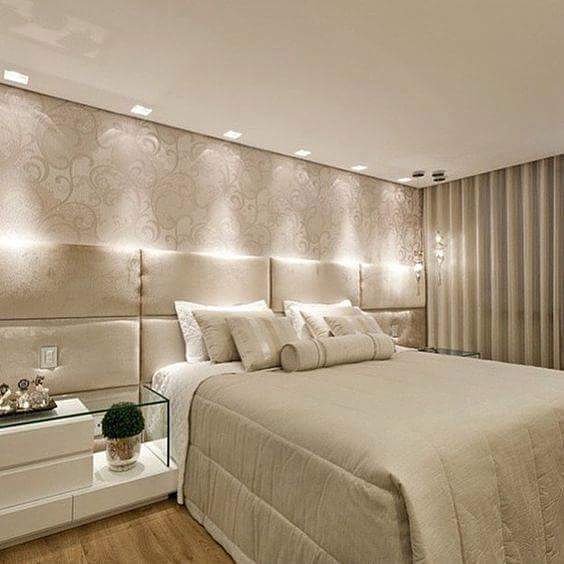
The Soft-Glam Monochromatic Retreat
This bedroom demonstrates how to achieve Opulent Minimalism by using a single color palette—champagne beige—and varying the textures to create visual richness.
1. The “Infinity” Padded Headboard
The focal point is the oversized, horizontal padded headboard. By extending the padding across the entire length of the wall, the designer creates a “seamless” look that makes the bed feel much larger. This “wall-to-wall” upholstery provides an extra layer of acoustic insulation, making the room feel incredibly quiet and private.
2. Damask Wallpaper and Grazing Light
Above the headboard, a subtle damask-patterned wallpaper is highlighted by recessed “grazing” lights in the ceiling. This lighting technique points directly down the wall to catch the texture of the pattern, creating soft shadows that add depth without the need for bold colors.
3. Glass and Gloss Nightstands
To keep the bedside area looking light and airy, the designer chose white gloss nightstands with integrated glass tops. The glass protects the surface while adding a reflective “sparkle” that echoes the room’s glamorous theme. The inclusion of a small, vibrant green topiary adds the only pop of organic color, breathing life into the neutral scheme.
4. Textural Layering of Linens
Luxury is felt through the skin, and this bed utilizes a “triple-layer” strategy. A heavy quilted coverlet provides structure, while plush shams and a cylindrical bolster pillow add volume. The mix of matte and satin finishes in the same beige tone ensures the bed looks sophisticated rather than flat.
The Dark Gloss and Stone Aesthetic
This room is designed for high-impact visual drama, utilizing a “Top-Down” design philosophy where the ceiling and walls are the primary storytellers.
1. The Psychology of the Mirrored Ceiling
Using a high-gloss, dark chocolate ceiling panel is a bold move that creates an “Infinite Void” effect. This prevents the room from feeling closed-in despite the dark tones. At night, the massive crystal chandelier reflects off this surface, creating thousands of tiny points of light that mimic a starlit sky, adding a romantic and cinematic quality to the suite.
2. Marble as an Architectural Foundation
The wall behind the bed isn’t just a surface; it’s a structural statement. The use of large-format marble slabs creates a sense of “Solid Luxury.” Because marble is a natural stone, each slab has unique veining, ensuring the room feels bespoke and original. The vertical brass or metallic dividers between the slabs add a “High-Fashion” pinstripe detail that complements the bronze tones in the bedding.
3. The Ensuite Transparency
The use of clear glass for the bathroom partition is a hallmark of ultra-modern penthouse design. It removes the visual barriers that usually make a bedroom feel smaller. By allowing the eye to see the marble vanity and soft lighting of the bathroom from the bed, the entire suite feels like one continuous, expansive lounge.
4. Curated Sculptural Accents
Every object in this room is chosen to look like a gallery piece. The tall, spindly floral arrangement adds a “Linear Organic” touch, while the bronze statue on a marble plinth provides a vertical silhouette. These elements draw the eye upward, ensuring that the room’s height is always appreciated.
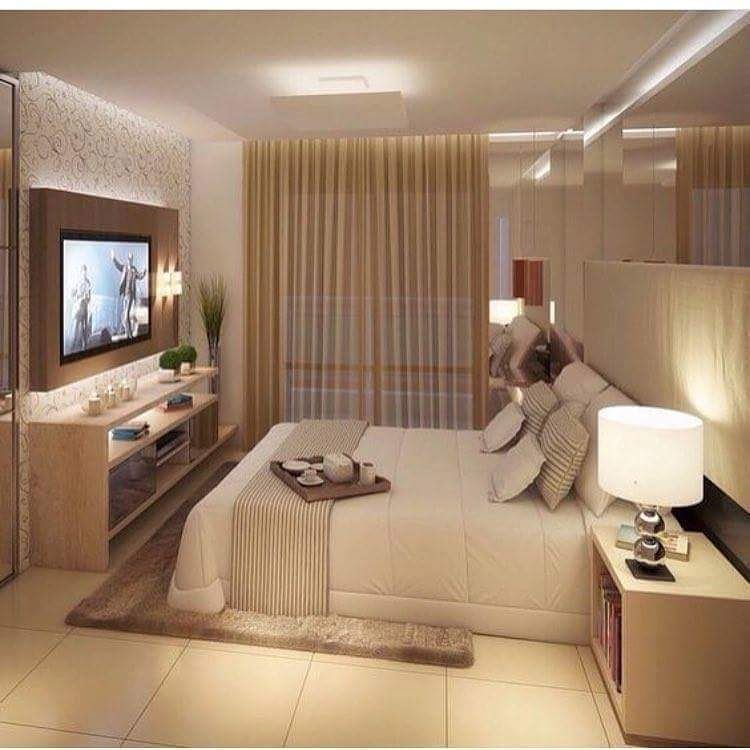
The Champagne Champagne Velvet Retreat
This bedroom takes a “Soft-Touch” approach, where luxury is defined by the quality of fabrics and the gentle wash of warm light.
1. The Extended Padded “Horizon” Headboard
The headboard is designed to be the “Horizon Line” of the room. By extending it horizontally across the entire wall, the designer creates a sense of vast width. This oversized padding doesn’t just look expensive; it serves an acoustic purpose by deadening echoes, creating a “Silent Chamber” effect that is perfect for deep, restorative sleep.
2. Monochromatic Texture Blending
The secret to this room’s success is the use of “Tone-on-Tone” layering. The wallpaper, the headboard, the curtains, and the bedding are all within the same champagne-beige family. However, because they all have different textures—silk, velvet, matte paper, and quilted cotton—the room feels incredibly rich and detailed rather than flat or boring.
3. “Grazing” and “Halo” Lighting
The lighting here is strictly “Warm White” ($2700K$), which mimics the soft glow of a candle. The recessed lights in the ceiling are angled to “graze” the wallpaper, catching the shimmer of the damask pattern. Additionally, the hidden LEDs behind the headboard create a “Halo” effect, making the bed appear to float against the wall in a soft cloud of light.
4. Minimalist Modern Nightstands
To balance the heavy fabric of the walls, the nightstands are kept sharp and clean. The use of white gloss and glass creates a “Cool” contrast to the “Warm” fabric. This mix of hard and soft materials is essential in a monochromatic room to keep the design from feeling too “mushy” or dated.
Expert Design Takeaways
Material Contrast
In Image 6, the contrast is Color-Based (White vs. Chocolate). In Image 12, the contrast is Texture-Based (Smooth Glass vs. Padded Fabric). Both are effective ways to create luxury without needing bright colors.
The “Glow” Factor
Both rooms avoid traditional “center-of-the-room” lighting. By using perimeter lighting (cove lights and spotlights), the designers ensure that the light comes from the edges of the room. This makes the space feel more expansive and the atmosphere much softer on the eyes.
Symmetry and Order: Notice that both rooms are perfectly symmetrical. Symmetrical design triggers a sense of “Balance” in the human brain, which is the key to creating a space that feels calm and expensive.
The Core Design Philosophies
These spaces illustrate three distinct directions in high-end design: Architectural Drama, Modern Organic, and Geometric Minimalism.
1. Architectural Drama and Reflective Luxury (Image 6 & 11)
These designs prioritize “The Glow Factor.” They use reflective materials to make a space feel infinite and prestigious.
The Mirrored Dimension
In Image 6, the use of a dark, high-gloss ceiling panel acts as a mirror, reflecting the massive crystal chandelier. This creates a sense of “double height” and luxury often found in penthouse suites. It turns the ceiling into a dynamic part of the room rather than a flat surface.
High-Texture Upholstery
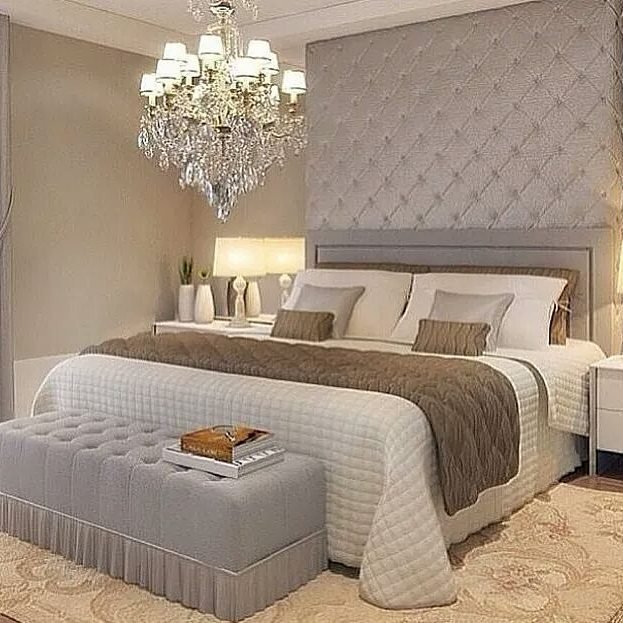
In Image 11, luxury is conveyed through tactile depth. The floor-to-ceiling tufted headboard panel adds a vertical anchor to the room. By matching the ottoman’s tufting to the wall, the designer creates a “Visual Suite” where the furniture and architecture are inseparable.
2. The Modern Organic Movement (Image 5)
This style focuses on the “Warmth of Wood” and “Biophilic Connection,” making it a top choice for wellness-focused design in 2026.
3D Wood Geometry
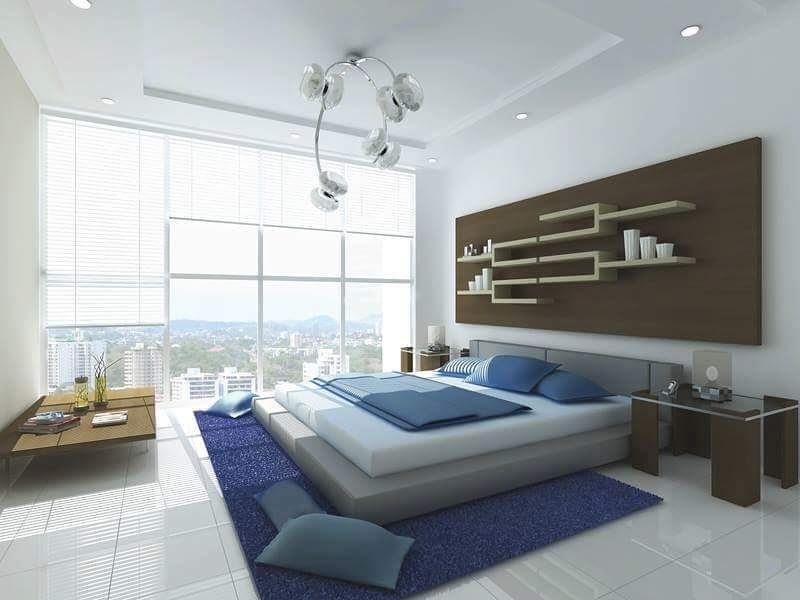
The headboard in Image 5 isn’t a single piece of furniture; it is a custom wall installation. By using rectangular wooden blocks of different depths and inserting LED strips between them, the wall becomes a soft light source. This “grazing light” emphasizes the natural grain and beauty of the timber.
Urban Greenery
The inclusion of an indoor tree and floor-to-ceiling windows connects the inhabitant to nature. This “indoor-outdoor” flow is essential for softening the hard lines of modern architecture, creating a peaceful, grounded sanctuary.
3. Geometric and Linear Minimalism (Image 4 & 3)
These designs focus on “Graphic Order,” using lines and high-contrast colors to create a clean, organized, and energetic atmosphere.
The Slat Wall Trend
Image 4 utilizes vertical wood slats, a major trend for the mid-2020s. These lines lead the eye upward, while the 3D diamond-patterned headboard inlay provides a textural “grid” that feels sophisticated and precise.
The “Piano Key” Wardrobe
In Image 3, we see Functional Contrast. The custom wardrobe uses vertical white panels against dark wood, mimicking a piano-key pattern. This “Banding” technique breaks up the weight of large storage units, making them feel like architectural art rather than bulky furniture.
Key Technical Comparisons
Lighting Layering
Professional design never relies on a single light bulb. These rooms use a Three-Tier Lighting System:
Ambient Layer: Recessed ceiling “cans” or cove lighting for a general glow.
Task Layer: Droplet pendants or adjustable bedside lamps for reading.
Accent Layer: LED strips behind panels or under beds to create a “floating” effect.
The Floor-to-Ceiling Strategy
Notice that in almost every image, the most important design features extend from the floor all the way to the ceiling. Whether it is the pinstripe slats in Image 4 or the white wardrobe panels in Image 3, this Vertical Extension is the primary secret to making a standard room feel like a custom-designed luxury suite.
Color Theory: The 60-30-10 Rule
60% (Base): Usually a neutral like cream, white, or light wood for walls and floors.
30% (Secondary): A contrasting tone like dark espresso, charcoal, or peach for the main furniture.
10% (Accent): The “jewelry” of the room—gold hardware, a green plant, or a colorful painting.
The Masterclass in Modern Luxury
Luxury in interior design is no longer just about expensive furniture; it is about creating an immersive environment where the architecture itself tells a story.
1. The Reflective “Infinite” Ceiling
One of the most ambitious features of high-end design is the use of high-gloss or mirrored ceiling panels. By choosing a dark, reflective surface, the designer effectively “removes” the ceiling, creating an illusion of infinite vertical space. When paired with a massive crystal chandelier, the light bounces off the glossy surface, creating a “starlight” effect that makes the room feel cinematic and grand.
2. Natural Stone as an Architectural Foundation
Cladding a primary wall in large-format marble slabs introduces a sense of permanence. Unlike paint or wallpaper, stone has a natural, cooling presence that adds significant “visual weight” to the room. By using vertical metallic dividers between the slabs, the design adds a subtle rhythmic detail that complements the room’s linear profile, grounding the high-gloss elements with an organic, solid base.
3. The Power of Textural Contrasts
A truly luxurious room must appeal to the sense of touch. To balance the “hard” surfaces of marble and glass, the design incorporates “soft” layers:
Metallic Silks: Bronze and gold tones in the bedding catch the light and add warmth to the cool stone.
Plush Underfooting: An oversized, high-pile shag rug provides a sensory contrast to sleek hardwood or tile floors.
Heavy Drapery: Floor-to-ceiling charcoal curtains provide a physical and acoustic barrier, ensuring the room remains a private, quiet retreat.
4. Seamless Spatial Flow with Glass
Modern luxury often utilizes transparent or semi-transparent partitions to define zones. Using floor-to-ceiling glass for an ensuite bathroom maintains a visual “open-concept” flow. It allows the eye to travel through the entire suite without interruption, which is essential for making master suites feel expansive and airy.
The Elegance of Monochromatic Texture
For those who prefer a more nurturing and quiet atmosphere, the focus shifts to Tone-on-Tone layering and soft-touch materials.
5. The “Wall-to-Wall” Padded Headboard
Instead of a traditional bed frame, professional designers often extend the headboard horizontally across the entire width of the wall. This “seamless” upholstery makes the bed feel much larger and acts as an acoustic absorber, deadening echoes for a deeper sleep. The grid-like padding provides a structured yet soft backdrop that feels like a protective cocoon.
6. Wall-Grazing and Ambient Glow
The lighting strategy in a soft-glam room avoids harsh, direct bulbs. Instead, it utilizes Wall-Grazing LEDs hidden in the ceiling. These lights point directly down to catch the texture of patterned wallpaper or fabric panels, creating soft shadows that add depth without the need for bright colors. This “halo” effect makes the architecture appear to glow from within.
7. Glass and Gloss Bedside Integration
To maintain a clean aesthetic, nightstands are often integrated into the wall treatment. Using white gloss finishes with glass tops adds a subtle “sparkle” that echoes the room’s glamorous theme. This mix of high-shine surfaces with matte fabrics ensures the monochromatic scheme stays dynamic and visually interesting.
8. Sophisticated Linen Layering
In a neutral room, the bed must be the “Hero Piece.” This is achieved through a triple-layer strategy: a structured quilted coverlet for the base, plush shams for volume, and a cylindrical bolster pillow for a professional finish. Mixing different finishes of the same champagne-beige tone provides the richness required for a high-end look.
Design Takeaway: The “Glow” Strategy
The secret to both of these styles is Layered Lighting. By avoiding a single central light source and instead combining hidden LEDs, decorative chandeliers, and task-oriented lamps, you can control the mood of the room throughout the day. This adjustable “glow” is the primary marker of a professionally designed luxury home.
1. The Architectural Mirror Concept
High-end suites often utilize a top-down design philosophy. By installing a dark, high-gloss ceiling panel, the room gains a reflective “infinite” quality. This surface acts as a mirror for a central crystal chandelier, effectively doubling the light and perceived height of the room. When paired with vertical marble wall slabs, the result is a space that feels grand, solid, and structurally permanent.
2. Integrated Wood Geometry
The Modern Organic trend focuses on 3D wall installations rather than traditional headboards. Utilizing various depths of wooden blocks creates a rhythmic, sculptural surface. By embedding LED strips between these panels, the wall itself becomes a diffused light source. This “grazing” effect highlights the natural timber grain, providing a warm, grounded contrast to the sleek urban views provided by floor-to-ceiling glass windows.
3. Kinetic Linearism
Contemporary design frequently uses intersecting diagonal lines to create visual energy. This motif often travels from the ceiling tray to the wardrobe doors and headboard panels. By repeating the same “visual language” across different planes, the room feels like a unified piece of art. This strategy is particularly effective in minimalist spaces, as the geometry provides the decoration without the need for additional clutter.
4. The Graphic Dual-Tone Suite
A striking visual organization is achieved through high-contrast color blocking, typically espresso brown and stark white. Custom cabinetry can mimic a “piano-key” pattern, using vertical white inserts to break up the weight of dark wooden wardrobes. This verticality, combined with low-profile platform beds and reflective white floor tiles, maximizes light and creates a clean, metropolitan aesthetic.
5. Structured Texture and Soft Lighting
In suites prioritizing comfort, luxury is expressed through tactile layering. Oversized, wall-to-wall padded headboards provide acoustic dampening and a sense of security. The lighting in these spaces is strictly ambient, utilizing hidden cove LEDs to create a “halo” effect. By mixing matte fabrics, shimmering silks, and high-gloss nightstands, the room achieves a sophisticated “tone-on-tone” richness that is both quiet and opulent.
Professional Design Takeaways
Vertical Extension: Running design features from the floor to the ceiling makes any room feel significantly larger and custom-built.
Integrated Storage: Seamless wardrobes that match the room’s primary geometry allow for massive storage capacity without disrupting the aesthetic flow.
Layered Illumination: Combining task lighting (lamps), ambient lighting (coves), and accent lighting (LED strips) allows for complete control over the room’s mood at any hour.
The Masterpiece of Integrated Design
Modern high-end bedrooms are built on the foundation of “Total Room Harmony,” where the ceiling, walls, and floor interact to guide the eye and influence the mood.
1. High-Gloss Architectural Reflectivity
One of the most striking techniques involves the use of mirrored or high-gloss ceiling panels. By treating the ceiling as a reflective plane, the room gains a “bottomless” verticality. This is often paired with a large crystal chandelier; the light doesn’t just illuminate the room—it bounces off the glossy ceiling, creating a sparkling “infinite” effect that is a hallmark of penthouse luxury.
2. The 3D Geometric Wood Wall
The “Modern Organic” style focuses on texture over color. Custom headboard walls are now constructed from individual wooden blocks or slats of varying depths. When illuminated by hidden LED strips placed between the panels, the wall creates a play of light and shadow. This “grazing light” highlights the natural grain of the timber, making a cold urban room feel grounded and warm.
3. Kinetic Visual Energy
Instead of traditional square patterns, many modern suites use intersecting diagonal lines. These “slashing” patterns move across the ceiling tray and continue onto the wardrobe doors. This kinetic design creates a sense of constant motion and energy, turning static storage units into a large-scale mural that defines the room’s personality.
4. Graphic Dual-Tone Contrast
A popular strategy for a clean, metropolitan look is the use of high-contrast color blocking. By using a palette of deep espresso and stark white, the room feels visually organized. Wardrobes often feature a “piano-key” design, where vertical white inserts break up the dark wood. This verticality stretches the room upward, while reflective floor tiles bounce light into the corners to keep the dark tones from feeling heavy.
5. Upholstered “Horizon” Headboards
Luxury is increasingly defined by acoustic comfort. Large, wall-to-wall padded headboards serve two purposes: they provide a soft, tactile backdrop for sleep and act as sound-dampening panels. By extending the headboard across the entire wall, the designer creates a “horizon line” that makes the bed feel like the undisputed anchor of the suite.
6. Fluid S-Curve Ceilings
To counter the sharp lines of modern architecture, “Soft Transitional” designs use fluid, sweeping curves. Multi-tiered S-curve soffits on the ceiling house soft glow-lights, creating an “organic halo” effect. This fluid geometry mimics the shapes found in nature, promoting a psychological sense of calm and safety that is essential for a restorative sleeping environment.
Professional Implementation Standards
The Three-Tier Lighting Rule A professional room never has just one light switch. Designers combine Ambient (cove lights), Task (pendant drops), and Accent (LED wall strips) layers. This allows the inhabitant to transition the room from a bright, energetic morning space to a dim, glowing sanctuary at night.
Material Interaction Luxury design is the dance between “Hard” and “Soft” surfaces. A room with marble walls (hard) needs a plush shag rug (soft). A room with a wooden block wall (hard) needs silk bedding (soft). This balance ensures the room feels high-end but still inviting and livable.
Monochromatic Texture When a room uses only one color (like champagne beige), it must use at least five different textures. By mixing matte paint, shimmering silk, velvet upholstery, glass surfaces, and wood grain, the designer creates “Visual Interest” without needing to introduce new colors that might disrupt the peaceful vibe.
1. The Elevation of the Modern Master Suite
The contemporary bedroom has transitioned from a simple sleeping area into a fully integrated architectural experience. By combining high-end materials with smart spatial planning, designers are creating sanctuaries that prioritize both visual impact and personal wellness. To achieve this look, focus on “Total Room Harmony,” where the ceiling, walls, and floor interact seamlessly.
2. Architectural Reflectivity and High-Gloss Finishes
One of the most effective ways to introduce luxury is through a “top-down” design approach. Utilizing high-gloss or dark-mirrored ceiling panels creates an illusion of infinite vertical space. When paired with a central crystal fixture, the light reflects across the glossy surface, doubling the perceived brightness and height of the room. This technique is particularly effective in urban apartments where maximizing the sense of space is essential.
3. 3D Geometric Feature Walls
Moving away from traditional flat headboards, 2026 trends favor multi-dimensional wall installations. Custom wood-block patterns or vertical slats of varying depths turn a primary wall into a sculptural masterpiece. By embedding hidden LED strips within these geometric structures, you create a “grazing light” effect that emphasizes natural textures and provides a soft, ambient glow perfect for evening relaxation.
4. Kinetic Lines and Visual Movement
For a dynamic and energetic atmosphere, designers are increasingly using “slashing” diagonal lines across multiple surfaces. This motif often starts at the ceiling tray and travels down to the custom cabinetry and wardrobe doors. Repeating this visual language ensures the room feels like a unified piece of art, providing a sense of motion that keeps a minimalist space from feeling static or cold.
5. High-Contrast Material Blocking
Creating a clean, metropolitan aesthetic often relies on a high-contrast color palette, such as deep espresso wood paired with stark white surfaces. Custom storage units can incorporate “piano-key” designs, where vertical white inserts break up the weight of dark wooden doors. This strategy provides massive functional storage while maintaining a light, airy, and visually organized environment.
6. Acoustic Luxury and Padded Enclosures
As the home becomes a primary retreat, acoustic comfort is a top priority. Large-format, wall-to-wall padded headboards serve as both a stylistic anchor and a sound-dampening feature. By extending the upholstery across the entire horizon of the bed, you create a “cocoon” effect that promotes deeper sleep and a feeling of total seclusion from the outside world.
7. Fluid Transitions and Organic Geometry
To counter the sharp angles of modern architecture, the “Soft Transitional” style introduces fluid, sweeping curves. S-curve ceiling soffits and rounded furniture silhouettes mimic organic forms found in nature. These soft transitions are psychologically calming, making the master suite feel more nurturing and human-centric.
Professional Design Takeaway
To master these trends, focus on Layered Illumination. A professional space should never rely on a single light source. Combine ambient cove lighting, task-oriented pendants, and decorative accent LEDs to create a “glow” that can be adjusted to match the time of day. This flexibility is the true marker of an elite modern interior.
The Master Principles of 2026 Bedroom Design
These designs utilize advanced spatial psychology and material science to create atmospheres that are both visually stunning and deeply restorative.
1. Integrated Linearism and Verticality
Many modern suites now use vertical slat systems and pinstripe motifs to manipulate the perception of height. By running thin wood or metallic slats from the floor to the ceiling, the eye is forced upward, making standard-sized rooms feel like grand, high-ceilinged galleries. This linear approach provides a sense of order and structural discipline that is essential for a clean, minimalist aesthetic.
2. Geometric Kinetic Energy
Instead of traditional static decor, contemporary interiors utilize intersecting diagonal paths. This kinetic energy is applied to ceiling trays, wardrobe doors, and even headboard inlays. By using “slashing” lines that cut across surfaces, designers create a sense of movement. This technique prevents large blocks of color or wood from feeling heavy, turning functional storage into a dynamic mural.
3. The “Horizon” Headboard Strategy
The modern headboard has evolved into a full-wall architectural feature. By extending the headboard horizontally—often wall-to-wall—designers create a stable “horizon line.” Whether it is a grid of 3D diamonds, a series of wooden blocks, or plush tufted upholstery, this wide anchor makes the bed feel like a secure, permanent fixture within the architecture rather than a temporary piece of furniture.
4. Architectural Lighting and Halo Effects
A major shift in 2026 is the elimination of harsh, direct light sources. Professional suites rely on layered “glow” lighting:
Cove Lighting: Hidden LEDs in ceiling recesses provide a soft, ambient wash.
Grazing Lights: Strategic spotlights that point down a textured wall to highlight its 3D depth.
Floating Effects: Lighting strips placed underneath bed frames and nightstands to make heavy furniture appear weightless.
5. High-Contrast Material Mapping
The “Graphic Design” of a room is often achieved through Dual-Tone Blocking. Pairing deep espresso woods with stark, reflective whites creates a metropolitan vibe that is both energetic and organized. Techniques like “piano-key” wardrobe inserts—alternating dark and light panels—allow massive storage units to blend into the room’s design language, effectively “hiding” the utility of the closet.
6. Fluid Geometry and Organic Curves
To balance the sharp edges of modern tech and furniture, “Soft Transitional” designs introduce sweeping S-curves. Multi-tiered ceiling soffits with rounded edges mimic natural shapes, which helps lower the heart rate and promote a sense of calm. These fluid transitions between the ceiling and walls create a “cocoon” atmosphere, shielding the inhabitant from the rigid outside world.
7. Reflective Depth and Mirrored Planes
The use of high-gloss and mirrored surfaces on ceilings and walls is a strategic tool for “spatial expansion.” By treating the ceiling as a reflective plane, designers can “double” the room’s volume. This is particularly effective when reflecting a view or a statement light fixture, ensuring that light is distributed evenly throughout the space without the need for multiple bright bulbs.
Professional Implementation Summary
To achieve this professional level of finish, the focus must be on seamlessness. Every element—from the way the curtains meet the ceiling to the way the nightstands integrate into the headboard—should look as if it was designed and installed at the same time. This “Built-In” philosophy is the true secret to the 2026 luxury aesthetic.
1. Integrated Architectural Headboards
The traditional standalone headboard is being replaced by full-wall architectural features. This approach creates a permanent “anchor” for the room.
Geometric Reliefs: Utilizing 3D diamond patterns or padded rectangular grids provides a sense of depth and tactile luxury.
Extended Horizons: Designers often run headboard panels horizontally across the entire width of the wall. This “horizon line” trick makes the bed feel larger and the room feel more expansive.
Built-in Niches: Incorporating shelving or nightstands directly into the headboard wall ensures a clean, clutter-free floor plan.
2. Linear Rhythm and Vertical Expansion
A major trend for 2026 is the use of Linear Motifs to manipulate the perception of space.
Vertical Slats: Thin, repetitive wood or metallic slats draw the eye upward, significantly increasing the perceived height of the ceiling.
Kinetic Slashing: Intersecting diagonal lines on wardrobe doors and ceiling trays add visual energy. This kinetic language turns static storage into a dynamic mural, preventing minimalist rooms from feeling too “still” or cold.
3. The Multi-Tiered Lighting Strategy
Professional-grade rooms never rely on a single light source. They utilize Layered Illumination to control the atmosphere.
Cove and Tray Lighting: Hidden LED strips in the ceiling provide a soft, ambient glow that eliminates harsh shadows.
Wall-Grazing: Lights positioned to shine directly down a textured wall (like damask wallpaper or stone slabs) emphasize the material’s 3D quality.
Floating Under-Glow: LEDs placed at the base of bed frames and nightstands make heavy furniture appear to float, adding a futuristic, weightless feel.
4. Functional Color Blocking and Contrast
High-contrast palettes are used to define different “zones” within a suite.
Dual-Tone Systems: Pairing deep espresso woods with stark whites creates a sophisticated metropolitan vibe.
Piano-Key Cabinetry: Alternating dark and light panels on wardrobes helps “disguise” massive storage units, making them appear as architectural art rather than bulky closets.
Monochromatic Richness: In rooms using a single tone (like champagne-beige), luxury is achieved by mixing at least five different textures—silk, velvet, matte paint, glass, and wood grain.
5. Fluidity and Organic Geometry
To counter the rigidity of modern urban living, many suites are embracing Soft Transitional curves.
S-Curve Soffits: Asymmetrical, sweeping ceiling designs soften the room’s energy and promote a sense of calm.
Circular Accents: “Halo” wall sconces and rounded furniture silhouettes mimic organic forms, making the technology-heavy modern home feel more human and nurturing.
1. Total Architectural Integration
The most prominent trend is the move toward Built-in Environments. Rather than standalone pieces, furniture is now a structural extension of the room.
Integrated Headboards: Full-wall installations that extend to the ceiling or across the entire horizon of the room.
Seamless Storage: Floor-to-ceiling wardrobes that use “invisible” handles or push-to-open technology, allowing storage to blend into the wall panels.
Zoning with Light: Instead of physical walls, designers use recessed ceiling trays and floor-level LEDs to define areas like the sleeping zone, the dressing nook, and the lounge space.
2. The Multi-Tiered “Glow” Strategy
Professional 2026 interiors have abandoned the single overhead light. Instead, they utilize a Three-Tier Lighting Layering system:
Ambient Cove Lighting: Hidden LED strips in ceiling soffits or behind wall panels that provide a soft, shadowless wash of light.
Task-Specific Pendants: Low-hanging, sculptural lights over nightstands that provide focused illumination for reading while acting as “room jewelry.”
Kinetic Accent Lighting: Motion-activated lights under the bed frame (the “floating” effect) or inside wardrobes that emphasize the 3D texture of the room’s architecture.
3. Geometric Kinetic Energy
Designers are increasingly using Linear and Kinetic Motifs to add energy to minimalist spaces.
Vertical Slat Systems: Running thin wood or metallic slats from floor to ceiling to manipulate the perception of height.
Slashing Lines: Intersecting diagonal patterns on ceiling trays and cabinetry that create a sense of movement, turning static surfaces into dynamic murals.
Texture Mapping: Mixing matte, gloss, and 3D-relief surfaces (like diamond-padded headboards) to catch light in different ways throughout the day.
4. Organic Modernism and Fluidity
To counter the rigid lines of urban architecture, the Soft Transitional style is reintroducing curves.
S-Curve Ceilings: Multi-layered soffits with rounded edges that promote a sense of calm and flow.
Biophilic Connection: Large glass partitions that treat the outdoor view as a living wallpaper, often framed by heavy, motorized drapery that provides total acoustic insulation.
Natural Material Contrasts: Pairing “cold” materials like marble or glass with “warm” elements like honey-toned oak or velvet upholstery to create a balanced, human-centric environment.
5. Functional Luxury and Acoustic Comfort
Luxury in 2026 is as much about how a room sounds as how it looks.
Acoustic Paneling: Utilizing wall-to-wall upholstered panels behind the bed to dampen external noise and create a “silent chamber” effect.
Smart Tech Integration: Wireless charging pads hidden within wooden nightstands and motorized curtains that sync with circadian rhythms to automate the morning wake-up process.
1. The Dawn of the Integrated Architectural Suite
The modern master bedroom has evolved beyond a collection of furniture into a seamless, integrated environment. Today’s premier designs treat walls, ceilings, and storage as a singular architectural installation. This “Total Room” approach ensures that every square foot serves a purpose, balancing high-impact aesthetics with the essential tranquility required for a restorative retreat.
2. Linear Dynamics and Spatial Perception
A defining trend in contemporary luxury is the use of Linear Rhythm. By incorporating vertical slat walls and repetitive pinstripe motifs, designers can effectively manipulate the perception of a room’s volume. These vertical lines draw the eye upward, creating a sense of grandeur in standard-sized rooms, while horizontal banding on cabinetry helps ground the space and provides a sleek, metropolitan energy.
3. Kinetic Geometry in Ceiling and Cabinetry
To avoid the static feel of traditional minimalism, 2026 designs embrace Kinetic Geometry. This involves the use of intersecting diagonal lines and “slashing” patterns across ceiling trays and wardrobe facades. This visual language adds a layer of sophisticated movement to the room, turning functional storage units into large-scale, dynamic murals that reflect a forward-thinking, artistic lifestyle.
4. Multi-Layered “Glow” Illumination
Professional lighting design has moved away from singular overhead fixtures in favor of a Three-Tier Glow Strategy. By combining ambient cove lighting, task-oriented sculptural pendants, and hidden accent LEDs beneath bed frames, a room can transition its mood instantly. This layered approach eliminates harsh shadows and highlights the 3D textures of architectural wall panels, providing a warm, high-end ambiance at any hour.
5. High-Contrast Material Mapping
The use of Dual-Tone Blocking remains a staple for achieving a clean, organized aesthetic. Pairing deep espresso or charcoal wood grains with stark, reflective white surfaces creates a sharp visual hierarchy. Innovative “piano-key” designs in wardrobes—where light and dark panels alternate—allow massive storage systems to blend into the room’s architectural fabric, maintaining an airy and uncluttered feel.
6. Acoustic Luxury and Padded Environments
In an increasingly connected world, true luxury is found in silence. Acoustic Upholstery is a major focus for 2026, with wall-to-wall padded headboards becoming a standard feature in elite suites. These oversized fabric installations provide significant sound-dampening qualities while creating a “soft” horizon line that promotes a psychological sense of safety and deep comfort.
7. Organic Fluidity and Curvilinear Soffits
To balance the sharp edges of modern technology, designers are reintroducing Fluid Geometry. Sweeping S-curve ceiling designs and rounded furniture silhouettes mimic organic forms, softening the room’s energy. These fluid transitions between the ceiling and walls create a “cocoon” effect, shielding the inhabitant from the rigid lines of urban life and fostering a more human-centric living space.
Professional Design Summary
The secret to a world-class master suite lies in Seamless Execution. From the alignment of floor tiles to the way a custom headboard integrates with bedside technology, every detail must feel intentional. By prioritizing architectural integrations over standalone decor, you create a space that is not only visually stunning but also inherently functional and timeless.
1. The Principle of Integrated Architectural Environments
Modern luxury is defined by seamlessness. Instead of placing a bed against a flat wall, the entire wall is treated as a three-dimensional installation. This includes floor-to-ceiling upholstered panels, custom-fitted niches for nightstands, and integrated storage units that appear as part of the wall’s architecture. This “Built-In” philosophy eliminates visual clutter and creates a sense of permanent, custom-made prestige.
2. Geometric Kinetic Energy and Visual Movement
To give minimalist rooms a sense of energy, designers utilize Kinetic Geometry. This involves the use of intersecting diagonal lines and “slashing” patterns, often found in ceiling tray designs or wardrobe facades. These lines break up the monotony of flat surfaces and guide the eye throughout the room, ensuring that even a neutral-toned space feels dynamic and high-fashion.
3. The “Horizon” Headboard and Acoustic Seclusion
As homes become multi-functional hubs, the bedroom must serve as a high-performance acoustic sanctuary. Large-format, wall-to-wall padded headboards are a key trend for achieving this. By extending upholstery across the entire horizon of the bed, designers create a “Silent Chamber” effect that dampens external noise while providing a soft, protective backdrop that promotes psychological comfort and deep rest.
4. Three-Tiered Glow and Layered Illumination
In a professionally designed 2026 suite, light is treated as a material. Designers avoid single-source overhead lighting in favor of a Layered Glow Strategy:
Ambient Layer: Hidden LED strips in ceiling soffits provide a shadowless base light.
Accent Layer: “Grazing” lights directed down textured wallpaper or stone slabs emphasize material depth.
Floating Layer: LEDs installed at the base of furniture make heavy pieces like platform beds appear to hover, adding a futuristic, weightless feel to the room.
5. High-Contrast Material Mapping
Creating a sophisticated metropolitan vibe often relies on Dual-Tone Contrast. The interaction between deep espresso wood grains and stark, high-gloss whites creates a “Graphic” organization that is pleasing to the eye. Techniques such as “piano-key” cabinetry—where light and dark panels alternate—allow large wardrobes to provide immense storage capacity without overwhelming the room’s visual scale.
6. Organic Fluidity and Curvilinear Transitions
To balance the sharp, technological lines of modern life, “Soft Transitional” architecture introduces Fluid Curves. S-curve ceiling designs and rounded furniture silhouettes mimic organic forms found in nature. These soft transitions are naturally calming and help to “de-stress” the environment, making the master suite feel more nurturing and human-centric.
7. Reflective Planes and Spatial Expansion
Strategic use of high-gloss and mirrored surfaces on ceilings or feature walls is a primary tool for Spatial Manipulation. By treating a ceiling as a reflective plane, the designer “doubles” the vertical volume of the room. When paired with a statement crystal fixture, the light is distributed across the ceiling, creating a sparkling, expansive atmosphere that feels both airy and opulent.
1. Acoustic Luxury: The Sound of Silence
In 2026, luxury is measured by what you don’t hear. Designers are prioritizing “Sound Mapping” to create silent chambers.
Soft-Shell Architecture: Extending upholstered panels from floor to ceiling doesn’t just look opulent; it serves as a high-performance acoustic buffer against outside noise.
Density Contrast: By pairing heavy, sound-absorbing materials like velvet or thick-pile rugs with “hard” reflective stone, you eliminate echoes, making the room feel physically quieter and more private.
2. Biophilic Structural Integration
Biophilic design has moved from “adding plants” to “structural nature.”
The Living Wallpaper: Large-scale windows are framed not just by drapes, but by architectural plant ledges or recessed niches that house air-purifying greenery.
Organic Materials: There is a strong return to “honest” materials—walnut wood, raw stone, and clay-based plasters. These materials have a lower “visual noise” and contribute to a healthier indoor air quality (low-VOC).
3. Chromatic Depth: Beyond the Beige
While neutrals remain a staple, 2026 is introducing “Calm Drama” through deeper, earth-rooted tones.
The Earthy Palette: Muted olive greens, terracotta, and deep berry tones are used to create a “cocooning” effect. These colors are scientifically shown to lower heart rates compared to stark, clinical whites.
Tone-on-Tone Shadowing: Using different shades of the same color across different textures (e.g., a matte wall with a glossy trim in the same hue) creates depth without visual clutter.
4. The Smart-Ambient Interface
Technology in the 2026 bedroom is invisible.
Circadian Lighting: Smart LED systems are now integrated into the architectural coves to mimic the sun’s natural color temperature cycle—shifting from a bright, blue-toned white in the morning to a warm, amber glow at sunset.
Concealed Tech: Wireless charging is built directly into stone or wood nightstand surfaces, and motorized curtain tracks are hidden within “blind pockets” in the ceiling soffits for a seamless look.
5. Kinetic Ceiling Geometry
The ceiling is no longer an afterthought; it is the “Fifth Wall.”
The Floating Tray: Recessed central sections (trays) make the ceiling appear to hover.
Micro-Reflections: Some high-end designs use subtle metallic leaf or “Cloud Dancer” (a creamy, shimmering white) on the ceiling to bounce soft light around the room, ensuring there are no dark, heavy corners.