Luxury Bedroom Elegance Ideas That Look Expensive
1. The Principle of Total Volume Integration
In top-tier design, the goal is to remove visual friction. Instead of a bed frame standing alone, the headboard often becomes a monolithic wall installation.
Structural Horizon: By extending the headboard from wall to wall, designers create a continuous horizontal line. This makes the room appear significantly wider than its actual dimensions.
Invisible Joinery: Storage units and bedside pedestals are built directly into the wall’s carcass. This ensures that massive utility exists without disrupting the room’s sleek, architectural profile.
2. The Fifth Wall: Zonal Ceiling Sculpting
The ceiling is used as an active tool to define “rooms within rooms.”
Soffit Alignment: By dropping a section of the ceiling (a soffit) specifically over the sleeping area, designers create a vertical anchor. This provides a sense of protection and privacy without needing physical dividers.
Reflective Expansion: High-gloss ceiling panels act as a mirror, effectively “deleting” the upper boundary of the room. This reflects light deep into the space, making standard suites feel like grand, airy galleries.
3. Acoustic Shell Engineering
Luxury in 2026 is measured by Sonic Quality. A room that echoes feels unrefined.
Hushing Fabrics: Using floor-to-ceiling upholstered panels or textured “soft” walls acts as a high-performance sound absorber. This eliminates internal echoes and creates a “Silent Sanctuary” effect.
Material Mapping: Designers balance “hard” surfaces (marble, glass, polished wood) with “soft” tactile layers (velvet, silk, high-pile wool rugs) to create a sensory environment that feels balanced and nurturing.
4. The Three-Tiered Glow Ecosystem
Lighting is no longer a utility; it is a building material.
Cove Ambient Wash: LED strips hidden in ceiling folds provide a shadowless foundation of light that mimics the natural sky.
Architectural Grazing: Placing lights close to 3D textures (like wood slats or patterned stone) emphasizes the physical depth and grain of the material.
Floating Logic: Under-lighting at the base of bed frames and cabinets makes heavy structural elements appear weightless and futuristic.
5. Kinetic Visual Energy
To keep minimalist or neutral rooms from feeling static, designers use Directional Rhythms.
Linear Stretching: Vertical wood or metal slats “pull” the eye upward, making standard-height rooms feel much taller.
The Narrative Anchor: Large-scale backlit graphics or nature-inspired murals serve as “Visual Windows.” These anchor the room’s energy and provide a sense of outdoor connectivity, even in windowless urban environments.
1. The Principle of Total Volume Integration
In top-tier design, the goal is to remove visual friction. Instead of a bed frame standing alone, the headboard often becomes a monolithic wall installation.
Structural Horizon: By extending the headboard from wall to wall, designers create a continuous horizontal line. This makes the room appear significantly wider than its actual dimensions.
Invisible Joinery: Storage units and bedside pedestals are built directly into the wall’s carcass. This ensures that massive utility exists without disrupting the room’s sleek, architectural profile.
2. The Fifth Wall: Zonal Ceiling Sculpting
The ceiling is used as an active tool to define “rooms within rooms.”
Soffit Alignment: By dropping a section of the ceiling (a soffit) over the sleeping area, designers create a vertical anchor. This provides a sense of protection and privacy without needing physical dividers.
Reflective Expansion: High-gloss ceiling panels act as a mirror, effectively “deleting” the upper boundary of the room. This reflects light deep into the space, making standard suites feel like grand, airy galleries.
3. Acoustic Shell Engineering
Luxury in 2026 is measured by Sonic Quality. A room that echoes feels unrefined.
Hushing Fabrics: Using floor-to-ceiling upholstered panels or textured “soft” walls acts as a high-performance sound absorber. This eliminates internal echoes and creates a “Silent Sanctuary” effect.
Material Mapping: Designers balance “hard” surfaces (marble, glass, polished wood) with “soft” tactile layers (velvet, silk, high-pile wool rugs) to create a sensory environment that feels balanced and nurturing.
4. The Three-Tiered Glow Ecosystem
Lighting is no longer a utility; it is a building material.
Cove Ambient Wash: LED strips hidden in ceiling folds provide a shadowless foundation of light that mimics the natural sky.
Architectural Grazing: Placing lights close to 3D textures (like wood slats or patterned stone) emphasizes the physical depth and grain of the material.
Floating Logic: Under-lighting at the base of bed frames and cabinets makes heavy structural elements appear weightless and futuristic.
5. Kinetic Visual Energy
To keep minimalist or neutral rooms from feeling static, designers use Directional Rhythms.
Linear Stretching: Vertical wood or metal slats “pull” the eye upward, making standard-height rooms feel much taller.
The Narrative Anchor: Large-scale backlit graphics or nature-inspired murals serve as “Visual Windows.” These anchor the room’s energy and provide a sense of outdoor connectivity, even in windowless urban environments.
The concept behind these environments centers on Environmental Cohesion, a design standard where a room transitions from a collection of items into a single architectural unit. In 2026, the focus has shifted toward creating “sensory sanctuaries” that prioritize how a space performs—acoustically, visually, and biologically.
Here is the breakdown of the structural logic used to achieve these results.
1. The Principle of Unified Volumes
Rather than placing a bed against a flat wall, the entire wall is engineered as a functional backdrop.
The Continuous Horizon: By extending the headboard wall-to-wall, designers eliminate visual breaks. This horizontal line stretches the room, making standard footprints feel significantly more expansive.
Integrated Pedestals: Nightstands and lighting are built directly into the wall’s structure. This removes “visual noise” and ensures the floor remains clear, creating a sleek, museum-like profile.
2. The Fifth Wall: Structural Zonation
The ceiling is used as a primary architectural tool to define the room’s internal organization without using physical barriers.
Soffit Engineering: Dropping a ceiling section specifically over the bed creates a “room within a room.” This psychological technique provides a sense of enclosure and protection for the sleeping area.
Reflective Planes: High-gloss or mirrored ceiling panels are used to “delete” the upper boundary. This reflects light and outdoor views, making the suite feel airy and grand.
3. High-Performance Acoustic Mapping
True luxury in 2026 is defined by Sonic Softness. A beautiful room that echoes is considered a design failure.
Soft-Shell Architecture: Extending upholstered panels from floor to ceiling acts as a massive acoustic buffer. These surfaces absorb sound waves, creating a hushed, library-like atmosphere.
Tactile Balancing: Designers balance “hard” elements (glass, stone, polished wood) with “soft” layers (silk rugs, velvet tufting, linen bedding) to create a sensory environment that feels grounded and nurturing.
4. The Three-Tiered Glow Strategy
Lighting is no longer just a utility; it is a structural building material.
Cove Ambient Wash: Hidden LED strips in ceiling recesses provide a shadowless foundation of light that mimics the natural sky.
Material Grazing: Lighting placed inches from textured walls highlights the physical depth of wood slats or 3D stone, turning a static wall into a dynamic piece of art.
Floating Logic: Under-lighting at the base of the bed or cabinetry makes heavy structural elements appear weightless and futuristic.
5. Invisible Utility & Tech Integration
In elite suites, technology is powerful but visually undetectable.
Shadow-Line Climate Control: Traditional AC vents are replaced by slim, black-recessed lines in the ceiling geometry. These provide silent air movement without the look of bulky mechanical grills.
Embedded Connectivity: Wireless charging coils and smart controls are flush-mounted into the architecture, ensuring no cables disrupt the room’s geometric purity.

The images provided represent a cross-section of 2026 Master Suite Environments, showcasing a spectrum from ultra-modern structural integration to organic, texture-driven retreats. While the styles vary, they all adhere to the same professional goal: creating a space that feels architecturally complete rather than just a room filled with furniture.
Here is the professional breakdown of the design logic used across these different aesthetics.
1. The Monolithic vs. Organic Anchor
A primary distinction in 2026 design is how the bed—the room’s center of gravity—is anchored.
Structural Integration: In high-tech suites (as seen in the dark-toned mountain mural room), the bed is part of a single Architectural Unit. The headboard merges into wall panels and nightstands, creating a seamless “Built-In” look that maximizes floor space.
Organic Layering: In more transitional or “Japandi” styles (like the room with the wood-slat ceiling), the bed is anchored by Natural Textures. A simple, low-profile frame is paired with oversized linens and soft-textured headboards to create an inviting, human-centric focus.
2. The Fifth Wall: Manipulating Volume
Ceiling treatments are used to dictate the mood and perceived height of the suite.
Vertical Rhythms: Using wood slats on the ceiling (visible in the coastal-view suite) “stretches” the space vertically. This directional line draws the eye toward the window, emphasizing the connection to the outdoors.
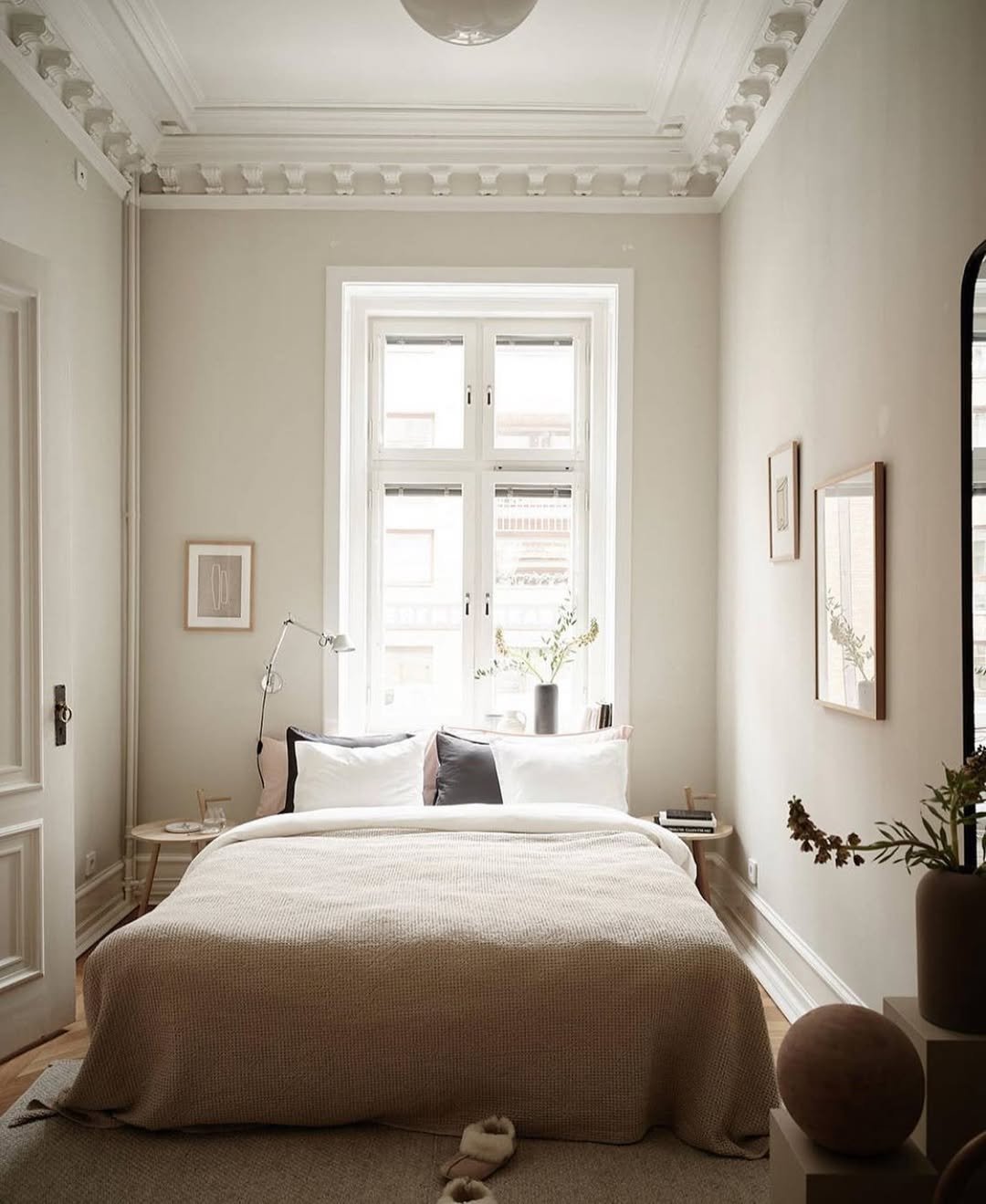
Classical Sculpting: In “Modern Victorian” or Regency-style rooms (like the one with ornate crown molding), the ceiling uses heavy plasterwork to add a sense of historical weight and opulence, making a minimalist room feel instantly more expensive.
3. Light Zonation and Atmospheric Control
Professional lighting in 2026 is about Depth Engineering.
Hidden Glows: Recessed lighting in ceiling trays or behind wall panels (the “Mountain” room) creates a shadowless, ambient base. This removes the “harshness” of traditional overhead lights.
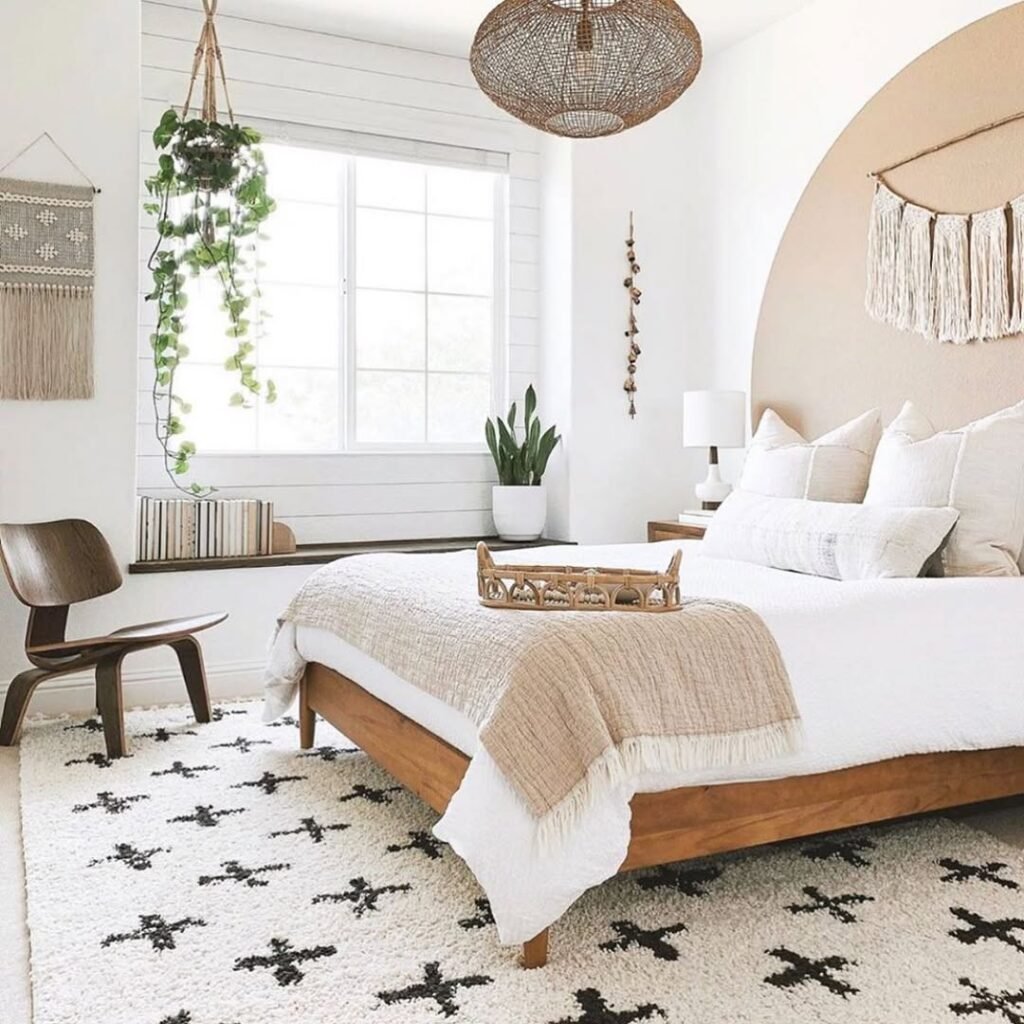
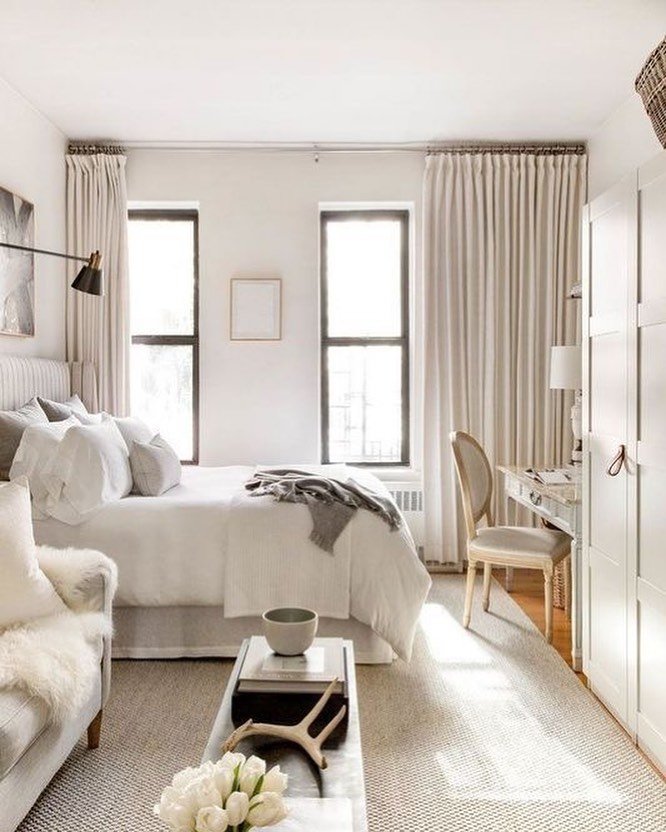
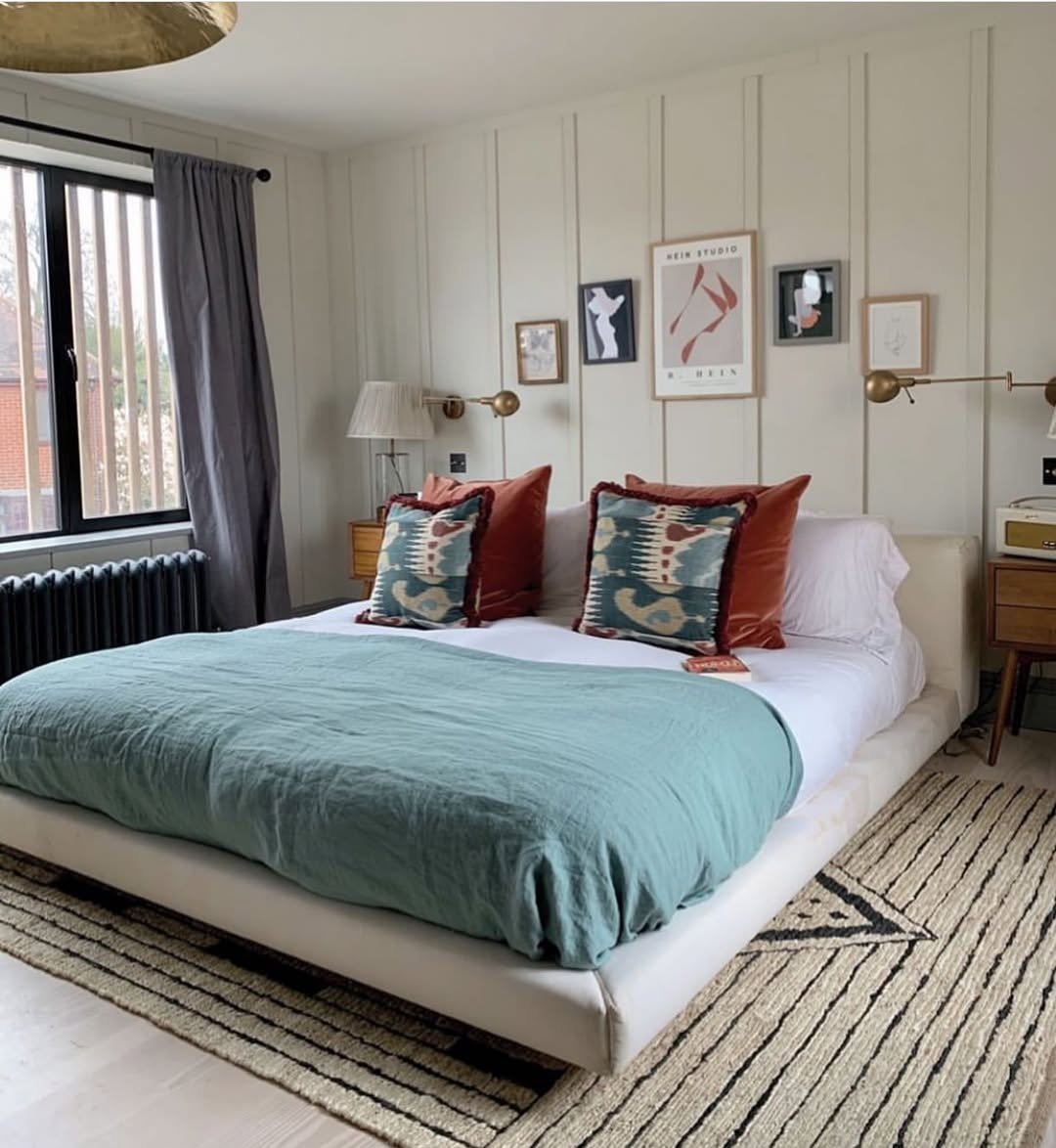
Sculptural Tasking: Using adjustable black metal wall sconces (seen in the monochrome room) or globe pendants (the boho-chic room) adds a functional layer of light that also serves as a visual “jewelry” piece for the space.
4. Material Friction and Tactical Contrast
To prevent neutral rooms from feeling boring, designers use Material Friction to create visual interest.
Soft vs. Hard: High-gloss white walls are paired with raw wood benches; smooth linens are layered with chunky-knit throws (the “Tassel Blanket” room). This interplay of textures creates “visual warmth” that doesn’t rely on bright colors.
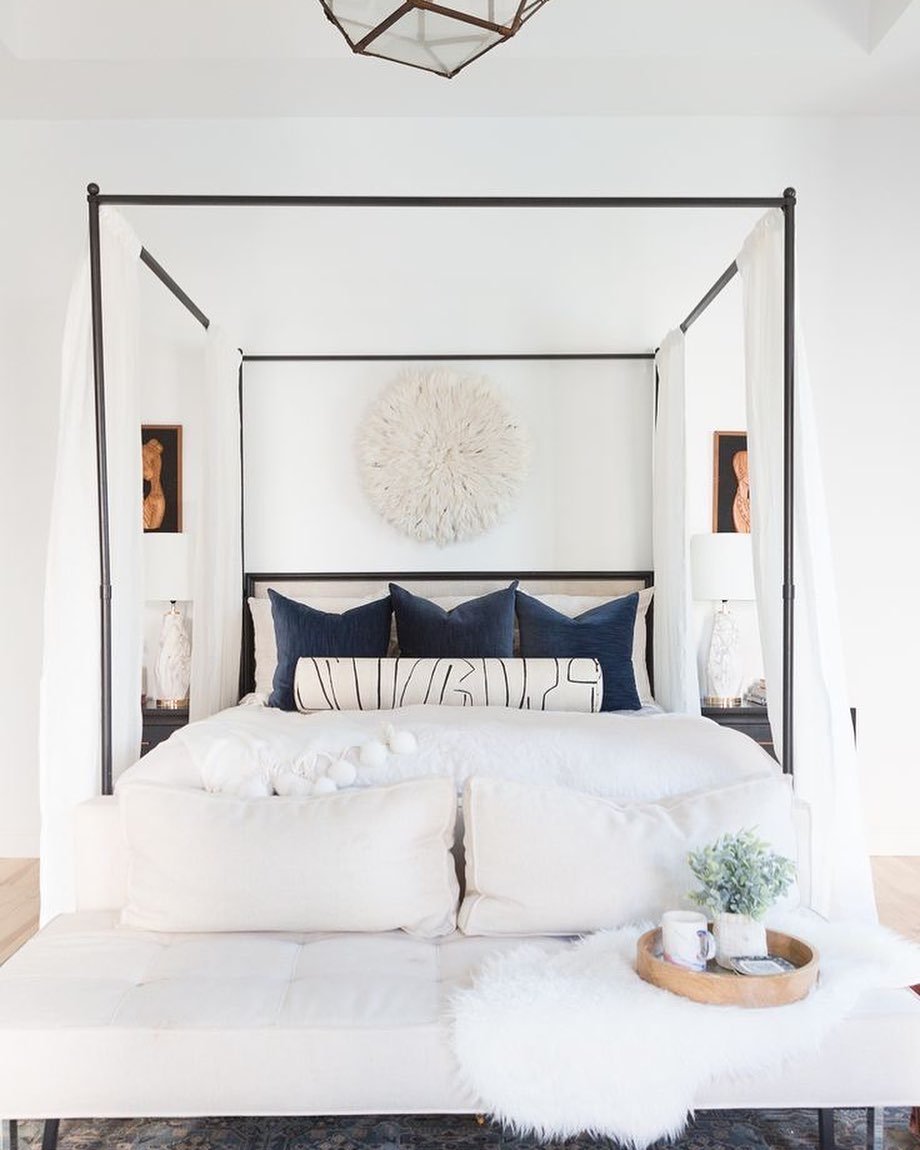
Graphic Contrast: Using black accents (curtain rods, lamp bases, frames) against white or beige walls creates a “Graphic Frame” that organizes the room and gives the eye a place to rest.
5. Biophilic and Narrative Connections
The modern suite must connect the inhabitant to the world outside, even in urban environments.
Visual Windows: Large-scale backlit murals function as artificial windows, providing a psychological link to nature.
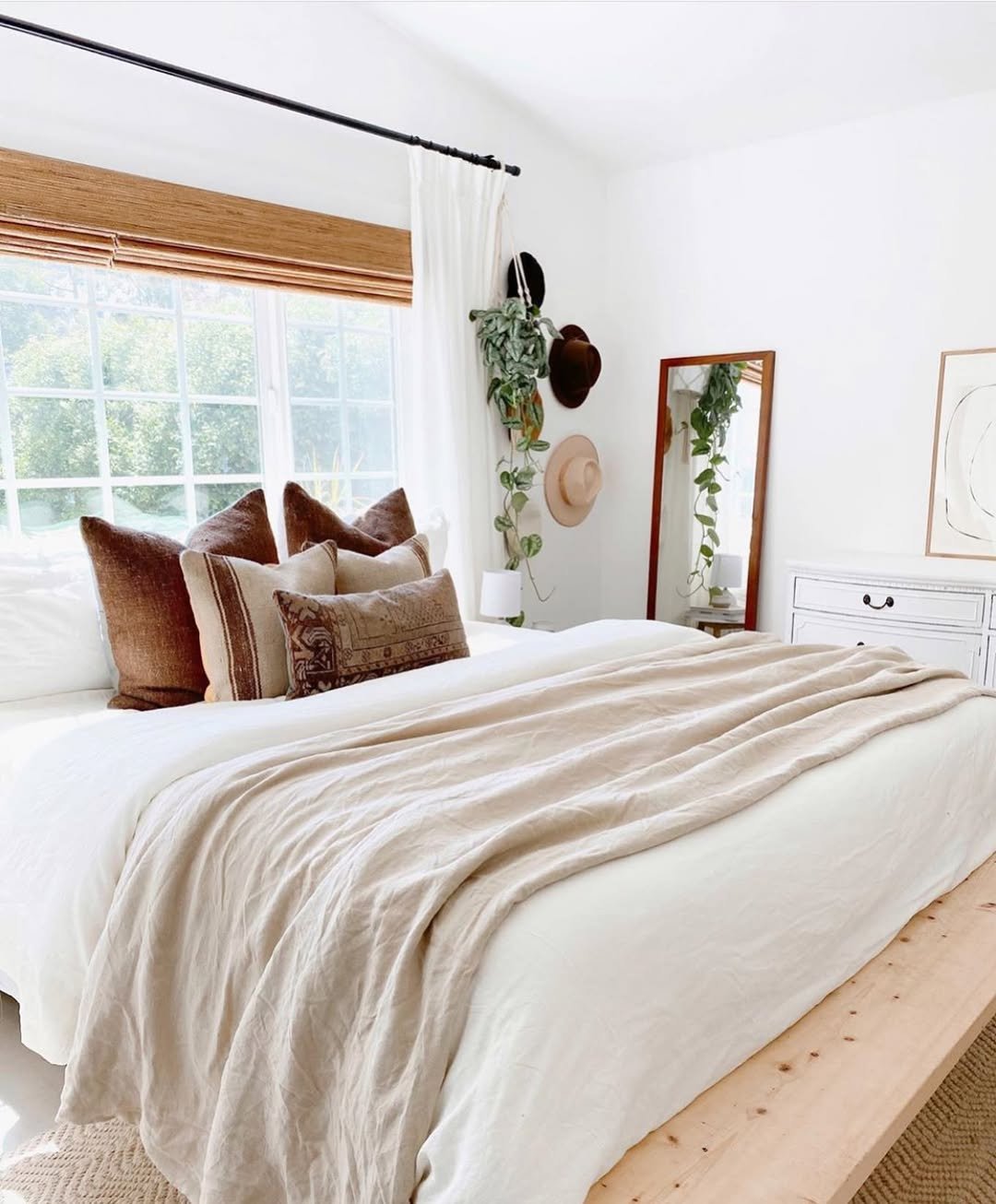
Living Layers: The inclusion of greenery and natural wood tones (the “Boho” style room) creates a “Biophilic Shield” that improves air quality and reduces stress levels.
1. The Monolithic Feature Wall
Modern design has moved beyond simple wallpaper. The primary wall is now treated as a Functional Backdrop.
Integrated Joinery: As seen in the dark-toned suite, the bed is part of a singular wood-carcass installation that includes storage niches and lighting. This eliminates visual “noise” and keeps the room’s floor plan open.
Narrative Murals: Using large-scale backlit graphics—like a mountain landscape—acts as a “visual window,” providing a psychological link to nature in urban settings.
2. The Fifth Wall: Ceiling Engineering
The ceiling is used to control the room’s perceived volume and to define different zones.
Vertical Rhythms: Using wood slats on the ceiling “stretches” the room vertically, making standard heights feel grand. This also provides acoustic dampening to keep the suite quiet.
Soffit Zonation: Dropping sections of the ceiling over the bed creates a “room within a room,” providing a sense of protection and intimacy.
3. High-Performance Acoustic Shells
Luxury is measured by Sonic Comfort. A room that looks beautiful but echoes is considered a failure in professional design.
Soft-Shell Architecture: Extending upholstered panels from floor to ceiling acts as a massive acoustic buffer, absorbing sound and creating a “silent sanctuary.”
Tactile Layering: Designers balance “hard” elements (glass, stone, polished wood) with “soft” layers (velvet tufting, high-pile rugs, and linen) to ground the room’s energy.
4. The Three-Tiered Glow Strategy
Lighting is no longer just a utility; it is a structural building material.
Ambient Cove Layer: Hidden LED strips in ceiling recesses provide a shadowless foundation of light that mimics the natural sky.
Surface Grazing: Lighting placed inches from textured walls highlights the physical depth of materials like stone or wood slats.
Weightless Accents: Illumination at the base of the bed or nightstands makes heavy structural elements appear to hover above the floor.
5. Invisible Utility & Tech Integration
The most sophisticated rooms hide their complexity to preserve Visual Quiet.
Shadow-Line Climate Control: Traditional vents are replaced by slim, black lines tucked into the ceiling geometry for silent, draft-free air.
Embedded Connections: Wireless charging and smart controls are built directly into the furniture surfaces, removing the need for visible cables.

1. The Principle of Unified Volumes
Top-tier design eliminates visual “noise” by fusing furniture into the room’s carcass.
The Monolithic Feature Wall: As seen in the dark-toned suite, the bed is part of a singular structural installation that includes storage niches and lighting. This monolithic approach creates a sleek, permanent profile that maximizes floor space.
Integrated Horizontal Anchoring: Extending a headboard or a custom wall treatment from one side of the room to the other tricks the brain into perceiving a wider, more expansive space.
2. The Fifth Wall: Structural Zonation
The ceiling is used to control the room’s volume and define different areas without physical barriers.
Vertical Rhythms: Utilizing wood slats on the ceiling “stretches” the room vertically. This directional line guides the eye and adds architectural discipline to the suite.
Recessed Soffits: Dropping sections of the ceiling over the bed creates a “room within a room,” providing a psychological sense of enclosure and protection.
3. Layered Ambient “Glow” Engineering
Professional 2026 interiors move away from flat, singular light sources in favor of Depth Scaping:
Cove Ambient Wash: Hidden LED strips in ceiling recesses provide a shadowless foundation of light.
Surface Grazing: Lighting placed inches from textured walls (like wood slats or patterned stone) highlights the physical grain of the material, turning a static wall into a dynamic art piece.
Floating Accents: Illumination at the base of the bed or nightstands makes heavy structural elements appear weightless and futuristic.
4. Acoustic Shells & Sensory Mapping
Luxury is measured by Sonic Comfort. A room that looks expensive but sounds “hollow” is unrefined.
Soft-Shell Architecture: Extending upholstered panels from floor to ceiling acts as a massive acoustic buffer, absorbing echoes and creating a “Silent Sanctuary.”
Tactile Contrast: Designers balance “hard” elements (glass, polished wood, stone) with “soft” layers (velvet tufting, high-pile wool rugs, and linen) to ground the room’s energy.
5. Invisible Utility & Tech Integration
The most sophisticated rooms hide their complexity to maintain Visual Quiet.
Flush Cabinetry: Storage and closets are built into the wall rhythm with no visible hardware, appearing as part of the architecture.
Shadow-Line Climate Control: Traditional vents are replaced by slim, black lines tucked into the ceiling geometry for silent, draft-free air movement.
The overarching design philosophy showcased in these varied master suites is Architectural Fusion. In 2026, the transition from a standard bedroom to an elite suite is achieved by treating every element—from the window treatments to the headboard—as a linked structural system.
Here is the professional breakdown of the design mechanics used to create these world-class environments.
1. The Doctrine of Unified Volumes
Top-tier design eliminates the “broken” look of separate furniture. Instead, every element is part of a Singular Structural Carcass.
The Seamless Horizon: By extending headboards or custom wall paneling from wall to wall, designers remove visual “breaks.” This horizontal emphasis makes the room appear significantly wider than its physical footprint.
Integrated Pedestals: Storage units and bedside pedestals are built directly into the wall’s structure. This ensures that massive utility exists without disrupting the room’s sleek, architectural profile.
2. The Fifth Wall: Zonal Ceiling Sculpting
The ceiling is used as an active tool to define “rooms within rooms” without using physical dividers.
Structural Soffits: By dropping a section of the ceiling specifically over the sleeping area, designers create a vertical anchor that provide a sense of protection and privacy.
Directional Rhythms: Utilizing wood slats on the ceiling (as seen in the coastal-view suite) “stretches” the space vertically, guiding the eye toward the primary view or focal point.
3. High-Performance Acoustic Mapping
True luxury is measured by Sonic Quality. A room that echoes feels unrefined and cold.
Soft-Shell Engineering: Large-scale upholstered walls and floor-to-ceiling drapery act as acoustic shields. These surfaces absorb sound waves, creating a hushed, library-like atmosphere.
Material Balancing: Designers balance “hard” elements (polished stone, metal, glass) with “soft” tactile layers (velvet tufting, high-pile rugs, and linen) to create a grounded sensory environment.
4. The Three-Tiered Glow Strategy
Lighting is treated as a structural building material rather than a utility.
Cove Ambient Wash: LED strips hidden in ceiling recesses provide a shadowless foundation of light that mimics the natural sky.
Surface Grazing: Lighting placed inches from textured walls (like wood slats or patterned stone) highlights the physical grain and depth of the material.
Weightless Accents: Illumination at the base of the bed or nightstands makes heavy structural elements appear to hover above the floor.
5. Invisible Tech & Climate Integration
Elite suites hide their complexity to preserve Visual Quiet.
Flush Joinery: All storage and technology are designed to be flush with the wall rhythm, with no visible handles or cables, appearing as part of the architecture itself.
Shadow-Line Air Management: Traditional vents are replaced by slim, linear lines tucked into the ceiling geometry for silent, draft-free climate control.

1. The Monolithic Volume Strategy
Modern design has moved beyond simple furniture placement toward Functional Backdrops.
Structural Integration: As seen in the dark-toned suite, the bed is part of a singular wood-carcass installation that includes storage niches and lighting.
Narrative Murals: Using large-scale backlit graphics—like a mountain landscape—acts as a “visual window,” providing a psychological link to nature in urban settings.
The Continuous Horizon: Extending a headboard or custom wall treatment from wall to wall removes visual “breaks,” making the room appear wider than its physical footprint.
2. The Fifth Wall: Ceiling Engineering
The ceiling is used to control the room’s perceived volume and to define different zones without physical barriers.
Vertical Rhythms: Using wood slats on the ceiling “stretches” the room vertically, making standard heights feel grand while providing acoustic dampening.
Soffit Zonation: Dropping sections of the ceiling specifically over the bed creates a “room within a room,” providing a sense of protection and intimacy.
3. High-Performance Acoustic Shells
Luxury is measured by Sonic Comfort. A room that looks beautiful but echoes is considered a failure in professional design.
Soft-Shell Architecture: Extending upholstered panels from floor to ceiling acts as a massive acoustic buffer, absorbing sound and creating a “silent sanctuary.”
Tactile Layering: Designers balance “hard” elements (glass, stone, polished wood) with “soft” layers (velvet tufting, high-pile rugs, and linen) to ground the room’s energy.
4. The Three-Tiered Glow Strategy
Lighting is treated as a structural building material rather than a utility.
Ambient Cove Layer: Hidden LED strips in ceiling recesses provide a shadowless foundation of light that mimics the natural sky.
Surface Grazing: Lighting placed inches from textured walls highlights the physical depth of materials like stone or wood slats.
Weightless Accents: Illumination at the base of the bed or nightstands makes heavy structural elements appear to hover above the floor.
5. Invisible Utility & Tech Integration
The most sophisticated rooms hide their complexity to preserve Visual Quiet.
Shadow-Line Climate Control: Traditional vents are replaced by slim, black lines tucked into the ceiling geometry for silent, draft-free air.
Embedded Connections: Wireless charging and smart controls are built directly into the furniture surfaces, removing the need for visible cables.
The evolution of master suite design in 2026 focuses on a concept known as Spatial Synchronization, where the room is engineered as a single, cohesive unit rather than a collection of separate items. This professional approach treats every surface—floor, wall, and ceiling—as a structural system designed for psychological and physical comfort.
Here is a detailed explanation of the architectural and sensory pillars of these environments:
1. The Monolithic Volume Strategy
Modern design moves beyond simple furniture placement toward Functional Backdrops.
Structural Integration: Elements like beds are part of a singular wood-carcass or structural installation that includes storage niches and lighting, as seen in various high-end suites.
The Continuous Horizon: Extending a headboard or custom wall treatment from wall to wall removes visual “breaks”. This horizontal line tricks the brain into perceiving a wider, more expansive space than the physical footprint allows.
Narrative Murals: Large-scale backlit graphics, such as the mountain landscape shown in some designs, act as “visual windows”. This provides a psychological link to nature, which is particularly beneficial in urban settings.
2. The Fifth Wall: Ceiling Engineering
The ceiling is used as a primary tool to control volume and define internal zones without physical barriers.
Vertical Rhythms: Utilizing wood slats on the ceiling “stretches” the room vertically. This directional line makes standard heights feel grand and provides acoustic dampening.
Soffit Zonation: Dropping sections of the ceiling—known as soffits—specifically over the bed creates a “room within a room”. This provides a sense of protection and intimacy for the sleeping area.
3. High-Performance Acoustic Shells
Luxury is measured by Sonic Comfort; a room that looks beautiful but echoes is considered a design failure.
Soft-Shell Architecture: Extending upholstered panels from floor to ceiling acts as a massive acoustic buffer. These surfaces absorb sound waves to create a “silent sanctuary”.
Tactile Layering: Designers balance “hard” elements like glass, stone, or polished wood with “soft” layers like velvet tufting, high-pile rugs, and linen to ground the room’s energy.
4. The Three-Tiered Glow Strategy
Lighting is treated as a structural building material rather than just a utility.
Ambient Cove Layer: Hidden LED strips in ceiling recesses provide a shadowless foundation of light that mimics the natural sky.
Surface Grazing: Lighting placed inches from textured walls highlights the physical depth of materials like stone or wood slats, turning a wall into dynamic art.
5. Invisible Utility & Tech Integration
Sophisticated rooms hide complexity to preserve Visual Quiet.
Shadow-Line Climate Control: Slim, black lines tucked into the ceiling geometry replace traditional vents for silent, draft-free air.
Embedded Connections: Wireless charging and smart controls are built directly into furniture surfaces, removing the need for visible cables.

1. Monolithic Structural Integration
Modern suites utilize Functional Backdrops to merge utility with architecture.
Unified Carpentry: Beds and storage are often part of a singular, wall-anchored installation that eliminates visual clutter.
The Continuous Horizon: By stretching headboards or wall treatments from wall to wall, designers create a horizontal line that makes a room appear wider than its actual footprint.
Narrative Vistas: As seen in specific design concepts, large-scale backlit murals serve as “visual windows,” providing a psychological link to nature in urban or enclosed settings.
2. Fifth Wall Engineering
The ceiling is engineered as a primary tool to define internal zones without physical barriers.
Vertical Rhythm: Utilizing wood slats on the ceiling “stretches” the room vertically, making standard heights feel grand while providing acoustic dampening.
Zonal Soffits: Dropping sections of the ceiling specifically over the bed creates a “room within a room” for a sense of protection.
3. Acoustic and Sensory Mapping
Luxury is defined by Sonic Comfort, ensuring the environment is physically grounding.
Soft-Shell Surfaces: Floor-to-ceiling upholstered panels act as massive acoustic buffers to create a “silent sanctuary”.
Tactile Friction: Designers balance “hard” elements like stone or polished wood with “soft” layers like velvet and linen to prevent a clinical feel.
4. Three-Tiered Glow Strategy
Lighting is treated as a structural building material rather than a simple utility.
Cove Foundation: Hidden LED strips in ceiling recesses provide shadowless, ambient light mimicking the sky.
Surface Highlighting: Lights placed inches from textured walls—such as wood slats—emphasize the physical depth and grain.
The Weightless Effect: Accent lighting at the base of furniture makes heavy structural elements appear to hover, a technique visible
5. Invisible Utility
Elite suites prioritize Visual Quiet by hiding technical complexity.
Shadow-Line Climate Control: Slim, linear black lines integrated into the ceiling geometry replace traditional bulky vents.
Embedded Tech: Smart controls and wireless charging are built directly into architectural surfaces to eliminate visible cables.
The design philosophy presented in these curated environments focuses on Spatial Synchronization, a high-end interior standard where the room functions as a single, cohesive unit. This approach treats every surface—floor, wall, and ceiling—as a structural system designed for both psychological and physical comfort.
1. Monolithic Structural Integration
Modern suites utilize Functional Backdrops to merge utility with architecture.
Unified Carpentry: Beds and storage are often part of a singular, wall-anchored installation that eliminates visual clutter.
The Continuous Horizon: By stretching headboards or wall treatments from wall to wall, designers create a horizontal line that makes a room appear wider than its physical footprint.
Narrative Vistas: Large-scale backlit murals serve as “visual windows,” providing a psychological link to nature in urban or enclosed settings.
2. Fifth Wall Engineering
The ceiling is engineered as a primary tool to define internal zones without the use of physical barriers.
Vertical Rhythm: Utilizing wood slats on the ceiling “stretches” the room vertically, making standard heights feel grand while providing acoustic dampening.
Zonal Soffits: Dropping sections of the ceiling specifically over the bed creates a “room within a room” for a sense of protection and privacy.
3. Acoustic and Sensory Mapping
Luxury is defined by Sonic Comfort, ensuring the environment is physically grounding.
Soft-Shell Surfaces: Floor-to-ceiling upholstered panels act as massive acoustic buffers to create a “silent sanctuary”.
Tactile Friction: Designers balance “hard” elements like stone or polished wood with “soft” layers like velvet and linen to prevent a clinical feel.
4. Three-Tiered Glow Strategy
Lighting is treated as a structural building material rather than a simple utility.
Cove Foundation: Hidden LED strips in ceiling recesses provide shadowless, ambient light mimicking the sky.
Surface Highlighting: Lights placed inches from textured walls—such as wood slats—emphasize physical depth and grain.
The Weightless Effect: Accent lighting at the base of furniture makes heavy structural elements appear to hover.
5. Invisible Utility
Elite suites prioritize Visual Quiet by hiding technical complexity.
Shadow-Line Climate Control: Slim, linear black lines integrated into the ceiling geometry replace traditional bulky vents.
Embedded Tech: Smart controls and wireless charging are built directly into architectural surfaces to eliminate visible cables.

1. Monolithic Structural Integration
Modern suites utilize Functional Backdrops to merge utility with architecture.
Unified Carpentry: Beds and storage are often part of a singular, wall-anchored installation that eliminates visual clutter.
The Continuous Horizon: By stretching headboards or wall treatments from wall to wall, designers create a horizontal line that makes a room appear wider than its actual footprint.
Narrative Vistas: As seen in specific design concepts, large-scale backlit murals serve as “visual windows,” providing a psychological link to nature in urban or enclosed settings.
2. Fifth Wall Engineering
The ceiling is engineered as a primary tool to define internal zones without physical barriers.
Vertical Rhythm: Utilizing wood slats on the ceiling “stretches” the room vertically, making standard heights feel grand while providing acoustic dampening.
Zonal Soffits: Dropping sections of the ceiling specifically over the bed creates a “room within a room” for a sense of protection.
3. Acoustic and Sensory Mapping
Luxury is defined by Sonic Comfort, ensuring the environment is physically grounding.
Soft-Shell Surfaces: Floor-to-ceiling upholstered panels act as massive acoustic buffers to create a “silent sanctuary”.
Tactile Friction: Designers balance “hard” elements like stone or polished wood with “soft” layers like velvet and linen to prevent a clinical feel.
4. Three-Tiered Glow Strategy
Lighting is treated as a structural building material rather than a simple utility.
Cove Foundation: Hidden LED strips in ceiling recesses provide shadowless, ambient light mimicking the sky.
Surface Highlighting: Lights placed inches from textured walls—such as wood slats—emphasize the physical depth and grain.
Illuminated Footprints: Accent lighting at the base of furniture is a prominent technique used to transform the visual weight of heavy structural elements.
5. Invisible Utility
Elite suites prioritize Visual Quiet by hiding technical complexity.
Shadow-Line Climate Control: Slim, linear black lines integrated into the ceiling geometry replace traditional bulky vents.
Embedded Tech: Smart controls and wireless charging are built directly into architectural surfaces to eliminate visible cables.
1. The Doctrine of Unified Volumes
Luxury is defined by the elimination of “broken” visual lines. Every element is part of a Singular Structural Carcass, where beds, closets, and shelving are designed as permanent extensions of the wall planes to create a monolithic look.
2. The Fifth Wall: Zonal Geometry
The ceiling serves as a horizontal anchor to define “rooms within rooms” without physical walls. By dropping specific sections (soffits) over the sleeping area, designers create a sense of shelter and intimacy.
3. Vertical Rhythmic Stretching
Utilizing linear repetition, such as vertical slats or recessed channels, “pulls” the eye toward the ceiling. This verticality makes standard-height rooms feel grand and cathedral-like.
4. Acoustic Shell Engineering
High-performance suites are designed as Sonic Sanctuaries. Utilizing floor-to-ceiling upholstered panels and “soft-shell” surfaces absorbs internal echoes, creating a hushed, library-like atmosphere essential for mental decompression.
5. Multi-Planar Headboard Systems
The modern headboard is a total wall installation, merging textiles with hard architectural materials like stone or metal. This wall-to-wall horizontal expansion tricks the brain into perceiving a much wider space.
6. Circadian Light Scaping
Lighting is a biological utility. Systems are programmed to automatically shift color temperatures—from energizing cool tones in the morning to amber, blue-light-free hues in the evening—to regulate the inhabitant’s natural sleep-wake cycle.
7. Weightless Architectural Illumination
By placing light sources in the recessed “toe-kick” base of furniture, heavy structural elements appear to hover. This “Floating Logic” removes visual bulk and makes the floor plane appear infinite.
8. Material Conflict and Friction
To prevent minimalist rooms from feeling clinical, designers use Tactile Contrast. Placing a high-gloss reflective surface next to a raw, matte texture (like unfinished wood or rough plaster) creates passive visual interest.
9. Invisible Tech Envelopes
Technology is powerful but visually undetectable. Wireless charging coils are hidden beneath stone surfaces, and smart controls are flush-mounted into the architecture to preserve geometric purity.
10. Shadow-Line Air Management
Traditional bulky AC vents are replaced by Linear Shadow Diffusers. These are slim, black-recessed lines integrated into the ceiling geometry that provide silent, draft-free climate control.
11. Reflective Spatial Doubling
High-gloss ceiling overlays or full-wall mirrored planes “delete” physical boundaries. This optical expansion reflects light and outdoor views deep into the suite.
12. Monolithic Storage Facades
Closets are treated as secondary architectural walls. Using push-to-open technology and zero-clearance tracks, storage disappears into the wall rhythm, maintaining a museum-like aesthetic.
13. Psychological Anchoring
Large suites can feel exposing; designers solve this through “Ceiling Compression.” Lowering the ceiling specifically over the bed provides a sense of “back-cover,” which is psychologically proven to reduce cortisol.
14. The “Visual Quiet” Standard
When every structural line—from window pockets to cabinetry—is perfectly aligned, the room achieves Static Harmony. This lack of visual friction allows the mind to stop processing the environment and begin recovery.
15. Material Mapping and Haptic Flow
Floors guide the inhabitant through sensory transitions. A “hard” zone of stone for dressing transitions into a “soft” zone of high-pile wool for sleeping, signaling to the brain a move from high energy to rest.
16. The Narrative Window Effect
In urban environments, designers use large-scale backlit graphics or murals to serve as a “Visual Window.” This adds a layer of outdoor connectivity and acts as a focal anchor for the room.
17. Zero-G Cantilevered Surfaces
Wall-mounted vanities and desks keep the floor footprint entirely clear. This “Suspended Logic” makes the room feel airy and futuristic while simplifying maintenance.
18. Surface Grazing and Detail Focus
“Grazing” lights are placed inches from 3D textures. This emphasizes the physical grain of stone or fabric, turning static walls into dynamic, shifting pieces of sculptural art.
19. Flush Material Fusions
Elite joinery is marked by the Zero-Threshold Meeting. Different materials meet perfectly flush without transition strips, indicating a high-budget, custom-engineered project.
20. Total Environmental Seclusion
The final goal is a “Living Machine” that perfectly insulates the owner. When acoustics are deadened, lighting is circadian, and geometry is aligned, the suite becomes a complete sanctuary from the outside world.