Rustic Glow and Scandinavian Calm
Warm Wood & Woven Light: A Story of Cozy, Nature-Inspired Kitchen Design
These two kitchens celebrate warmth, natural materials, and intimate living. Rooted in wood textures, soft neutral palettes, and handcrafted details, they create environments that feel welcoming, relaxed, and deeply connected to nature. Unlike dramatic modern spaces that rely on bold contrast, these kitchens embrace comfort and harmony. They prioritize atmosphere as much as functionality, blending rustic charm with contemporary simplicity.
Together, they showcase how thoughtful lighting, organic materials, and soft color palettes can transform a kitchen into a sanctuary within the home.
Kitchen One: Skylit Rustic Charm
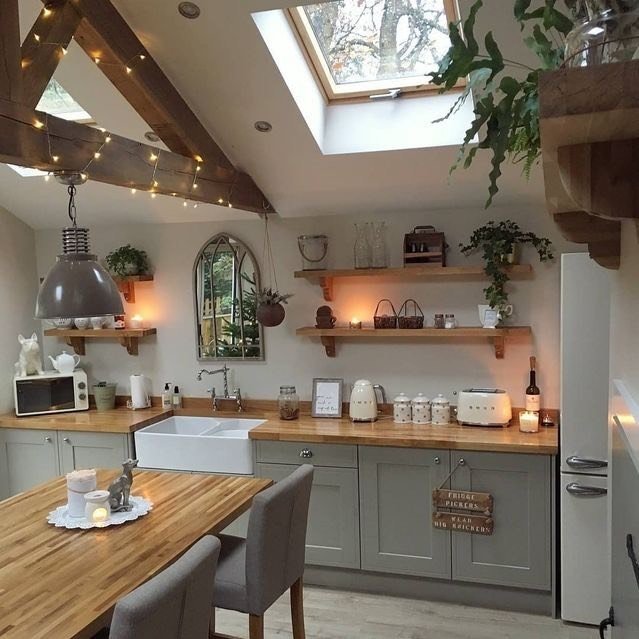
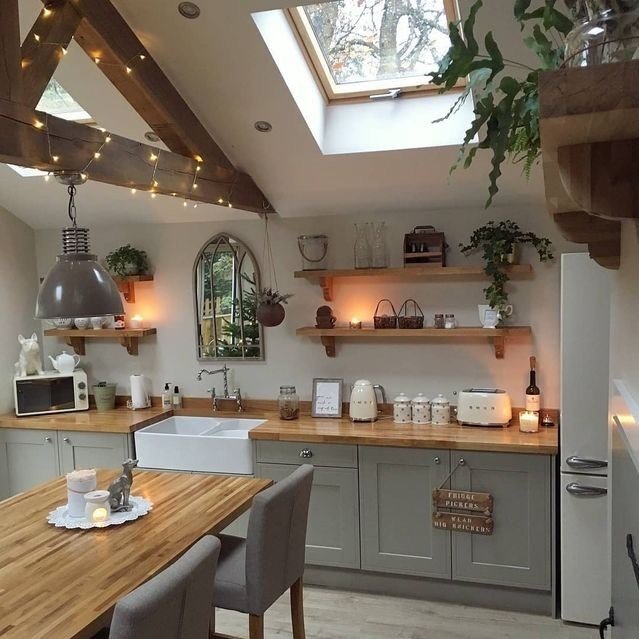
The first kitchen immediately captivates with its sloped ceiling, exposed wooden beams, and skylight. The architectural features set the tone for a space that feels intimate and inviting.
Architectural Warmth
The exposed beams create strong visual structure overhead, drawing the eye upward and emphasizing the cozy proportions of the room. Their rich wood tone contrasts beautifully with the soft white ceiling, adding depth without overwhelming the space.
The skylight is a defining feature. Natural daylight pours into the kitchen, illuminating countertops and open shelving while highlighting the warmth of the wood finishes. The view of tree branches through the skylight enhances the connection to nature, making the kitchen feel alive and dynamic throughout the day.
String lights wrapped around the beams add an extra layer of charm. They introduce a subtle glow in the evenings, transforming the kitchen into a softly lit retreat.
Soft, Earthy Cabinetry
The lower cabinets are painted in a muted sage green—an earthy, calming shade that blends seamlessly with the wood countertops. This gentle color reinforces the natural aesthetic and prevents the room from feeling overly rustic.
The cabinetry style is classic and understated, featuring simple paneling and minimal hardware. This ensures that the materials themselves—wood, paint, and light—remain the primary design elements.
Wooden Countertops and Open Shelving
The wooden countertops enhance the farmhouse character. Their natural grain adds organic texture and warmth. Unlike glossy stone surfaces, these countertops feel tactile and approachable.
Open wooden shelves above the counter provide both storage and display. Glass jars, small plants, and everyday kitchen essentials are neatly arranged, adding personality without clutter. The shelves contribute to an airy feeling, preventing the room from appearing heavy with cabinetry.
Small decorative candles placed along the shelves create ambient lighting, reinforcing the cozy atmosphere.
Farmhouse Sink and Vintage Details
A large farmhouse-style sink anchors the countertop area. Its deep basin and traditional form reflect practicality while enhancing the rustic charm.
Nearby, a retro-inspired appliance and decorative accessories add nostalgic character. These details suggest a kitchen designed for comfort and familiarity rather than sleek modernism.
Intimate Dining Area
The wooden dining table extends naturally from the kitchen workspace, creating a seamless transition between cooking and gathering. Upholstered chairs soften the look, making the area feel comfortable and welcoming.
This kitchen feels like the heart of a cottage home—ideal for slow mornings, homemade meals, and candlelit evenings.
Kitchen Two: Scandinavian Serenity with Woven Elegance
The second kitchen leans toward Scandinavian minimalism, enriched with soft textures and natural light. While it shares the use of wood and organic materials, its design feels slightly more contemporary and refined.
Open, Airy Architecture
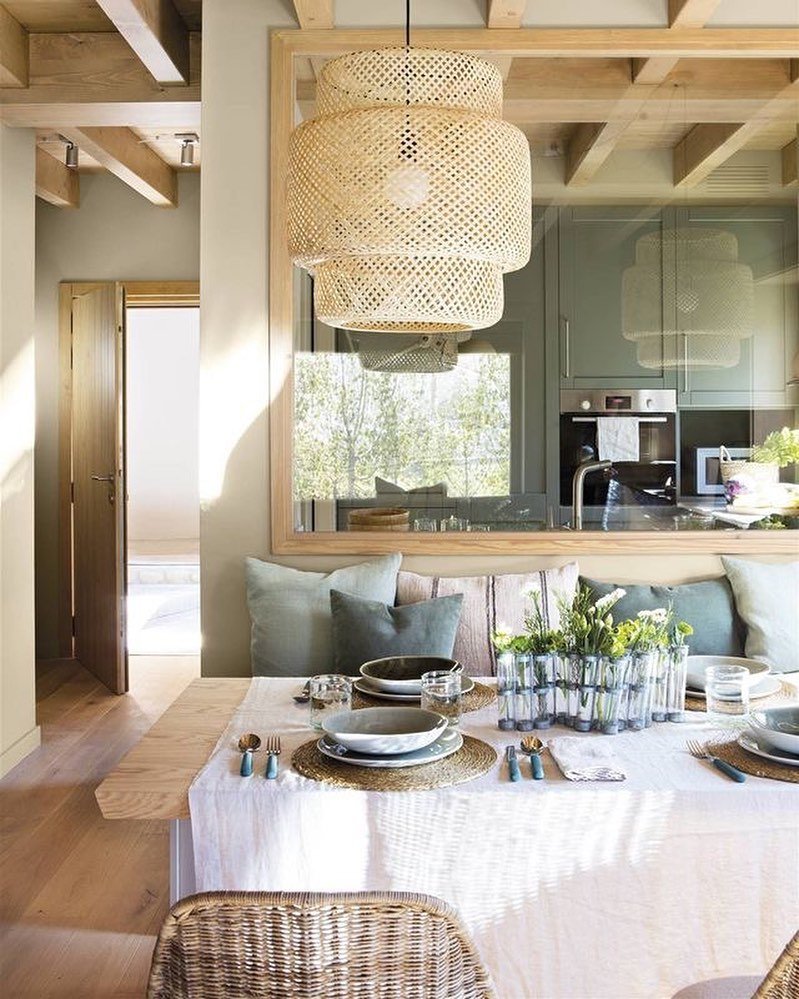
Exposed wooden ceiling beams define the room while maintaining a light, spacious feel. Their pale wood tone contrasts gently with soft neutral walls, creating brightness rather than heaviness.
A large interior window connects the kitchen to the dining area, allowing natural light to flow freely between spaces. This architectural feature enhances openness and visual continuity.
Soft Green Cabinetry
The kitchen cabinetry appears in a muted sage or olive tone—similar to the first kitchen but styled more minimally. The finish feels smooth and modern, with clean lines and integrated appliances that blend seamlessly into the design.
The restrained color palette contributes to a sense of calm and clarity.
Woven Pendant as a Focal Point
A woven rattan pendant light hangs above the dining table, immediately capturing attention. Its layered cylindrical design adds sculptural presence while maintaining softness.
The woven texture diffuses light gently, casting warm shadows that enhance the natural ambiance. This fixture serves as both lighting and artwork—an example of functional decor.
Natural Textures and Layering
The dining table is styled with woven placemats, neutral linens, and simple ceramic tableware. These layered textures create depth without visual noise.
Wicker chairs add warmth and a casual coastal influence. Soft cushions in muted tones provide comfort while maintaining the earthy palette.
Greenery in glass vases brings freshness to the space. The plants introduce organic movement and subtle color contrast.
Light Wood Flooring
Wide-plank wood flooring grounds the entire design. Its warm undertones tie together cabinetry, ceiling beams, and woven elements. The floor acts as a unifying base, ensuring harmony throughout.
The natural wood reflects daylight, enhancing the kitchen’s airy feel.
Shared Design Principles
Though stylistically distinct, these kitchens share key design principles that make them successful.
1. Emphasis on Natural Materials
Both spaces prioritize wood, woven fibers, greenery, and soft fabrics. These materials introduce texture and warmth while fostering a connection to nature.
Natural materials age gracefully, adding character over time.
2. Soft, Muted Color Palettes
Rather than bold contrasts, both kitchens use gentle greens, creams, and warm wood tones. This creates visual cohesion and emotional calm.
Muted palettes encourage relaxation and comfort—qualities essential in a gathering space.
3. Warm Ambient Lighting
Lighting plays a crucial role in both kitchens. String lights, candles, woven pendants, and warm-toned bulbs create layered illumination.
This soft lighting enhances texture and prevents harsh shadows, contributing to the cozy atmosphere.
4. Balance of Function and Style
Neither kitchen sacrifices practicality for aesthetics. Work surfaces are ample, storage is accessible, and layouts promote efficiency.
However, functional elements are integrated thoughtfully, ensuring the space remains beautiful.
Atmosphere and Emotional Experience
The first kitchen evokes cottage living—intimate, nostalgic, and slightly rustic. The skylight and string lights create a magical ambiance, particularly in the evening.
The second kitchen feels serene and refined. Its clean lines and woven textures encourage slow dining and mindful living. It reflects Scandinavian principles of simplicity and balance.
Both spaces emphasize emotional comfort over visual drama.
Design Lessons from These Kitchens
Architectural details matter. Exposed beams and skylights transform ordinary kitchens into memorable spaces.
Texture adds depth. Wood, rattan, and fabric soften minimal palettes.
Lighting defines mood. Warm layered lighting creates intimacy.
Nature enhances design. Plants and organic materials bring life into the kitchen.
Cohesion is key. Limiting the color palette ensures harmony.
Conclusion
These kitchens demonstrate that beauty lies in warmth and authenticity. Through exposed wood beams, woven lighting, soft sage cabinetry, and natural textures, they create environments that feel personal and nurturing.
The first kitchen wraps you in rustic charm beneath a skylit ceiling. The second invites you to gather beneath woven light in a serene, Scandinavian-inspired setting.
Both celebrate the idea that a kitchen should feel like home—not just a place to cook, but a place to connect, reflect, and unwind.
In a world often dominated by bold trends and high-gloss finishes, these designs remind us of the timeless appeal of natural materials, soft light, and thoughtful simplicity.