Rustic Modern Kitchen & Dining Retreat
A Warm, Nature-Inspired Kitchen and Dining Space: A Detailed Interior Description
Introduction: A Harmonious Blend of Rustic Charm and Modern Comfort
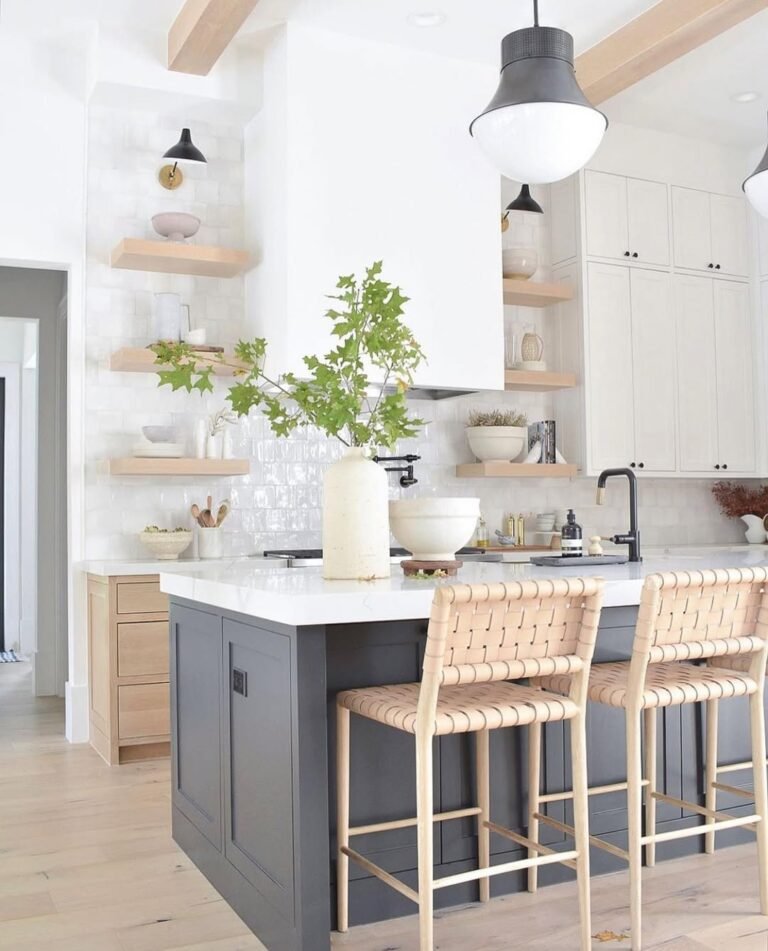
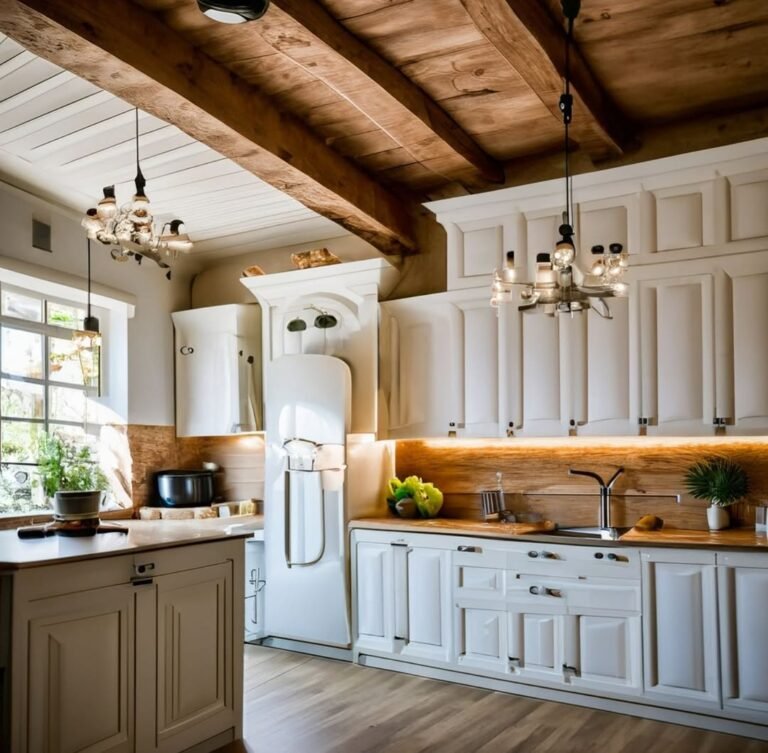
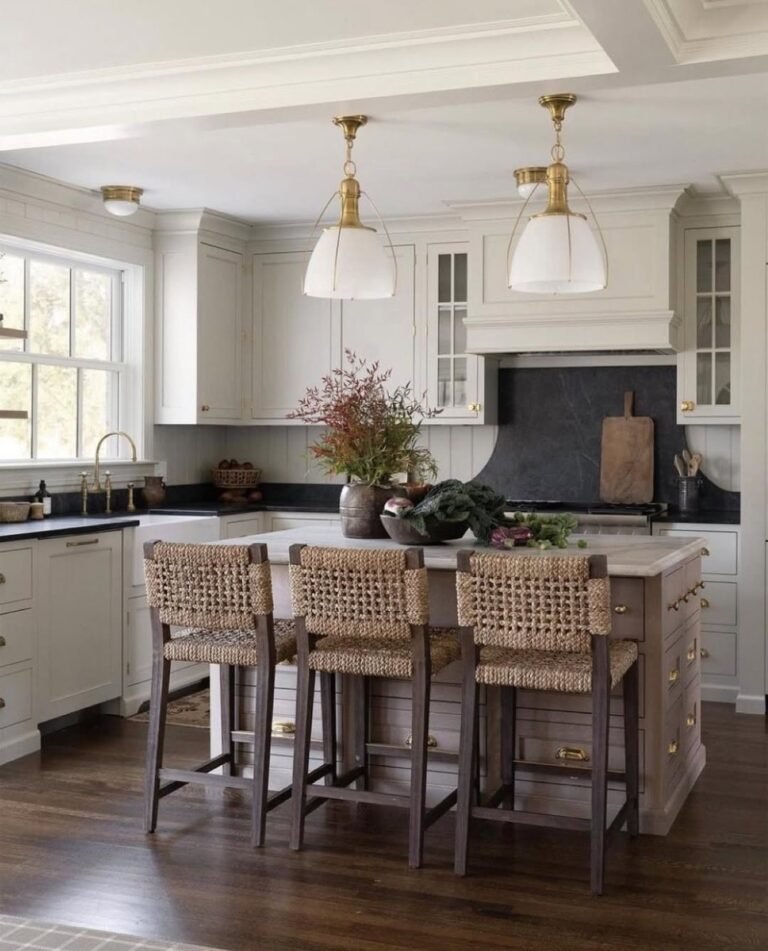
The two interiors presented form a cohesive narrative of warmth, craftsmanship, and thoughtful design. Both spaces celebrate natural materials, soft neutral palettes, and an abundance of light. They embody a style that gently merges rustic farmhouse charm with contemporary Scandinavian minimalism. Exposed wooden beams, layered textures, handcrafted details, and greenery contribute to an environment that feels both curated and comfortably lived-in.
Together, these rooms tell a story of a home that prioritizes atmosphere, intimacy, and connection — a place where cooking, dining, and gathering become cherished rituals framed by natural beauty and soft illumination.
Part I: The Rustic Skylit Kitchen
Architectural Character and Structural Warmth
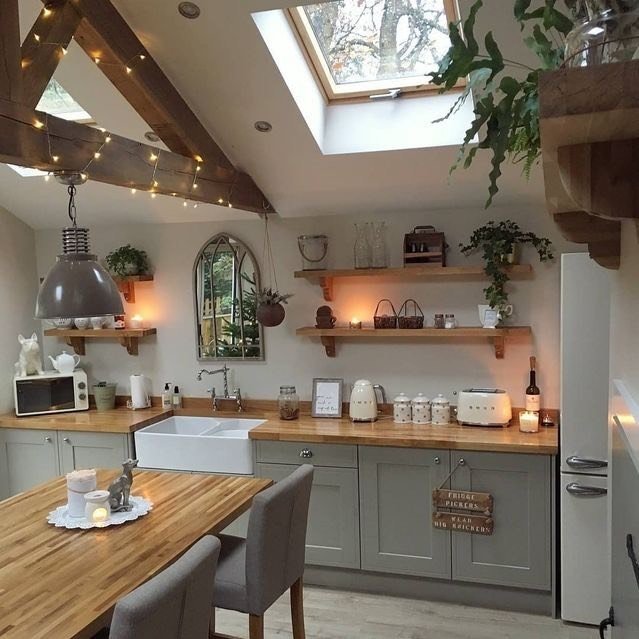
The kitchen is nestled beneath a pitched ceiling with exposed wooden beams that immediately draw the eye upward. These beams introduce architectural depth and rustic character, their warm timber tones contrasting gently against the soft white ceiling. The sloped roof is punctuated by a generous skylight, inviting daylight to flood the space and creating a dynamic interplay between light and shadow throughout the day.
The skylight serves as both a practical and emotional focal point. It visually expands the room, connects the interior to the sky above, and enhances the sense of openness despite the kitchen’s relatively intimate footprint.
A Soft, Earthy Color Palette
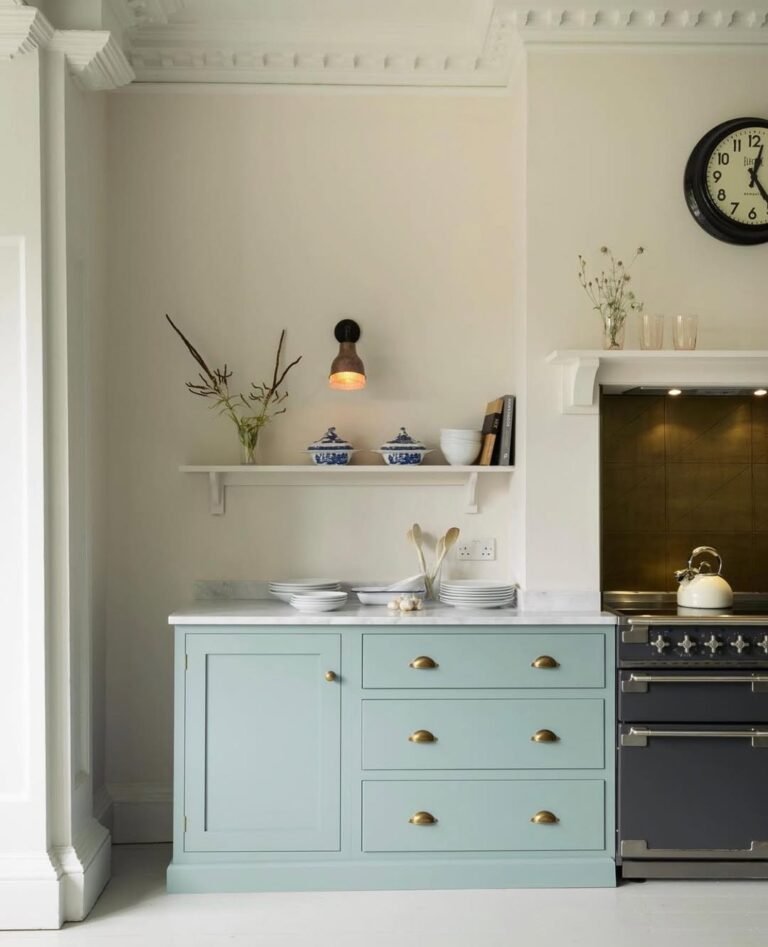
The cabinetry is painted in a muted sage green — a hue that evokes calm and harmonizes beautifully with the natural wood countertops. This subtle green grounds the space while maintaining a light and airy feel. The combination of soft green, honey-toned wood, and creamy white walls creates a palette rooted in nature.
The overall color story is understated and cohesive. There are no jarring contrasts; instead, every element flows seamlessly into the next. The effect is soothing and timeless rather than trend-driven.
Natural Materials and Textural Layers
One of the most striking aspects of the kitchen is its commitment to natural materials:
Solid wood countertops with visible grain patterns
A deep farmhouse-style ceramic sink
Wooden floating shelves supported by simple brackets
Linen textiles and woven accents
Ceramic storage jars and glass containers
The farmhouse sink, centrally placed beneath a decorative mirror, acts as a nostalgic nod to traditional country kitchens. Its clean white surface contrasts softly against the wooden countertop and sage cabinetry.
Floating wooden shelves replace upper cabinets, maintaining visual lightness and allowing everyday objects to double as décor. Glass jars, potted plants, and small woven baskets create visual rhythm while keeping the space functional.
Lighting: Creating Intimacy and Ambiance
Lighting in this kitchen is layered and thoughtfully executed. A large industrial-style pendant lamp hangs over the wooden dining table, balancing rustic and modern aesthetics. The matte gray metal shade adds a subtle industrial edge without overpowering the softness of the room.
String lights draped across the wooden beams introduce a whimsical, intimate glow. Small candles placed along the shelves and countertop further enhance the cozy ambiance, especially during evening hours.
This interplay of natural daylight from the skylight and warm artificial lighting transforms the space from bright and energizing during the day to intimate and cocoon-like at night.
Functional Layout and Flow
Despite its compact proportions, the kitchen is efficiently organized. The work triangle — sink, countertop prep space, and appliances — is logically arranged. Appliances such as a toaster, microwave, and kettle are neatly aligned along the back counter, ensuring easy access without clutter.
The refrigerator sits to one side, integrated into the layout without disrupting the visual balance. Decorative touches like a small hanging sign and potted plants soften the practicality of the space.
The wooden dining table positioned centrally invites casual meals and conversation. Upholstered dining chairs in neutral tones add comfort and subtle refinement, preventing the space from feeling overly rustic.
Decorative Details and Personal Touches
The kitchen feels deeply personal. A vintage-style mirror above the sink reflects light and greenery from outside, visually expanding the space. Small framed prints, ceramic jars labeled for storage, and carefully arranged plants suggest a home that is lovingly curated.
Greenery plays a vital role. Trailing plants cascade gently from upper shelves and beams, adding organic movement. These living elements bring vitality and freshness, reinforcing the connection between interior and nature.
Part II: The Contemporary Rustic Dining Area
A Framed View and Architectural Continuity
The second space transitions seamlessly into a dining area that continues the natural aesthetic while elevating it with slightly more modern refinement.
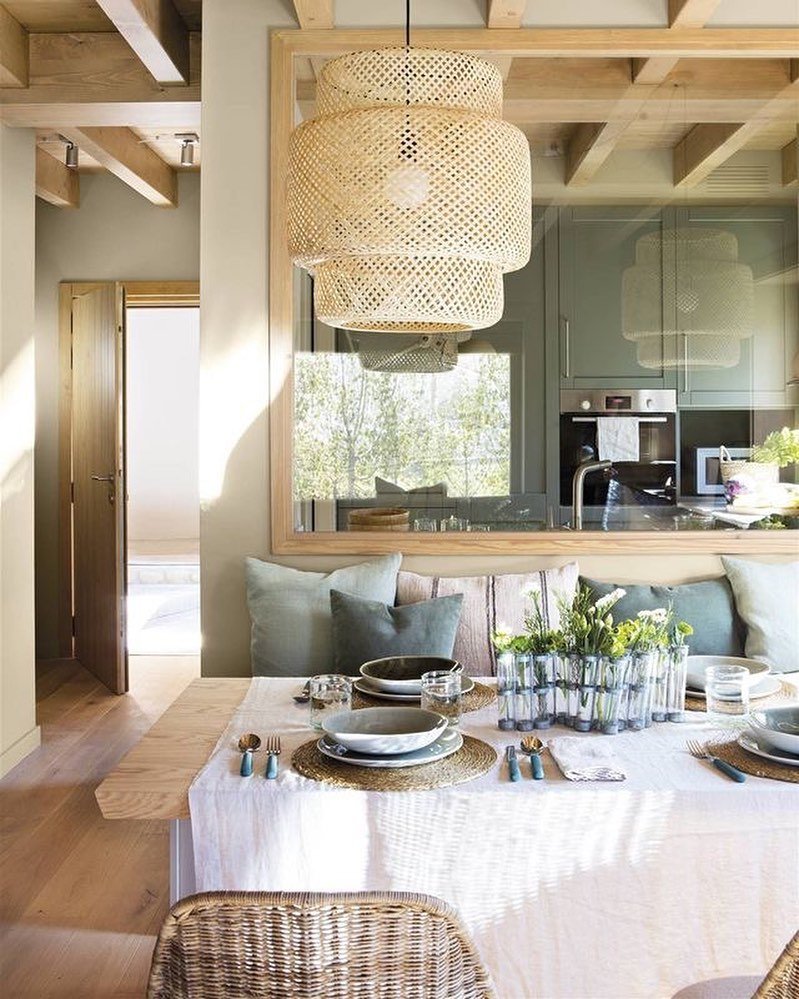
Exposed wooden ceiling beams again establish warmth and continuity. A large interior window framed in light wood connects the dining area to the kitchen beyond. This feature acts as both a visual bridge and a design statement. It maintains openness while defining zones within the home.
The large wooden frame adds architectural interest and reinforces the prominence of natural materials.
The Statement Pendant Light
Suspended centrally above the dining table is a woven rattan pendant light. Its layered cylindrical shape introduces sculptural softness. The woven texture filters light gently, casting subtle patterns that enhance the room’s atmosphere.
This pendant becomes the focal point of the dining space. It embodies the home’s commitment to craftsmanship and organic materials. The light fixture feels artisanal, grounding the room in tactile authenticity.
Dining Table Styling and Table Setting
The dining table itself is solid wood with a natural finish, echoing the tones of the ceiling beams and flooring. The styling is deliberate yet effortless.
A soft white table runner drapes across the table, introducing a clean canvas for layered place settings. Each setting includes:
Neutral ceramic plates
Subtle gray bowls
Woven placemats
Minimalist cutlery with muted handles
Clear glassware
The woven placemats mirror the texture of the pendant light, creating harmony across vertical and horizontal elements. The overall styling communicates simplicity, elegance, and quiet hospitality.
Seating and Comfort
Seating includes woven rattan chairs at the table’s edges and a built-in bench along the wall. The bench is styled with plush cushions in soft sage and muted green tones. These pillows echo the kitchen cabinetry, creating a cohesive color thread between spaces.
The combination of woven chairs and upholstered bench seating adds diversity in texture while maintaining comfort. The seating arrangement encourages lingering meals and relaxed gatherings.
Connection to Nature
Large windows allow sunlight to pour in, illuminating the natural wood flooring and highlighting the grain patterns. Through the glass, greenery from outside becomes part of the interior composition.
A simple floral arrangement at the center of the table reinforces this connection. Fresh green stems in clear glass vases bring life and movement without overwhelming the minimalist aesthetic.
The interior window framing the kitchen creates depth and layered perspective, enhancing the feeling of an interconnected, open-plan home.
Cohesion Between Both Spaces
Unified Design Language
Though distinct in function, the kitchen and dining areas share:
Exposed wooden beams
Light, neutral wall colors
Organic materials
Green accents
Warm ambient lighting
Minimal clutter
This repetition creates unity and visual calm. There is no abrupt shift in style; instead, the dining area feels like a natural extension of the kitchen.
Balance of Rustic and Modern
Both spaces strike a delicate balance. The rustic elements — beams, farmhouse sink, woven materials — provide character and warmth. The modern elements — clean cabinetry lines, minimalist table styling, sleek appliances — ensure the rooms feel current and functional.
This balance prevents the interiors from feeling overly nostalgic or starkly contemporary. Instead, they occupy a timeless middle ground.
Atmosphere and Emotional Impact
Daytime Experience
During the day, sunlight defines the mood. The skylight and windows bathe surfaces in natural light, enhancing the warmth of wood and softening green tones. Shadows shift gently across beams and tabletops, adding visual interest.
The space feels fresh, open, and energizing — ideal for morning coffee, casual brunches, or productive cooking sessions.
Evening Ambiance
As daylight fades, artificial lighting transforms the mood. String lights in the kitchen glow softly, candles flicker along shelves, and the woven pendant casts warm illumination over the dining table.
The home becomes intimate and cocooning — a sanctuary from the outside world. The layered lighting invites slow dinners, heartfelt conversations, and quiet reflection.
Craftsmanship and Intentional Living
What stands out most in these interiors is intentionality. Nothing feels accidental. Every object has a purpose, whether functional or aesthetic. Storage is integrated seamlessly into décor. Open shelving encourages mindful curation rather than accumulation.
The emphasis on natural materials suggests sustainability and appreciation for craftsmanship. The design values longevity over trends, authenticity over excess.
Texture as a Design Foundation
Texture plays a defining role across both spaces:
Smooth ceramic surfaces
Matte painted cabinetry
Raw woven rattan
Soft linen textiles
Solid wood grain
Glass transparency
These layers prevent the neutral palette from feeling flat. Even without bold colors, the rooms feel rich and dynamic because texture carries visual weight.
Conclusion: A Sanctuary of Warmth and Simplicity
These interiors represent more than aesthetic appeal; they embody a lifestyle centered around warmth, nature, and connection. The skylit kitchen offers rustic charm with practical functionality, while the dining area elevates everyday meals into meaningful experiences.
Together, they create a cohesive environment where natural materials, soft lighting, and thoughtful design coexist harmoniously. The result is a home that feels grounded yet airy, refined yet welcoming — a sanctuary designed not only to be seen, but to be lived in fully and joyfully.
This is a space where wood warms the senses, light shapes the mood, and simplicity becomes a form of quiet luxury.