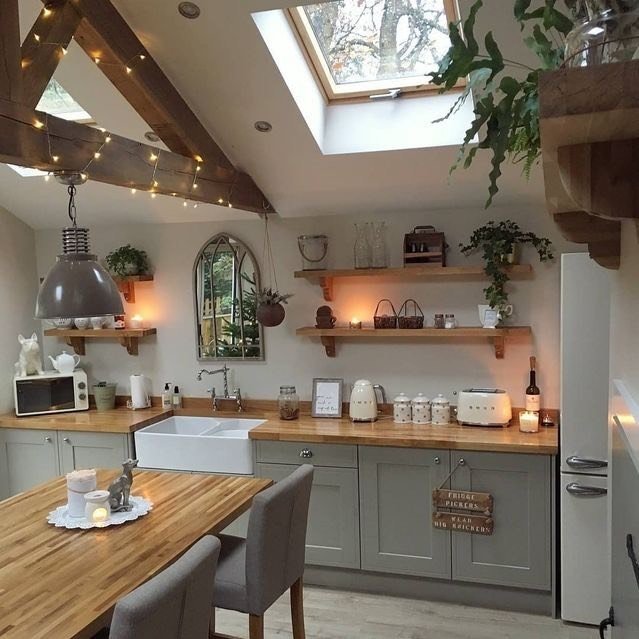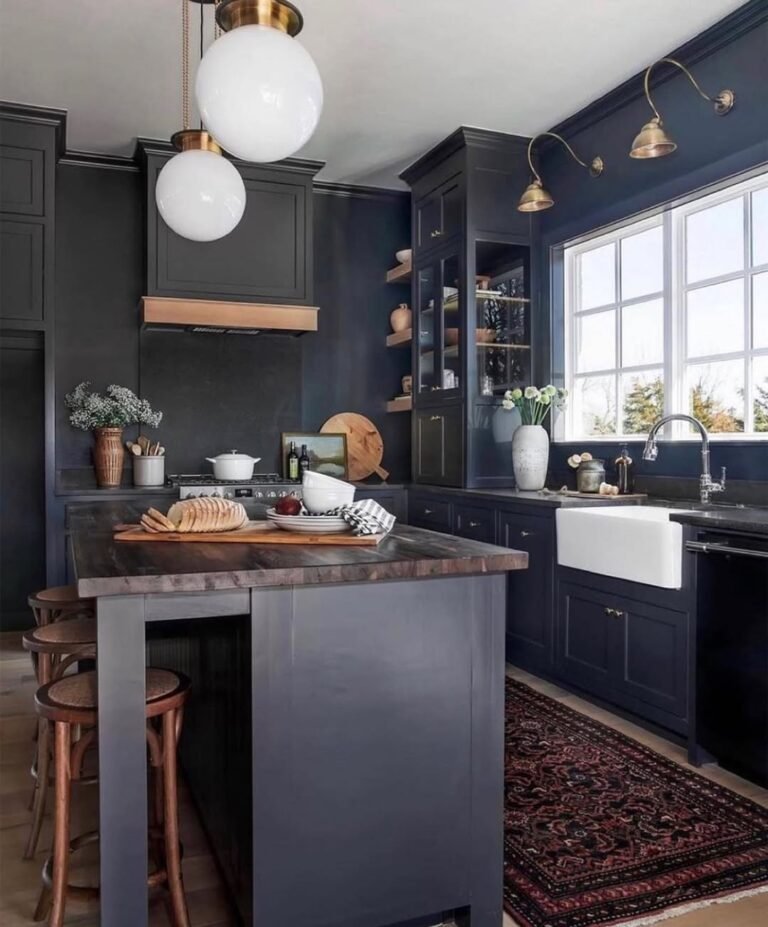
The Art of Kitchen Personality
Three Kitchens, Three Personalities: Rustic Warmth, Artistic Boldness & Coastal Serenity
Kitchens are more than functional spaces. They are emotional centers of the home—places where design meets daily ritual, where materials shape mood, and where personality is expressed through texture, color, and light. The three kitchens presented here each tell a distinct story. One celebrates rustic warmth with timber beams and heritage charm. Another embraces artistic boldness through dramatic contrast and vibrant tilework. The third radiates coastal serenity with soft greens, natural fibers, and relaxed styling. Though different in tone and character, all three demonstrate how thoughtful design transforms a kitchen into an experience.
Kitchen One: Rustic Warmth and Heritage Character
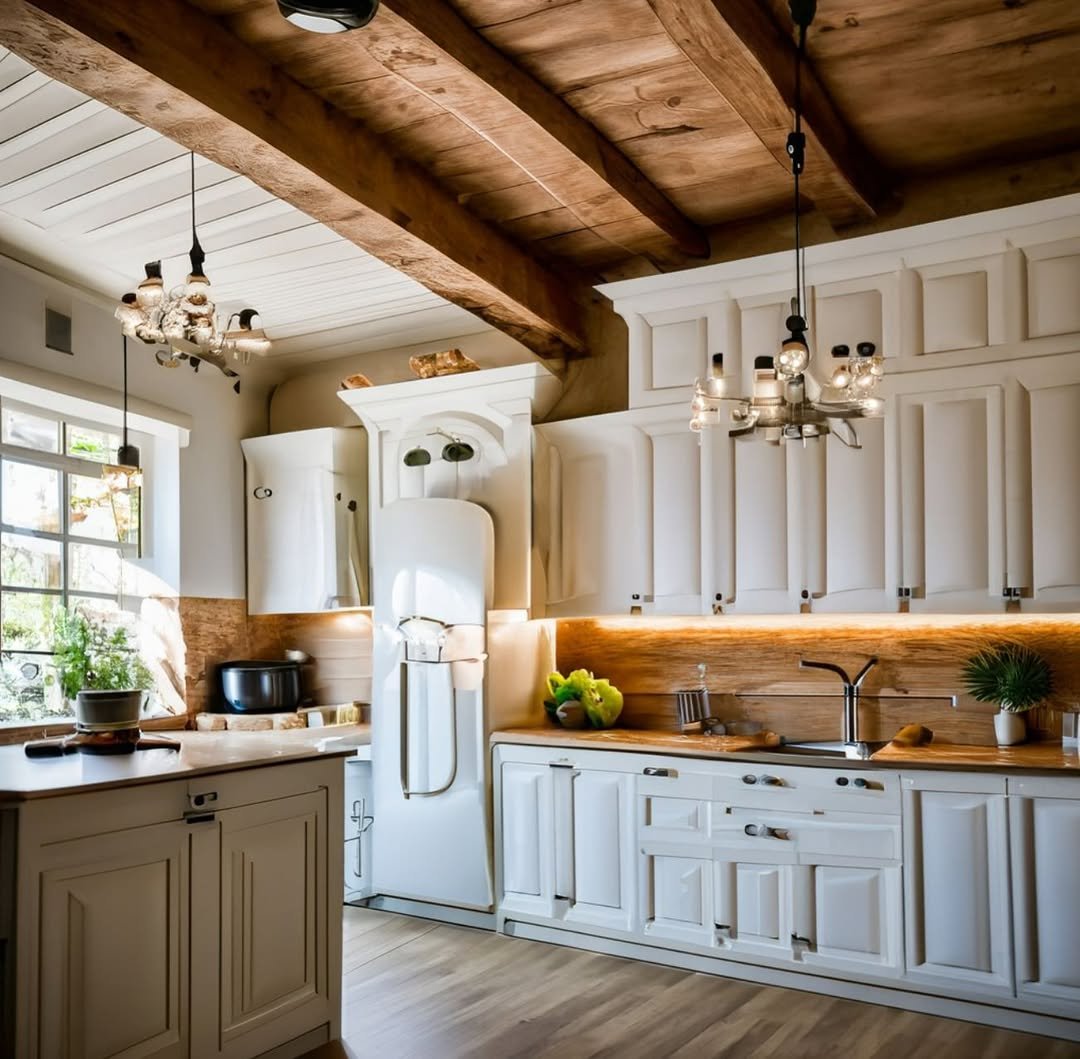
The first kitchen immediately draws attention upward. Exposed wooden ceiling beams create architectural drama while establishing warmth and authenticity. The rich tone of the wood contrasts beautifully against the crisp white cabinetry below, forming a harmonious dialogue between rustic and refined.
Architectural Presence
The heavy timber beams define the entire space. They introduce age, texture, and structural beauty. Paired with white-paneled ceilings, they prevent the room from feeling heavy while maintaining that farmhouse character. The beams ground the design and provide visual rhythm across the ceiling plane.
The cabinetry beneath follows a traditional profile. Paneled doors, classic molding, and detailed trim evoke heritage craftsmanship. Rather than sleek minimalism, this kitchen embraces depth and contour.
Vintage Influence
A standout feature is the retro-inspired refrigerator. Its curved silhouette and soft finish reinforce the nostalgic charm. Instead of hiding appliances behind panels, this kitchen allows personality to shine through statement pieces.
The lighting also leans toward decorative expression. Pendant fixtures with exposed bulbs hang from the ceiling, adding a slightly industrial note while maintaining warmth. Their soft glow enhances the wood tones and creates intimacy during evening hours.
Natural Materials and Warm Surfaces
Wood appears not only in the ceiling beams but also in the backsplash and countertops. The subtle grain variation adds organic character. Unlike glossy stone surfaces, these wood finishes feel tactile and inviting.
Under-cabinet lighting casts a golden hue across the backsplash, emphasizing texture and enhancing the cozy atmosphere. The warm lighting temperature complements the timber beams and natural elements.
Balance of Old and New
Though rooted in rustic tradition, the kitchen maintains modern functionality. Clean countertops, integrated appliances, and organized storage ensure practicality. The result is a space that feels lived-in yet efficient—a perfect blend of farmhouse soul and contemporary convenience.
This kitchen speaks to those who appreciate heritage details, natural materials, and comforting ambiance. It feels grounded, timeless, and deeply welcoming.
Kitchen Two: Artistic Boldness and Refined Drama
The second kitchen takes a dramatically different approach. It is a study in contrast, pattern, and elegance. While the first kitchen celebrates wood and nostalgia, this one centers around marble, deep cabinetry, and an unforgettable patterned tile backsplash.
The Power of Contrast
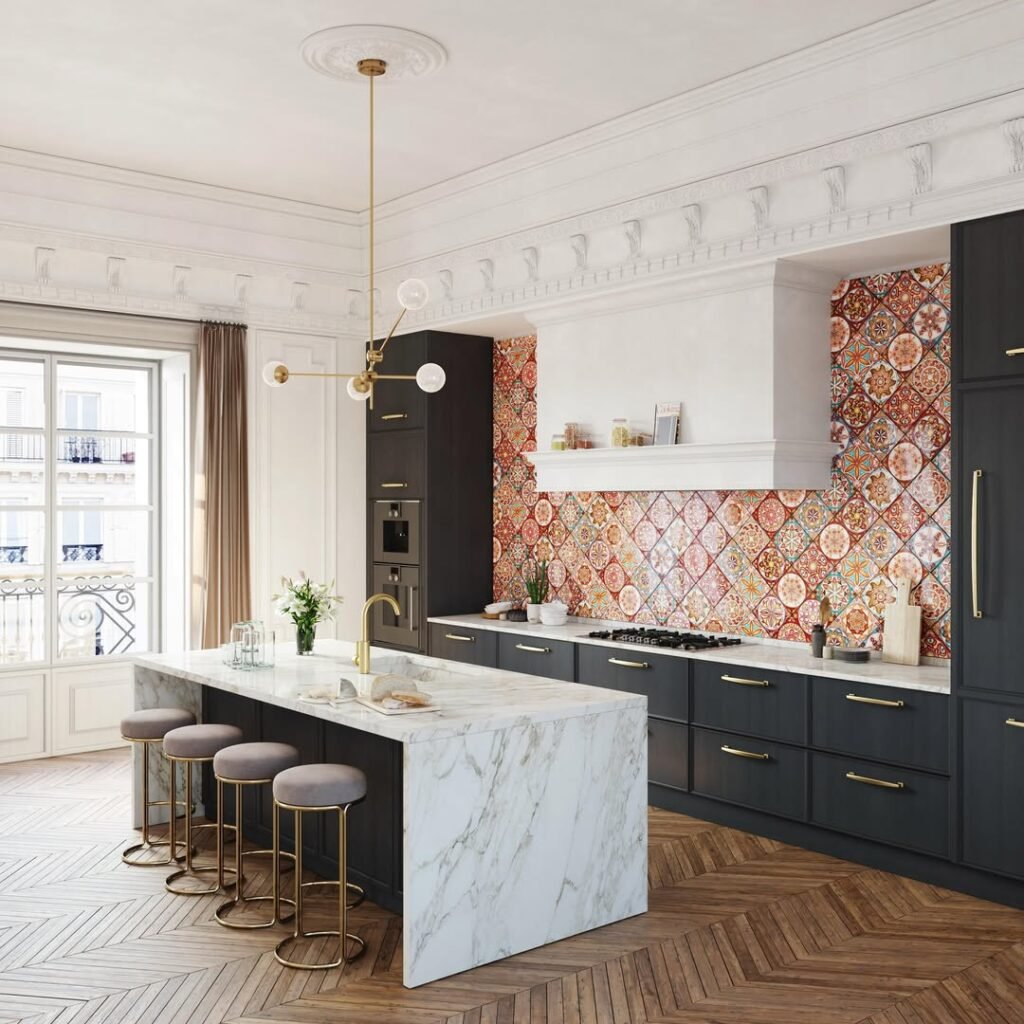
Dark lower cabinets in a rich navy or charcoal tone create a strong foundation. Their smooth finish conveys sophistication and confidence. In contrast, the upper walls and surrounding architecture remain light and airy, allowing the darker cabinetry to stand out without overwhelming the space.
Gold hardware introduces a layer of luxury. The slim, linear handles and fixtures provide refinement and cohesion. The warm metallic accents also echo tones within the colorful tile backsplash.
Statement Tile as Art
The backsplash is the undeniable focal point. Intricate circular and geometric patterns in reds, blues, oranges, and creams create visual movement. Each tile feels handcrafted, as though it carries cultural heritage and artistry.
Rather than covering the entire wall randomly, the tile is framed thoughtfully between cabinetry and shelving. It reads like a curated artwork rather than a simple surface covering.
The vibrant patterns energize the kitchen, transforming the cooking zone into a design statement. This boldness reflects confidence and creativity.
Marble Island as Anchor
The large marble island introduces balance. Its soft white surface with subtle veining provides calm amid the vibrant tiles. The waterfall edges enhance modern sophistication.
The island also functions as a social hub. With bar seating along one side, it invites conversation and gathering. The gold faucet above the island sink ties back to the hardware, ensuring design consistency.
Light and Height
High ceilings and detailed molding frame the space with elegance. A modern chandelier with globe bulbs adds sculptural interest without competing with the backsplash.
Large windows flood the kitchen with natural light, enhancing the tile’s vibrancy and reflecting off the marble surfaces. The interplay of light and pattern creates dynamic energy throughout the day.
A Kitchen with Personality
This kitchen is bold yet controlled. Every dramatic element is balanced by simplicity elsewhere. The cabinetry remains streamlined. The island is uncluttered. The architectural details are classic.
The overall impression is one of artistic refinement—a kitchen for those who appreciate color, craftsmanship, and visual storytelling.
Kitchen Three: Coastal Serenity and Natural Ease
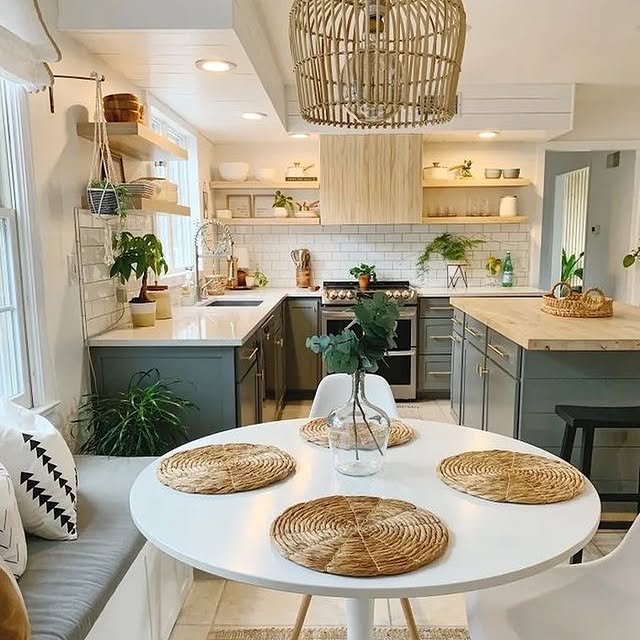
The third kitchen shifts toward softness and relaxation. Where the second kitchen energizes, this one soothes. Its palette of muted greens, whites, and natural fibers evokes a coastal or Scandinavian influence.
Gentle Color Palette
Soft sage or muted green cabinetry establishes a calm foundation. The tone feels organic and understated. Paired with white subway tile backsplash and light countertops, the kitchen feels airy and fresh.
Unlike bold contrast, this design relies on tonal harmony. The colors blend seamlessly, creating continuity rather than drama.
Open Shelving and Simplicity
Open shelves display curated dishware and greenery. The styling is minimal yet intentional. Potted plants and simple ceramics add life without clutter.
The cabinetry lines are clean and practical. This kitchen values usability and comfort over ornamentation.
Natural Texture as Decoration
A woven pendant light hangs above the dining table, introducing texture and warmth. The woven placemats echo that natural fiber theme. These elements soften the space and enhance its organic appeal.
Plants are thoughtfully placed throughout, reinforcing the connection to nature. The greenery contrasts gently with the muted cabinetry.
Functional Layout
The U-shaped configuration maximizes efficiency. Counter space surrounds the cooking area, ensuring ease of movement. The central dining table creates a seamless transition between kitchen and dining zone.
The design feels approachable and livable. It encourages slow mornings, casual meals, and relaxed gatherings.
Light-Filled Atmosphere
Large windows allow abundant daylight. The light bounces off white surfaces and highlights the soft green cabinetry. The effect is peaceful and inviting.
This kitchen embodies simplicity, balance, and comfort. It reflects a lifestyle centered on calm and connection.
Comparing the Three Styles
Though distinct in personality, these kitchens share common design principles:
1. Strong Focal Points
Rustic kitchen: Exposed beams
Artistic kitchen: Patterned backsplash
Coastal kitchen: Natural textures and soft palette
Each design establishes a clear visual anchor.
2. Material Harmony
All three kitchens use natural materials—wood, marble, tile, metal—to create depth and authenticity.
3. Thoughtful Lighting
Lighting plays a critical role in defining mood. Warm lighting enhances rustic charm. Sculptural lighting elevates artistic drama. Soft, natural light defines coastal serenity.
4. Functional Efficiency
Despite aesthetic differences, each kitchen prioritizes usability. Work zones are clear, storage is integrated, and layouts support daily life.
Emotional Impact of Design
Design influences how we feel in a space.
The rustic kitchen feels grounding and nostalgic.
The artistic kitchen feels inspiring and expressive.
The coastal kitchen feels peaceful and rejuvenating.
These emotional responses demonstrate the power of color, texture, and proportion.
Choosing a Style
Selecting a kitchen style depends on personality and lifestyle.
If you value warmth, tradition, and tactile materials, rustic charm may resonate.
If you love bold design and statement features, artistic contrast offers excitement.
If you crave calm and natural simplicity, coastal serenity provides comfort.
The best kitchen reflects its owner’s rhythm and preferences.
Conclusion
These three kitchens illustrate the diversity of contemporary design. From timber beams and vintage accents to dramatic tile artistry and tranquil natural palettes, each space showcases a unique interpretation of beauty and functionality.
The rustic kitchen celebrates heritage and warmth. The artistic kitchen transforms surfaces into expressive canvases. The coastal kitchen prioritizes light, texture, and relaxation.
Together, they demonstrate that great kitchen design is not about following trends but about creating atmosphere. Whether bold or subtle, traditional or modern, the most successful kitchens are those that feel intentional, balanced, and deeply personal.
In the end, a kitchen is more than cabinetry and countertops—it is a reflection of lifestyle, taste, and the stories we choose to tell through design.