Timeless Interior Ideas
The Art of Timeless Interiors: Creating Warm, Elegant Spaces That Last
In today’s fast-changing design world, trends come and go quickly. But timeless interiors remain beautiful year after year. These spaces feel welcoming, refined, and comfortable no matter the season.
In this guide, we’ll explore how to create elegant dining and living spaces inspired by classic design, layered textures, and warm natural materials.
Designing a Timeless Dining Room
A timeless dining room balances tradition and comfort. Rich wood paneling, elegant lighting, and layered table settings create a sophisticated atmosphere perfect for gatherings.
Key Elements:
-
Solid wood walls or furniture
-
Statement chandelier
-
Upholstered dining chairs
-
Patterned table linens
-
Classic artwork
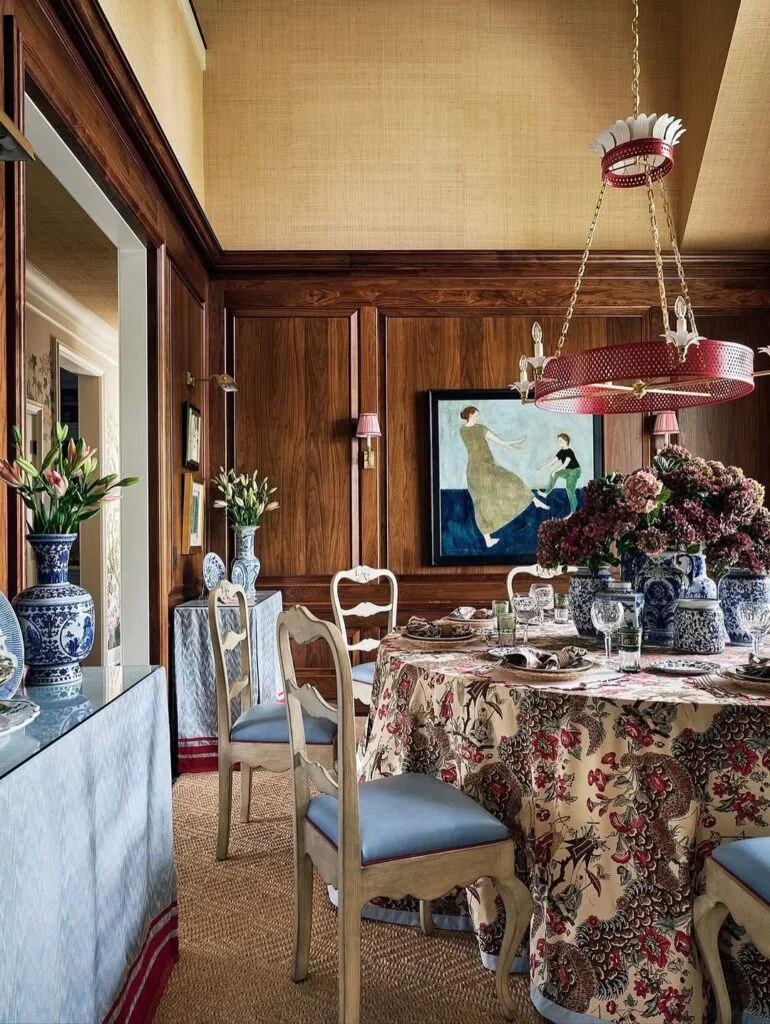
Example of a Classic Dining Room
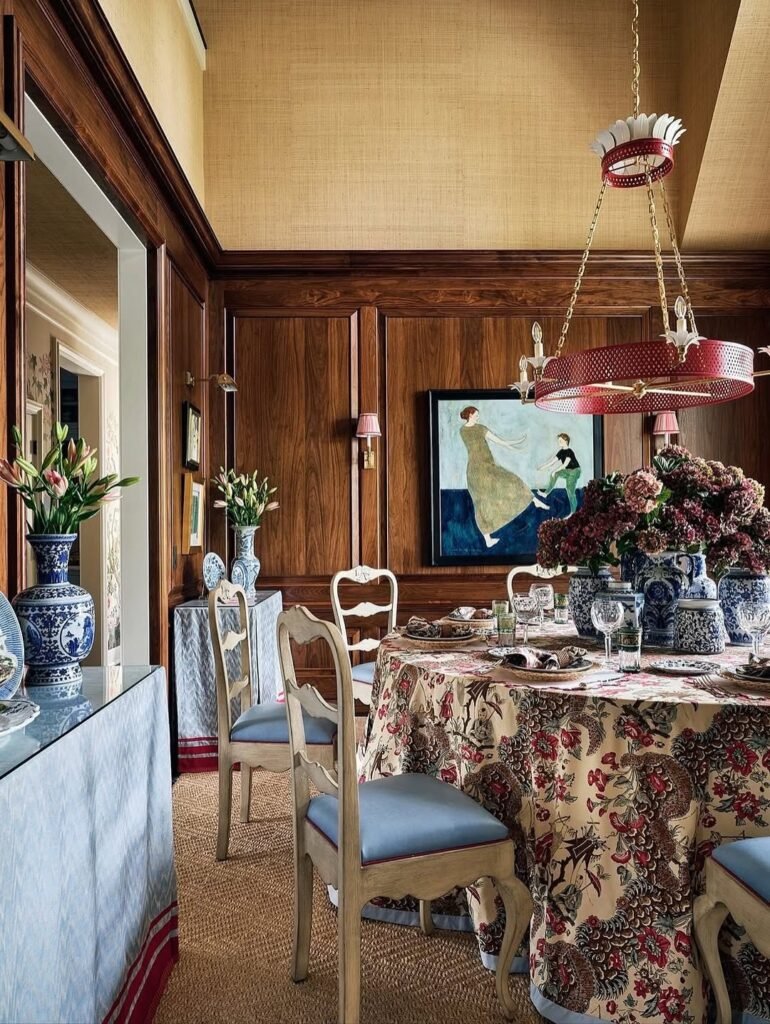
Notice the deep wood paneling paired with a patterned tablecloth and blue upholstered chairs. The chandelier adds character, while the floral centerpiece softens the space.
The Beauty of a Cozy Living Room
A timeless living room feels bright, calm, and welcoming. Neutral walls combined with soft blue patterns create a peaceful environment.
Important Features:
-
White paneled walls
-
Marble fireplace
-
Built-in bookshelves
-
Patterned armchairs
-
Layered décor
Elegant Living Room Example
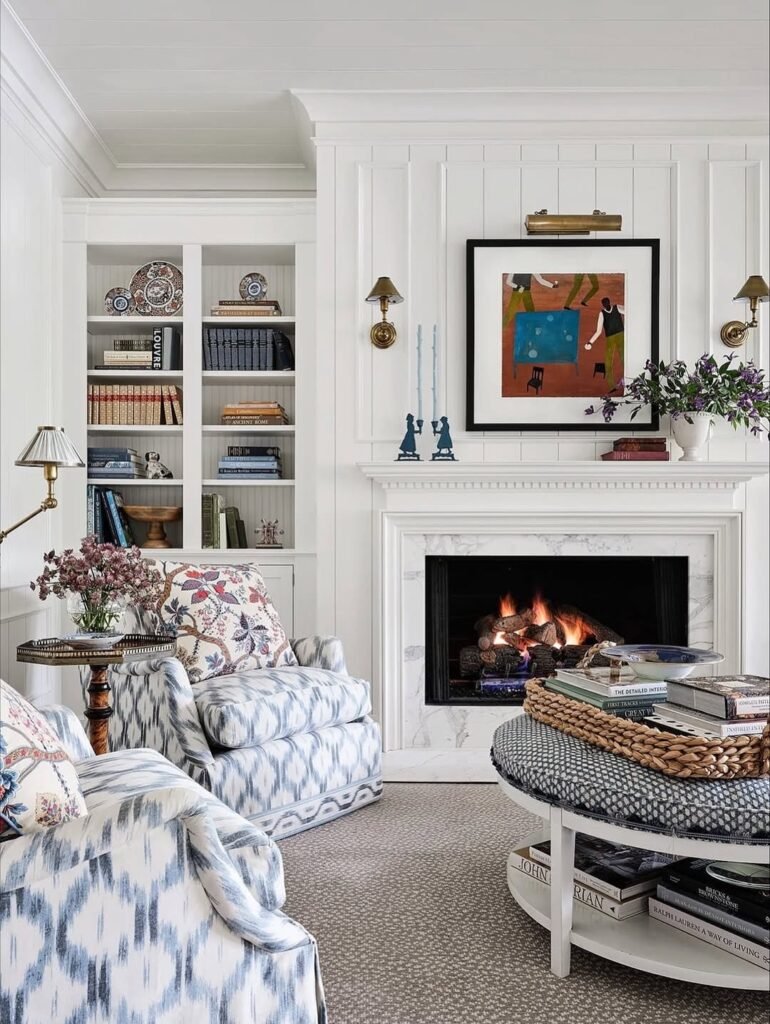
The marble fireplace adds sophistication, while patterned armchairs introduce charm without overwhelming the space.
Statement Lighting in Dining Spaces
Lighting is a major design element. A bold yet classic chandelier can completely transform a dining room.
What Makes It Work:
-
Warm metal finishes
-
Soft lighting bulbs
-
Balanced size for the table
-
Coordinated with décor
Overhead Dining View
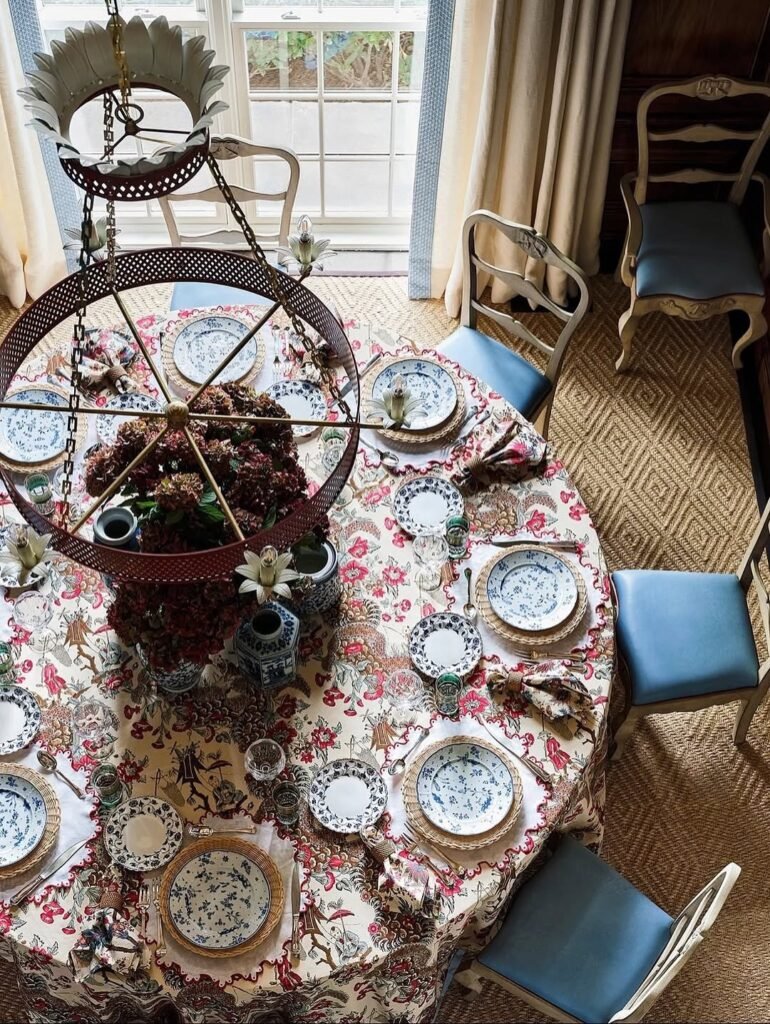
From above, you can see how beautifully layered table settings, woven placemats, and floral arrangements create depth and warmth.
Mixing Patterns with Confidence
Timeless design does not mean plain design. Mixing patterns—when done carefully—adds richness and personality.
In the room below, floral cushions, striped curtains, and textured fabrics blend harmoniously.
Patterned Breakfast Nook
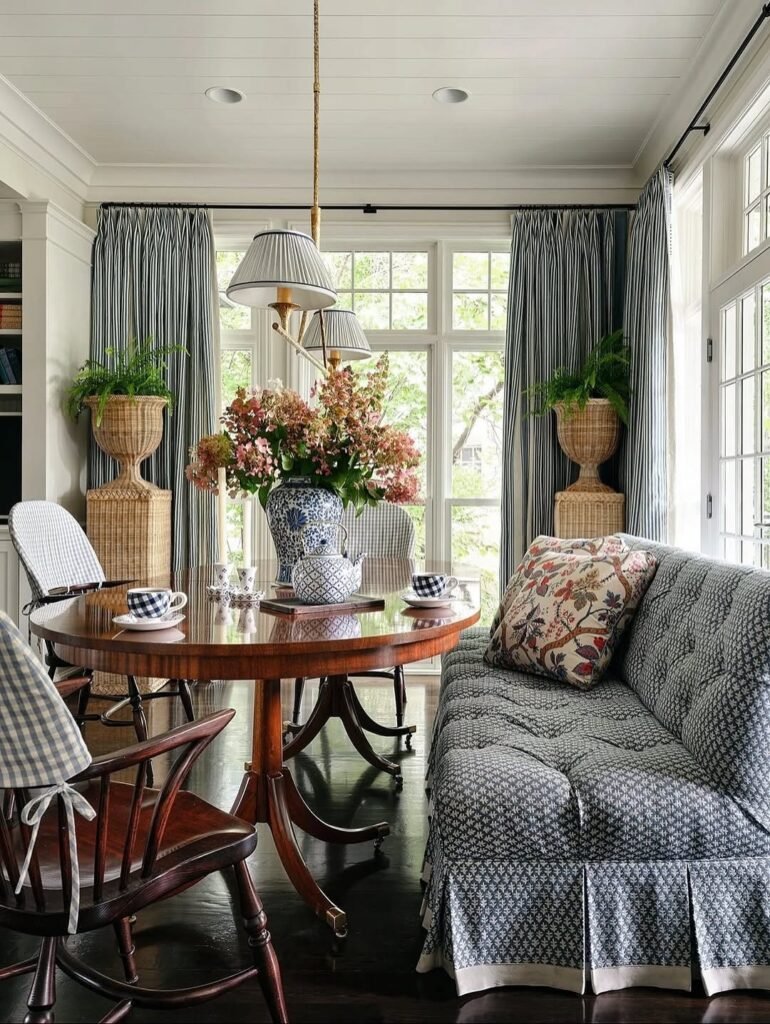
The balance works because the colors remain soft and cohesive—mostly blues, creams, and muted florals.
Decorative Walls that Tell a Story
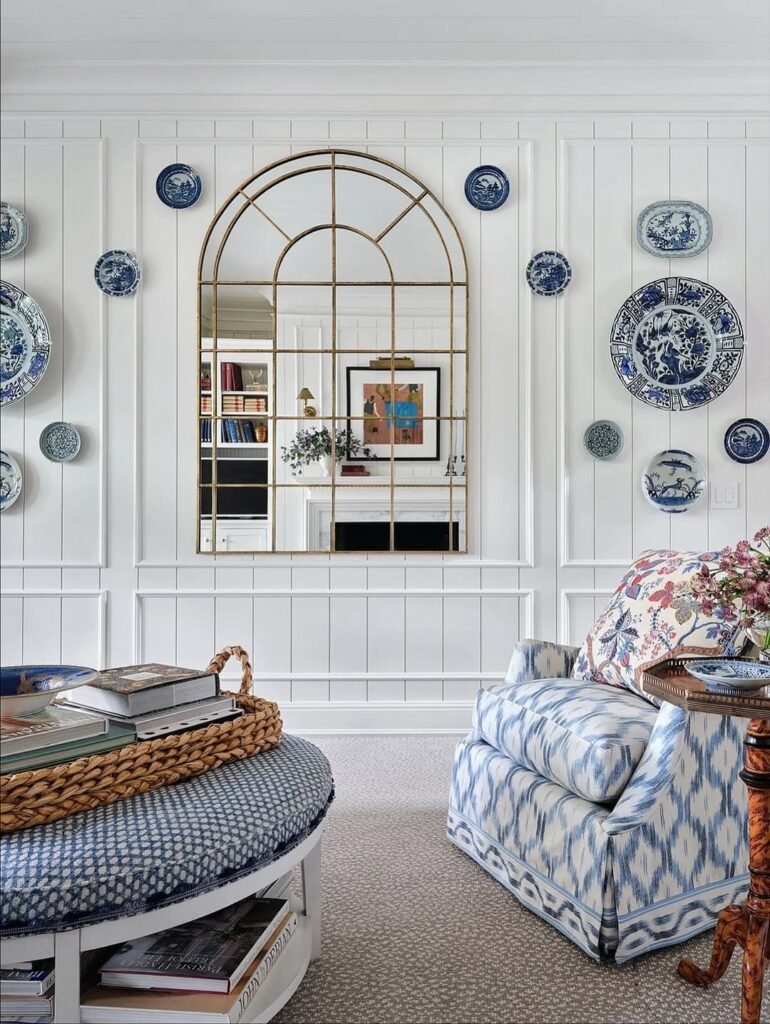
Wall décor plays a significant role in traditional interiors. Plate walls, large mirrors, and framed art add character without clutter.
Wall Styling Inspiration
https://www.instagram.com/diningroomdesignideas/
The gold-framed mirror reflects light and makes the room feel larger, while blue-and-white plates create a curated, collected look.
The Power of Natural Materials
One of the defining features of timeless interiors is the use of natural materials. Unlike synthetic or trend-driven finishes, natural elements age beautifully and develop character over time.
Think of:
-
Solid hardwood floors
-
Marble fireplaces
-
Woven jute or sisal rugs
-
Linen and cotton fabrics
-
Ceramic and porcelain accessories
-
Rattan and wicker accents
These materials add warmth and authenticity to a space. In both the dining and living rooms, you can see how wood, woven textures, and ceramics work together to create depth without overwhelming the eye.
Natural materials also make a home feel grounded and inviting — never cold or overly modern.
Layering Textures for a Collected Look
Texture is what transforms a room from flat to dynamic. Even in neutral spaces, texture creates interest.
For example:
-
A woven rug under a wooden table
-
Upholstered chairs paired with crisp cotton curtains
-
Smooth marble against soft patterned fabric
-
Glossy ceramic plates displayed on matte paneled walls
Layering textures adds richness while maintaining balance. The key is contrast — soft with hard, smooth with woven, polished with rustic.
When done correctly, layering makes a room feel curated rather than staged.
The Importance of Symmetry and Balance
Traditional interiors often rely on symmetry. This creates a sense of calm and visual harmony.
Examples include:
-
Matching wall sconces on either side of a fireplace
-
Identical armchairs facing one another
-
Evenly spaced decorative plates on a wall
-
Centered artwork above a mantel
Symmetry makes a space feel intentional and organized. It is one of the easiest ways to create a polished, timeless look.
Bringing Life with Florals and Greenery
Fresh flowers and plants instantly elevate a space. They soften structured furniture and architectural details.
In the dining areas, floral centerpieces bring color and life to the table. In the living room, small arrangements add warmth to shelves and side tables.
You can use:
-
Hydrangeas for classic elegance
-
Green branches for a minimalist touch
-
Seasonal blooms for variety
-
Potted plants for everyday freshness
Natural greenery ensures your home never feels static or overly formal.
Choosing Artwork That Feels Personal
Artwork is a powerful finishing touch. Instead of following trends, choose pieces that feel meaningful.
Timeless art choices often include:
-
Framed classic paintings
-
Traditional landscapes
-
Figurative art
-
Botanical prints
-
Black and white photography
The artwork in these spaces adds personality without overwhelming the room. The frames are simple and classic, allowing the art to stand out naturally.
https://www.instagram.com/diningroomdesignideas/
The Bold Nook: Designing for Maximum Impact in Small Spaces
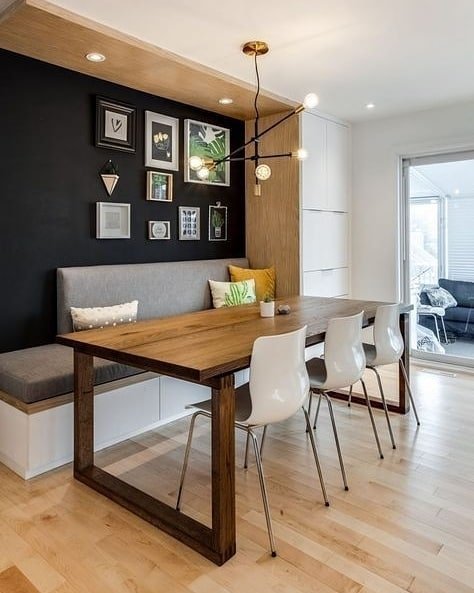
This dining area is a masterclass in using high-contrast design to create a dedicated “zone” within an open-concept floor plan. By utilizing vertical space and a moody color palette, the designer has transformed a simple breakfast nook into a sophisticated focal point.
The Architecture of the Nook
The most striking feature of this space is the “room-within-a-room” effect created by the wooden canopy.
-
The Wooden Surround: A light wood soffit extends from the wall across the ceiling, mirrored by a vertical panel. This architectural “hug” defines the dining area without the need for physical walls.
-
Recessed Lighting: Built-in spotlights within the wood panel provide functional task lighting, ensuring the dark wall doesn’t make the space feel dim.
The Contrast Strategy: Black and White
The space relies on a sharp, graphic color story to create depth.
-
The Statement Wall: A matte black accent wall serves as a dramatic backdrop. This “receding” color makes the wall feel further away, which paradoxically can make a small area feel deeper.
-
The Gallery Wall: A curated mix of frames in white, wood, and black breaks up the dark expanse. The variety in frame sizes and art styles adds a personal, lived-in touch.
-
The Seating Mix: High-gloss white molded chairs provide a sleek, mid-century modern vibe. Their reflective surface pops against the dark table and wall, keeping the visual energy high.
Function Meets Comfort: The Built-In Banquette
Space-saving design is at the heart of this layout.
-
Integrated Bench: The grey upholstered banquette is built directly into the wall structure, maximizing seating while minimizing the footprint. The light grey fabric provides a soft middle ground between the black wall and the white chairs.
-
Storage Potential: The white base of the bench suggests integrated storage, a clever solution for keeping linens or seasonal items tucked away.
Texture and Lighting
To prevent the high-contrast look from feeling cold, organic textures and warm metals are introduced.
-
Solid Wood Table: The dark-stained wood table features a “waterfall” or framed-leg design, providing a sturdy, rustic counterpoint to the plastic chairs.
-
Mid-Century Lighting: A thin-arm brass chandelier with exposed globes adds a touch of “industrial glam.” The brass finish introduces a warm metallic note that complements the light wood tones.
-
Pops of Color: Mustard yellow and botanical-print pillows soften the bench and introduce a controlled splash of color, making the space feel inviting rather than just “designed.”
https://www.instagram.com/diningroomdesignideas/
Sculptural Serenity: The Fusion of Classical Elegance and Minimalist Precision
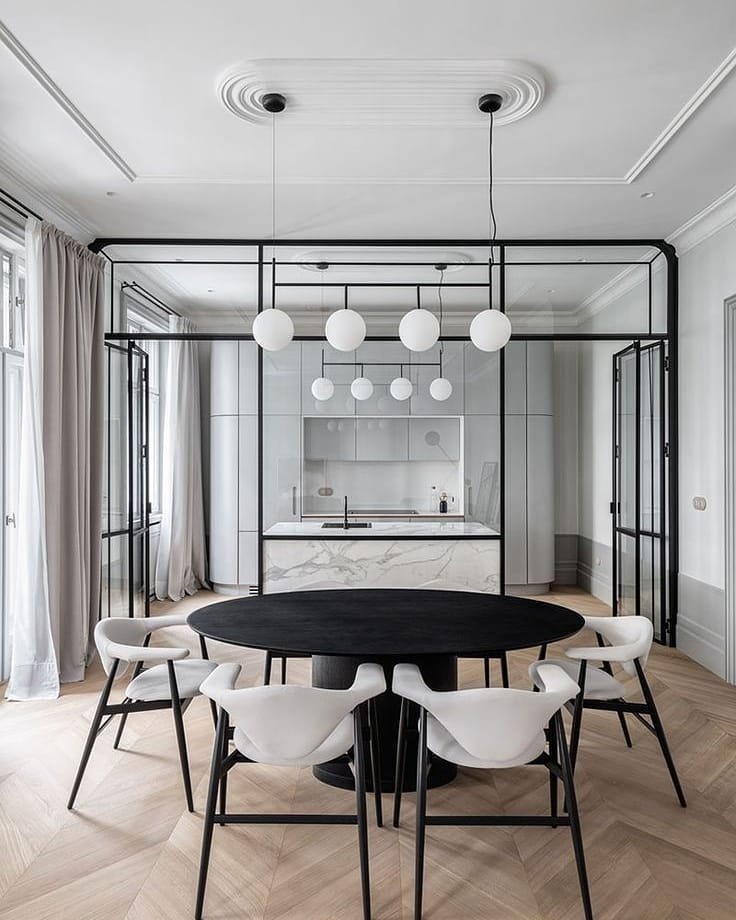
This dining and kitchen space is a masterclass in “Soft Minimalism”—a design philosophy that strips away clutter while retaining a sense of luxury and architectural history. By playing with circular forms and a monochromatic palette, the room achieves a museum-like quality that remains inviting and functional.
The Architecture: Framing the Experience
The standout feature of this home is the integration of original classical details with industrial-inspired partitions.
-
The Glass Divide: A black-framed glass wall separates the dining area from the kitchen. This provides a sound barrier while maintaining a visual “open concept,” allowing light to flow through the entire floor.
-
Crown Molding and Medallions: The ceiling features intricate classical moldings and a custom oval ceiling medallion. These traditional elements provide a stunning contrast to the modern, sharp lines of the furniture below.
-
Herringbone Flooring: The light oak floors are laid in a classic herringbone pattern, adding subtle movement and warmth to an otherwise cool-toned room.
The Dining Centerpiece: Curves and Contrast
The furniture selection prioritizes sculptural silhouettes over ornamentation.
-
The Round Table: A large, matte black pedestal table acts as the room’s anchor. Its circular shape encourages conversation and breaks up the many right angles of the walls and glass partitions.
-
The Chairs: The white-and-black dining chairs feature a distinct, curved backrest that mimics the “wing” of a sculpture. The contrast of the white upholstery against the black legs echoes the overall color story of the house.
-
Symmetry in Lighting: Two identical minimalist pendant lights with milk-glass globes hang from the ceiling. Their horizontal bars perfectly align with the glass partition behind them, creating a sense of mathematical balance.
The Kitchen: A Monolith of Marble and Mist
Visible through the glass, the kitchen is designed to look like a high-end gallery.
-
Curved Cabinetry: The pale grey cabinets feature soft, rounded edges that mirror the circular dining table. This “recessed” design makes the kitchen feel less like a utility room and more like a piece of custom furniture.
-
Marble Island: The waterfall marble island provides a luxurious focal point. Its natural grey veining ties together the black furniture and the light grey walls.
Key Design Takeaway: Geometric Harmony
The success of this room lies in the repetition of shapes. The circular table, the globe lights, the curved chairs, and the rounded kitchen cabinets all speak the same “visual language.” When every piece follows a consistent geometric theme, the room feels unified and calm.
https://www.instagram.com/diningroomdesignideas/
The Curated Collector: Blending Boho-Chic with Mid-Century Modern
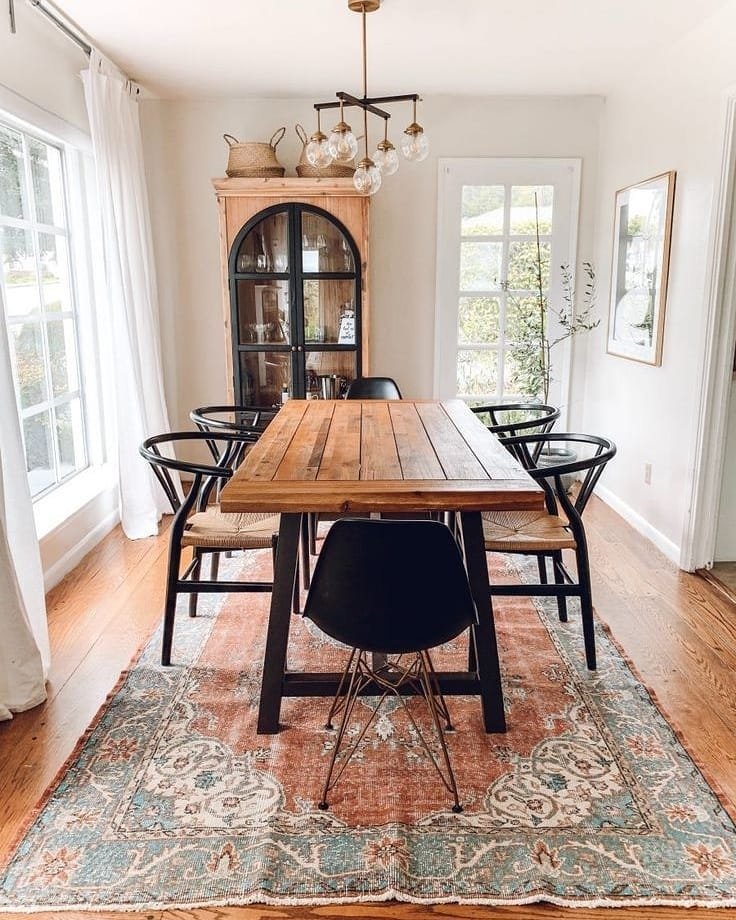
This dining room is a masterclass in “eclectic cohesion.” By mixing furniture styles from different eras and grounding them with a rich, traditional rug, the space feels personalized and layered rather than just a showroom set. It’s a perfect example of how to combine warmth, history, and modern silhouettes.
The Foundation: Color and Pattern
While many modern spaces lean into monochromatic palettes, this room uses a distressed Persian-style rug to introduce character.
-
The Palette Anchor: The rug features muted rust, terracotta, and teal tones. These warm colors complement the natural wood grain of the floor and table, while the teal provides a subtle “cool” contrast.
-
Aged Texture: The “faded” look of the rug prevents the room from feeling too formal, adding a vintage, lived-in soul to the bright, white-walled space.
The Seating: A Play on Silhouettes
One of the most daring and successful choices in this room is the mismatched seating.
-
The Wishbone Chairs: The black Wishbone-style chairs on the sides offer a classic organic-modern silhouette. Their woven paper cord seats echo the natural materials found throughout the room.
-
The Eames-Style End Chair: At the head of the table, a black molded plastic chair with “Eiffel” metal legs adds a sharp, mid-century industrial touch.
-
Why it Works: By keeping all the chairs the same color (matte black), the different shapes feel like a deliberate collection rather than a random accident.
Architectural Interest: The Arched Cabinet
In the background, a tall, light-wood hutch with an arched glass door serves as a major focal point.
-
Softening Lines: The curve of the cabinet door breaks up the straight lines of the dining table and window frames, creating a more inviting visual flow.
-
Natural Accents: Topping the cabinet with woven seagrass baskets adds height and reinforces the “Boho” elements of the design.
Lighting and Final Touches
-
The Chandelier: A brass-and-black sputnik-style chandelier hangs low over the table. The brass finish adds a touch of “glam” that elevates the rustic wood table.
-
Natural Light: Large windows with simple white sheers allow the sun to wash over the space, highlighting the different textures—from the rough wood table top to the sleek metal chair legs.
-
The Greenery: A tall, slender olive tree in the corner adds a pop of life, bringing the outdoors in and softening the corner of the room.
Pro-Tip for This Look:
If you want to mix chair styles like this, follow the “Same Color, Different Shape” rule. It’s the easiest way to create an eclectic look that still feels sophisticated and intentional.
https://www.instagram.com/diningroomdesignideas/
The Indoor Jungle: Crafting a Bohemian Sanctuary
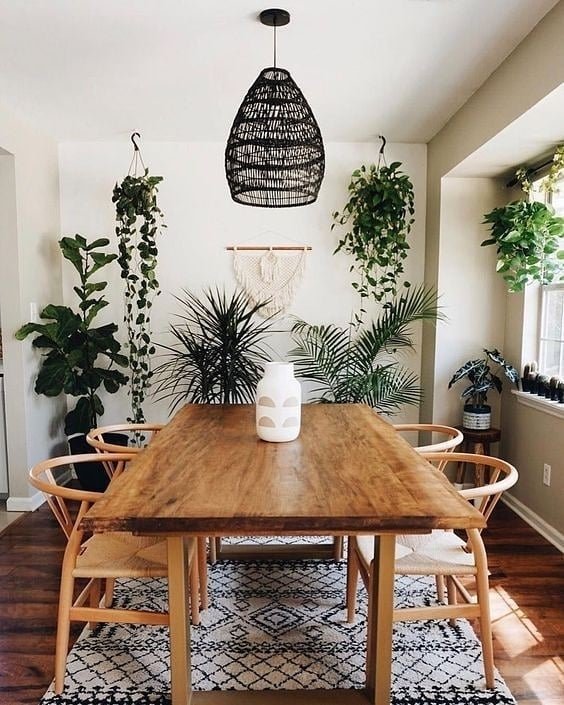
This dining space is a vibrant example of “Jungalow” style—a design movement that prioritizes lush greenery, global textiles, and natural materials. By embracing a “maximalist-lite” approach to plants, the room feels like a tropical escape tucked inside a modern home.
The Greenhouse Effect: Vertical Greenery
The defining characteristic of this room is its abundant use of plants to create a living backdrop.
-
Layered Heights: The designer has strategically placed plants at every eye level. Tall floor plants like the Fiddle Leaf Fig and various palms provide a sense of enclosure, while trailing Pothos hanging from the ceiling add vertical drama.
-
Biophilic Benefits: Beyond aesthetics, this volume of greenery creates a calming, air-purifying environment that blurs the line between the indoors and the garden.
Textural Harmony: Natural Fibers
To ground the “jungle” vibe, the room relies on a consistent palette of organic textures.
-
Woven Light Fixture: The oversized black rattan pendant light serves as a bold architectural crown. Its open weave casts intricate shadows and provides a dark focal point that grounds the light-filled room.
-
Macramé Wall Art: A small cream-colored macramé hanging provides a soft, artisanal touch to the center wall, echoing the bohemian spirit of the space.
-
Wishbone Chairs: The light oak chairs with woven cord seats offer a “Scandinavian-meets-Boho” aesthetic. Their curved backs mirror the organic shapes of the surrounding foliage.
Patterns and Contrast
The space uses a graphic, monochromatic base to ensure the greenery remains the star of the show.
-
The Tribal Rug: A black-and-white diamond pattern rug anchors the dining table. The geometric precision of the rug provides a necessary contrast to the wild, irregular shapes of the plant leaves.
-
The Table Top: A warm, honey-toned live-edge wood table provides a substantial surface that feels sturdy and raw.
-
Decorative Vase: A simple white ceramic vase with a minimal arch pattern sits at the center, offering a clean, modern resting place for the eye amidst the surrounding textures.
Key Design Takeaway: Creating Depth with “Vines”
Notice how the hanging plants are positioned to “frame” the dining table. By using ceiling hooks to suspend vines, you can draw the eye upward, making the ceiling feel higher and the overall room feel more immersive. It is an excellent strategy for small dining nooks that lack architectural interest.